
Created by Isabella Lenarduzzi on Wed, 10/29/2025 - 23:24

Description:
Harriet Smith very quickly becomes Emma's protégé in Emma (1816). Despite Harriet's precarious parentage, Emma takes an interest in Harriet and tries to elevate her, fueling her delusions of grandeur early in the novel. Key to Harriet's story, however, is that she knows nothing of her parentage, as she is placed in a boarding school from a young age.
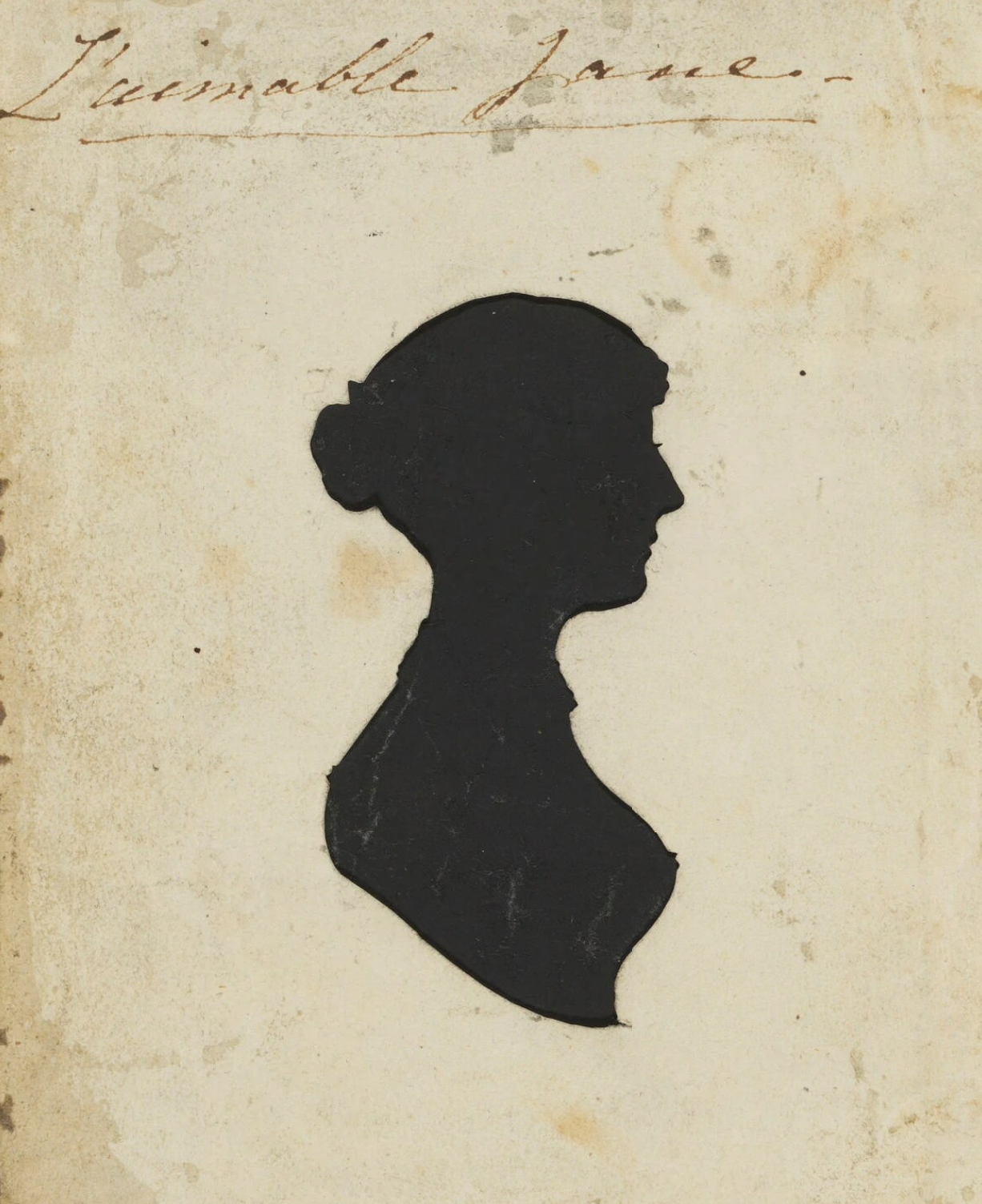
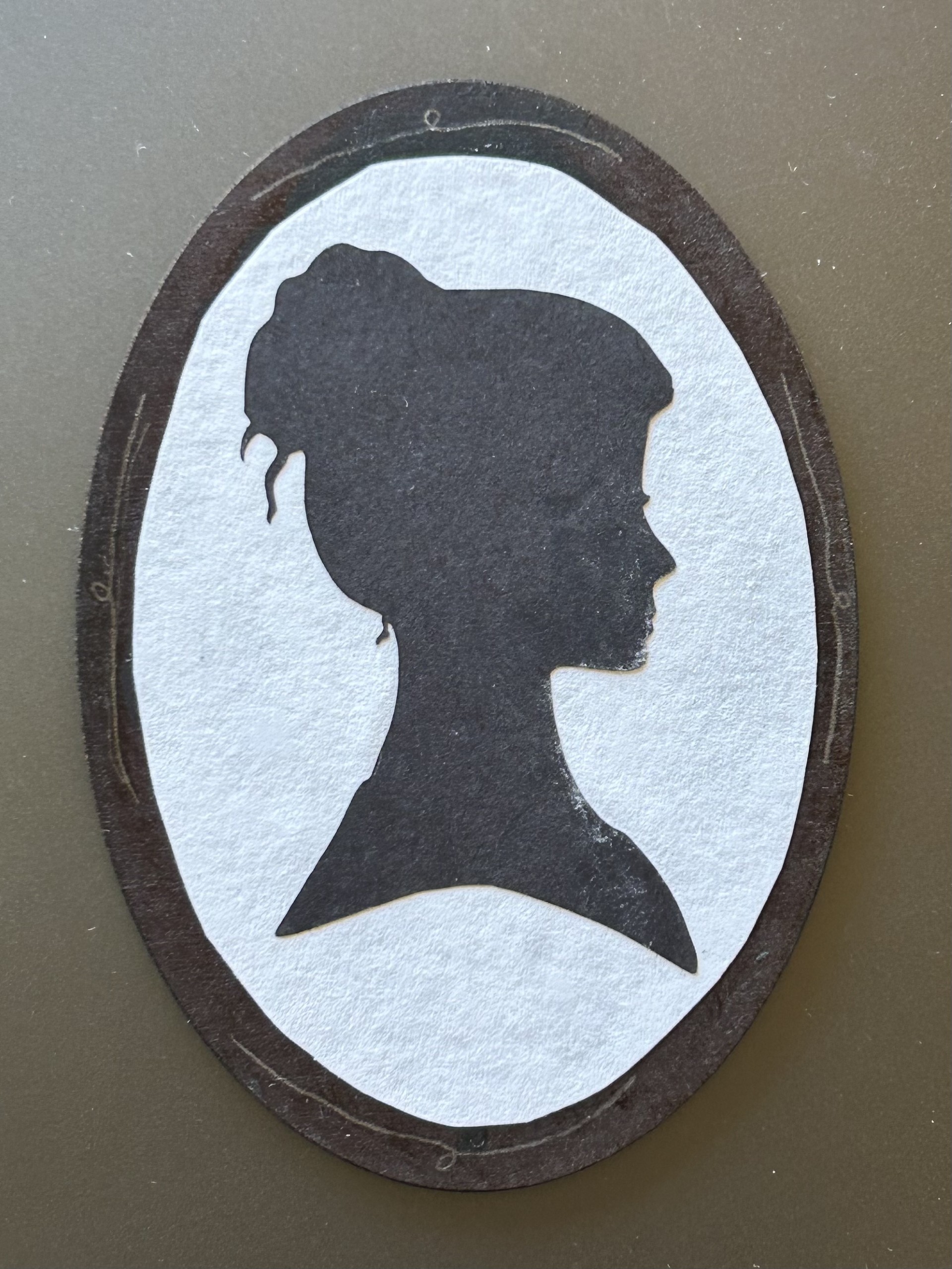
I wanted to create a very simple silhouette for Harriet. In reality, if a Regency woman like Harriet were to have her likeness captured, it would be in the form of a plain silhouette. Veronica Litt, in an essay for the Jane Austen Society of North America, draws connections between Austen and Harriet. She writes, “Like Harriet, Austen attended boarding school (unlike Emma, she did not have a governess) and would have ranked below Emma in Highbury’s social scale…These links are sometimes small and sometimes broad, but, cumulatively, they suggest in social rank, expression, and its reception, Austen resembles Harriet more than Emma.” Jane Austen's silhouette from the National Portrait Gallery served as the inspiration for the portrayal of Harriet in my piece. I aimed to show Harriet as she first appears in the novel and how film adaptations of the character either reflect this by showing her as simple (as in the 1996 film version) or alter her character (as in the 2020 version).
Silhouette, possibly Jane Austen, National Portrait Gallery, year and artist unknown. This silhouette, likely Jane Austen, is simplistic. Aside from her general silhouette, there is no added detail to the image. As mentioned previously, this silhouette of Austen served as the inspiration for the way in which I portrayed Harriet.
Silhouette of Harriet Smith from Emma, by Bella Lenarduzzi, 2025. I wanted my silhouette to be traditional with no extravagant details or adornments, so as to reflect the Harriet Smith the reader meets at the start of the novel, prior to Emma's influence taking hold. It is likely that if Harriet had never met Emma, she would never have had her likeness captured as she does in Vol. I, ch. 6 of the novel. Without Emma, it is likely that the only portrait that Harriet could have had is a simple silhouette, such as the one I created, rather than a detailed portrait miniature.
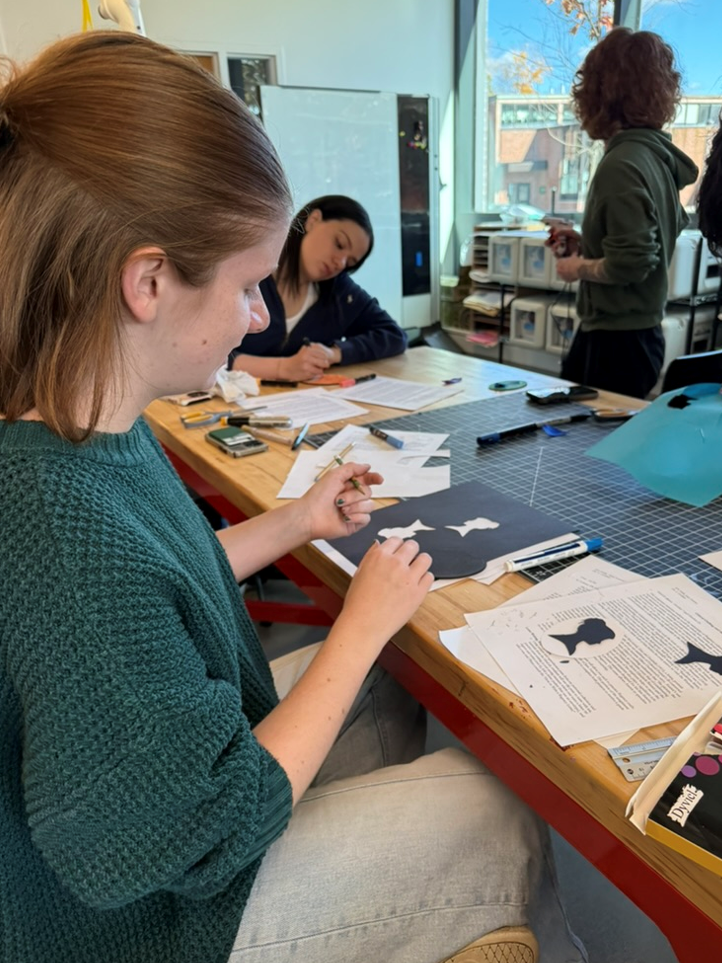
Crafting Process of Harriet Smith Silhouette, Photograph by Dr. Catherine Golden, 2025. I painted the wood black for the background and cut out a piece of white paper to create a contrast between the silhouette, the background, and the black wood. Regency silhouettes are typically very basic, compared to later-era silhouettes, so I tried to recreate that look in my project. I added some small details on the black background in pencil to make the silhouette stand out.
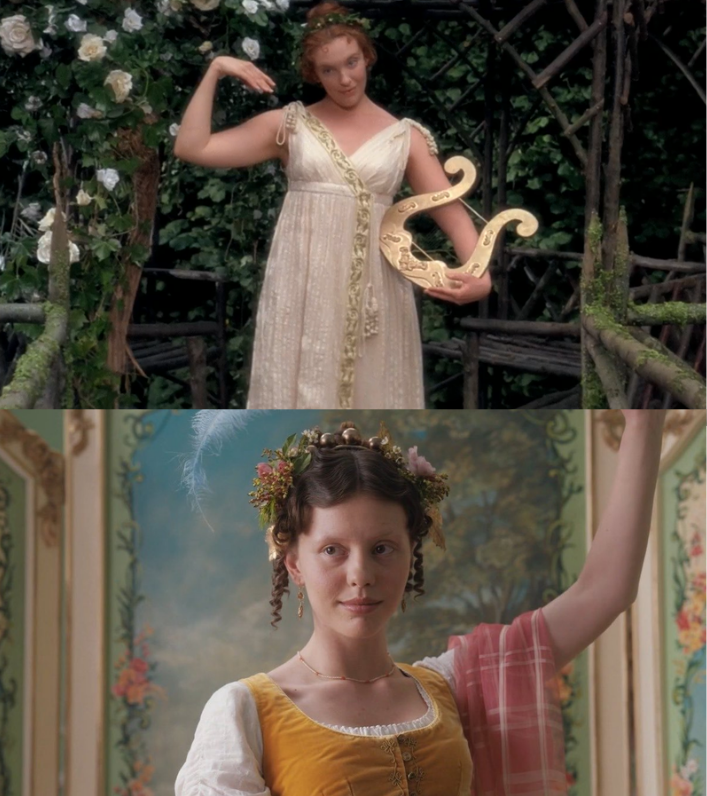
Film clip of Harriet Smith from Emma (1996) starring Toni Collette and Emma (2020) starring Mia Goth. In the 1996 film adaptation of Emma, directed by Douglas McGrath, Harriet dresses very plain, especially compared to the 2020 film adaptation of the novel. Autumn de Wilde's 2020 film is imbued with "fussy symmetry [and] popping colors," as Manohla Dargis writes in a review of the film for the New York Times. This elaborate mise en scene extends to the characters and their wardrobes. In McGrath's adaptation, Harriet and Emma are dressed in muted colors, with Harriet typically wearing white. De Wilde's film has Harriet in bright colors.
Comparing the two scenes in which Emma paints Harriet, you can see the difference in the costuming. In the 1996 film, Harriet is not wearing bright colors; she has a crown of leaves in her hair, but there are no flowers and little color in her look. She is being painted outside with natural scenery behind her. Mia Goth in her portrayal of Harriet, however, is dressed in elaborate costuming. She has color, not only in her dress, but in her hair as well. There are vibrant flowers and a beautifully painted background.
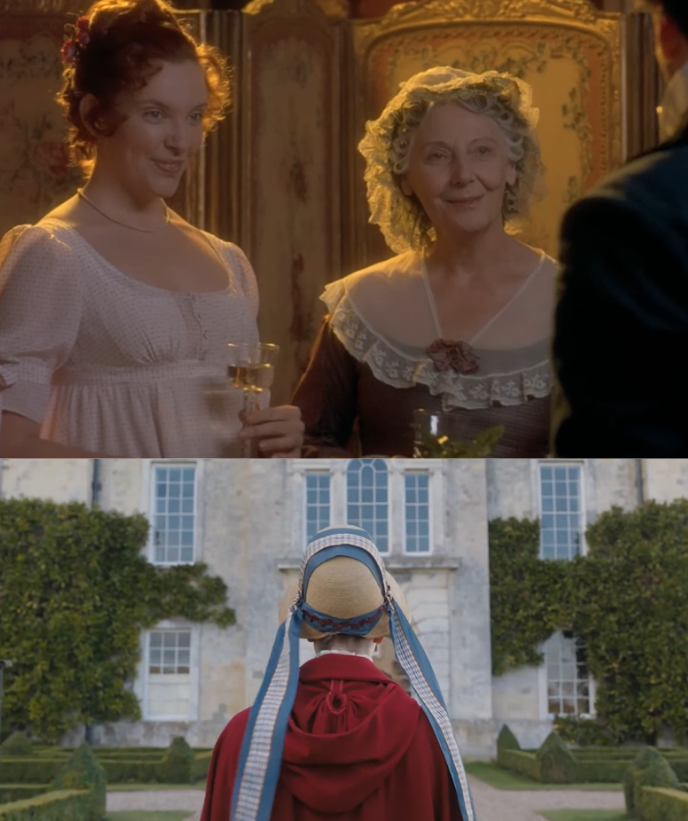
Secondary film clip of Harriet Smith from Emma (1996) starring Toni Collette and Emma (2020) starring Mia Goth. In McGrath's film, Harriet looks simple and never wears much color or accessories. When audiences first meet Toni Collette's Harriet, as is portrayed in the final photo of my case, she is dressed plainly. At the end of the film, she looks generally similar. The changes that Emma imparts to her are largely internal, not physical. In Autumn de Wilde's film, Harriet visually becomes a much different person after she meets Emma. The large, plain bonnet (as seen in this last photo) becomes extravagant hats and bonnets. Her boarding school-issued dress and red cloak become colorful dresses. In short, Emma's influence over her is more marked by her physical appearance in the 2020 film adaptation.
Both films have different approaches to portraying Harriet Smith. In 2020, the effect Emma has on Harriet is seen through a visual shift in costuming. In the 1996 film, Emma’s influence is seen in Harriet’s actions. Toni Collette's Harriet Smith is much more reflective of the silhouette I created to represent Harriet, inspired by Austen.