
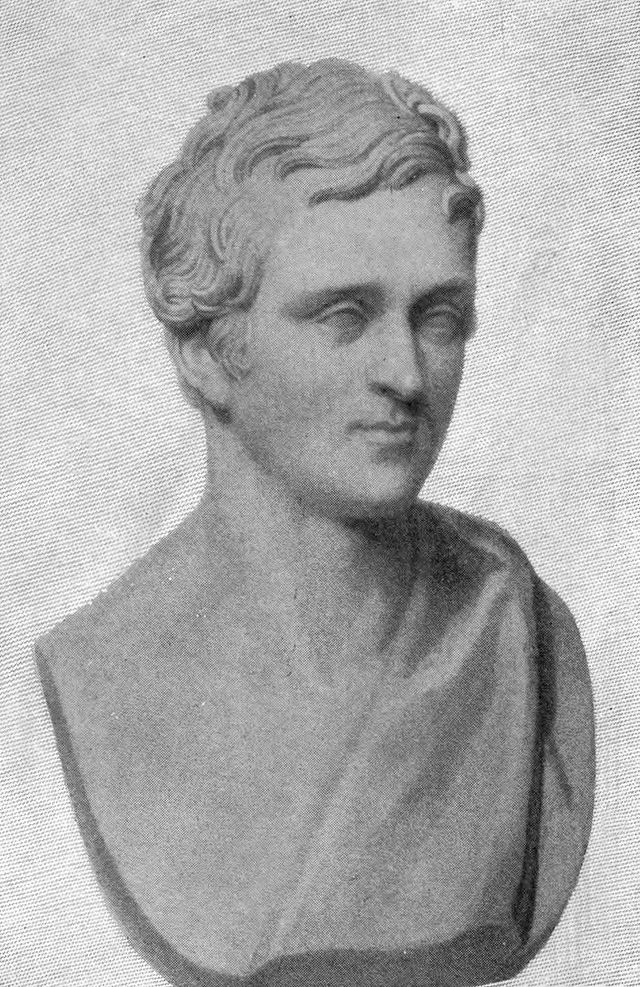
Arthur Hallam, the most dear companion of the poet laureate, died on September 15, 1833, of a stroke at just 22 years old. The two poets and intellectuals experienced four years of deep friendship before Hallam's death. This enormous death, compounded by the death of Tennyson's father and his family's poverty, was cataclysmic to his mental fortitude. He refused to have his work published for the ten years following, but this period of emotional turmoil brought with it some of his greatest works: "Morte d'Arthur," "Tithonus," "Tiresias," and "Break, break, break."
This also included the beginning of a seventeen-year effort pouring his grief about Hallam's death into many unlinked poems that eventually became In Memoriam, one of the most celebrated of all Victorian poems. This poem, comprising 131 sections and nearly 3,000 lines, solidified Tennyson as the poet laureate. Irrevocably saturated with the grief of losing one's closest companion, it also dealt with a myriad of other Victorian issues, including religion, the sciences, the role of art, the relation of the conscious to the unconscious, and many others. Tennyson inherited the laureate title from Wordsworth in 1851, a year after his predecessor's death.
"Alfred, Lord Tennyson." Poetry Foundation, Alfred, Lord Tennyson | The Poetry Foundation.
Blocksidge, Martin. "Arthur Henry Hallam," The Tennyson Society, Arthur Henry Hallam – The Tennyson Society.