
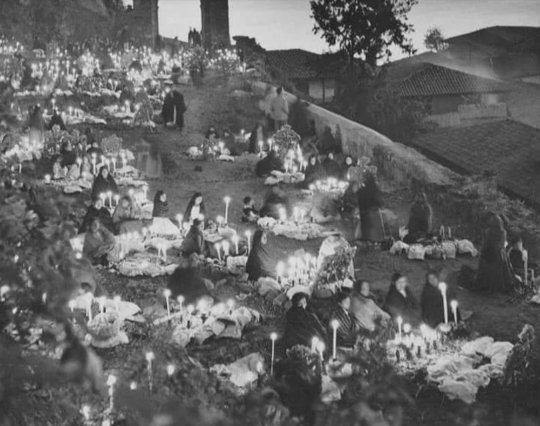
In 1958 Elena Garro published her play Un hogar sólido, about an extended family who are buried in the same crypt. The play is most believed, but never specified, to have taken place in Mexico City.
In Garro's play the occupants of the crypt hear the chanting speech of those honoring the dead. From context this appears to be a burying ritual, or some funeral, and the vocabulary seems to be distinctly catholic.
The Day of the Dead is Mexico's most popular holiday and has much cultural significance. The Day of the Dead is seen as a way to connect with the souls of your departed, and the rituals are deeply rooted in Roman Catholic tradition. Interestingly this holiday also stands as a symbol of anti-colonial resistance, as Spanish colonizer's attempted to quell the ferocity of the celebration while in power.