
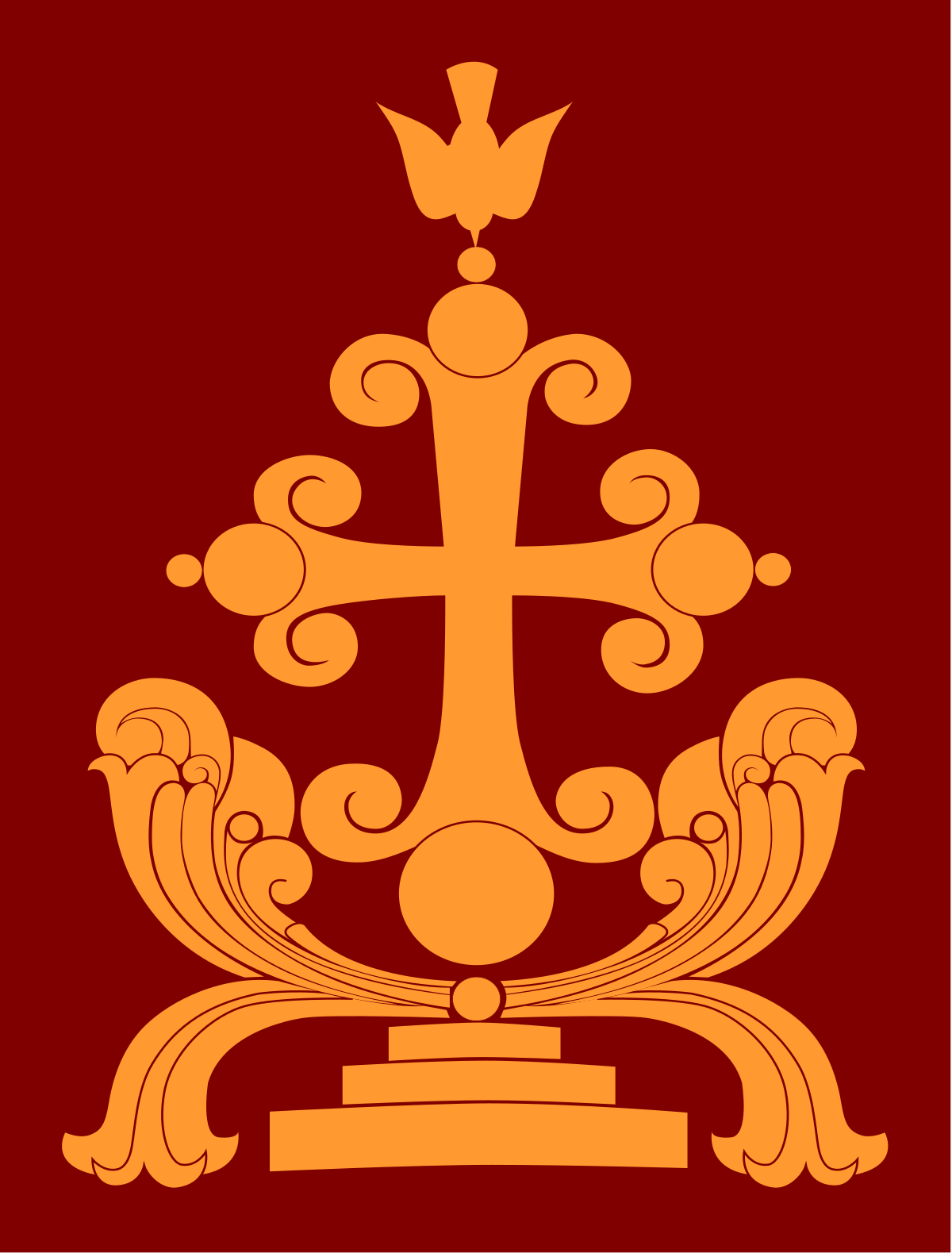
In “The Decay of Lying,” Wilde mentions, “Truth is entirely and absolutely a matter of style.” I believe the same thing can be said for perception. When people think of the religion of Christianity, there is a preconceive notion that it is a “white mans” religion. However, this is not the case. Jesus, the founder of Christianity started in the region of Galilee around 33Ad, and from there it became the largest religion practiced in the world today. Before Christianity flourished in Western Europe and the Americas, it had strong roots in the Middle East, Africa, Eastern Europe, and even India. In this Build Assignment I want to focus on Christianity in India. When people think of Christianity in India, they may assume that the Portuguese, the British, and/or the other colonial empire may have brought it. However, that is not the case at all. Surprisingly, India had one of the earliest Christian communities in the world, and they were known as the St. Thomas Christians. The St. Thomas Christians trace their faith from Thomas the Apostle who brought Christianity to Kerala, India in the year 52 AD. Therefore, Christianity was in India before it reached parts Europe. Today there is a debate among historians whether or not the Apostle Thomas had come to Kerala, India. However, St. Thomas Christians continue to claim that Christianity was brought to India by Thomas the Apostle. A group within the Saint Thomas Christians known as the Knanaya Catholics preserved the history of St. Thomas in India through oral history known as Margramkali. The Magramkali mentions the arrival of Thomas the Apostle in India, how he preached, and his martyrdom. There are references of Thomas’ arrival in India from the Church Fathers. Saint Jerome mentions in Epistles of St. Jerome: "Jesus dwelt in all places; with Thomas in India, with Peter in Rome, with Paul in Illyricum, with Titus in Crete with Andrew in Achaia, with each apostolic man in each and all countries.”[1] The St. Thomas Christians formed a unique identity because they were “Hindu in culture. ” Dr. John mentions, “The Malabar Christian community has assimilated many of the indigenous social customs. Social customs of the Malabar Syrian Christians were very much indigenous, in the sense that they have also manifested itself in church architecture, the ecclesiastical paintings, murals and church music.” [2] Although the St. Thomas Christians had their distinct identity, they were under the authority of the Church of the East. Dr. McKee mentions, “[The St. Thomas Christian] represented truly Indian expression of Christianity. Nevertheless, there was dependence on the East Syrian Church for theology, liturgy and bishops.”[3] In the Fifteenth century, the arrival of Vasco da Gama and the Portuguese changed the fate of the St. Thomas Christians. Initially, the Portuguese were pleased when they found out that there was a Christian community in Kerala India; however, as they settled this changed over time. The Saint Thomas Christians were under the jurisdiction of the Church of the East; the Church of the East is associated with the Nestorian heresy. Therefore, the Portuguese condemned the St. Thomas Christians as heretics. Dr. Ancy mentions, “From the beginning the Portuguese noticed that the St. Thomas Christians were different from them in anything ecclesiastical, ritual or theological and in rite, customs and hierarchical allegiance. The official attitude of the Portuguese towards the Christians of St. Thomas was one of the Sympathy and understanding but always motivated by a sense of superiority about their form of Christianity, according to the Portuguese version, their rites and customs was the true form to which all Christians had to conform in order to become perfect Christians.” [4] Even though the Saint Thomas Christians were an early Christian community with unique and rich traditions, the Portuguese still attempted to compel them to practice the Latin liturgy and to submit to the judication of Rome. Dr. Kochuparampil mention in this book, “As the Portuguese missionaries who were very friendly with the Thomas Christians, they wanted them to conform to latin customs, there arose tension between the two communities. The Portuguese could intensify the process of latinization by the end of the sixteenth century through the Council of Goa held in 1585.”[5] The 1599 Synod of Diamper condemned the Catholicos of Chaldea (Patriarch of the Church of the East) and all Saint Thomas Christians who would not submit to Rome. Many clerics were imprisoned, ancient churches were destroyed, and books and documents were burned. A few of the Saint Thomas Christians also did not agree with the decrees that were produced during the Synod. As a result, some of the Saint Thomas Christians resisted the Portuguese oppression. On January 3, 1653, a group of Saint Thomas Christians publicly swore that they would not submit to Rome. This was known as the Coonan Cross Oath. As a result of the Synod of Diamper and the Coonan Cross Oath, the once unified Saint Thomas Christians split into being Catholic (Latin rite and Easrtern rites) and Othrodox. .
[1] Jerome, ., & Wright, F. A. (1975). Select letters of St. Jerome. Cambridge, Mass: Harvard University Press.
[2] Johny, P. (2000). THE OATH OF THE 'COONAN CROSS' (LEANING CROSS), MATTANCHERRY, COCHIN, JANUARY 16, 1653 A.D. — ITS SOCIO-POLITICAL BACKGROUND. Proceedings of the Indian History Congress, 61, 453-460. Retrieved March 30, 2020, from www.jstor.org/stable/44148123
[3] McKee, G. (2018). Benjamin Bailey and the Call for the Conversion of an Ancient Christian Church in India. Studies in World Christianity, 24(2), 114–134. https://doi.org/10.3366/swc.2018.0216
[4] Ancy, M. (2012). CIRCUMSTANCES THAT LED TO THE SYNOD OF DIAMPER. Proceedings of the Indian History Congress
[5] Kochuparampil, X. (1996). The St Thomas Christians of India: Ecumenical and Missiological Challenges. Exchange, 25(3), 243–260.