
On November 11 of 1918, the Allied powers signed a ceasefire agreement in Compiénge, France that brought World War 1 to a close.
The following year, President Wilson declared Armistice Day: “To us in America, the reflections of Armistice Day will be filled with solemn pride in the heroism of those who died in the country’s service and with gratitude for the victory, both because of the thing from which it has freed us and because of the opportunity it has given America to show her sympathy with peace and justice in the councils of the nations…”
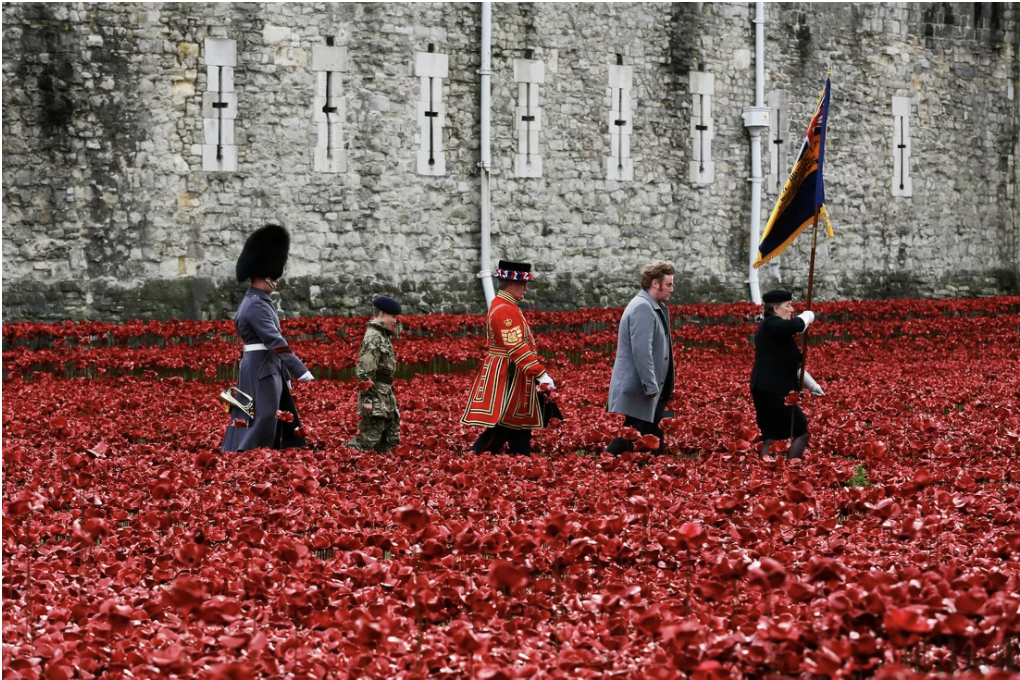
Between the 2 World Wars, it was officially recognized in the UK, France and the United States as a day of tribute to veterans to both wars. British commonwealth countries refer to this day now as Remembrance Day while the United States refers to it as Veterans Day. The marking of Armistice Day was the beginning of many following efforts to recognize and support veterans in following years. In the UK today, bright red poppies are seen in shops, train stations, cars, and people's clothing in remembrance of the lives lost in the service of their country.
The signing of the ceasefire, however, is a different event from the treaty of Versailles which was signed in Paris the following year. It defined the terms of codified peace between Germany and the Allied powers and held Germany responsible for starting World War 1. President Wilson had wanted a “peace without victory” and hoped to reconcile multiple countries after the war but the Treaty of Versailles was far from that. It was a humiliating treaty that stripped Germany of territory, military power, money, and morale. Much of this fueled the anger of the Germans and enabled Adolf Hitler to gain power leading up to World War 2.
The Paris Peace Conference opened up in January of 1919, the anniversary of crowing of the German Emperor who had taken a region of France in a victory during the Franco-Prussian war in 1871. The Prime Minister of France, George Clemenceau, had not forgotten this loss and unjust theft and planned to take back what belonged to France, fueling the rivalry between Germany and France over the territories of Alsace. Germany would go on to reclaim it during World War 2, only for it to be restored to France following their defeat.
When German leaders signed the Armistice in Compiénge, they assumed that the treaty would look more like President Wilson’s version of “peace without victory” and would be the basis for the upcoming peace treaty to be signed the following year in Paris. These German leaders were branded the “November Criminals” by German nationalists because of the results of the Treaty of Versailles in the following 20 years.