
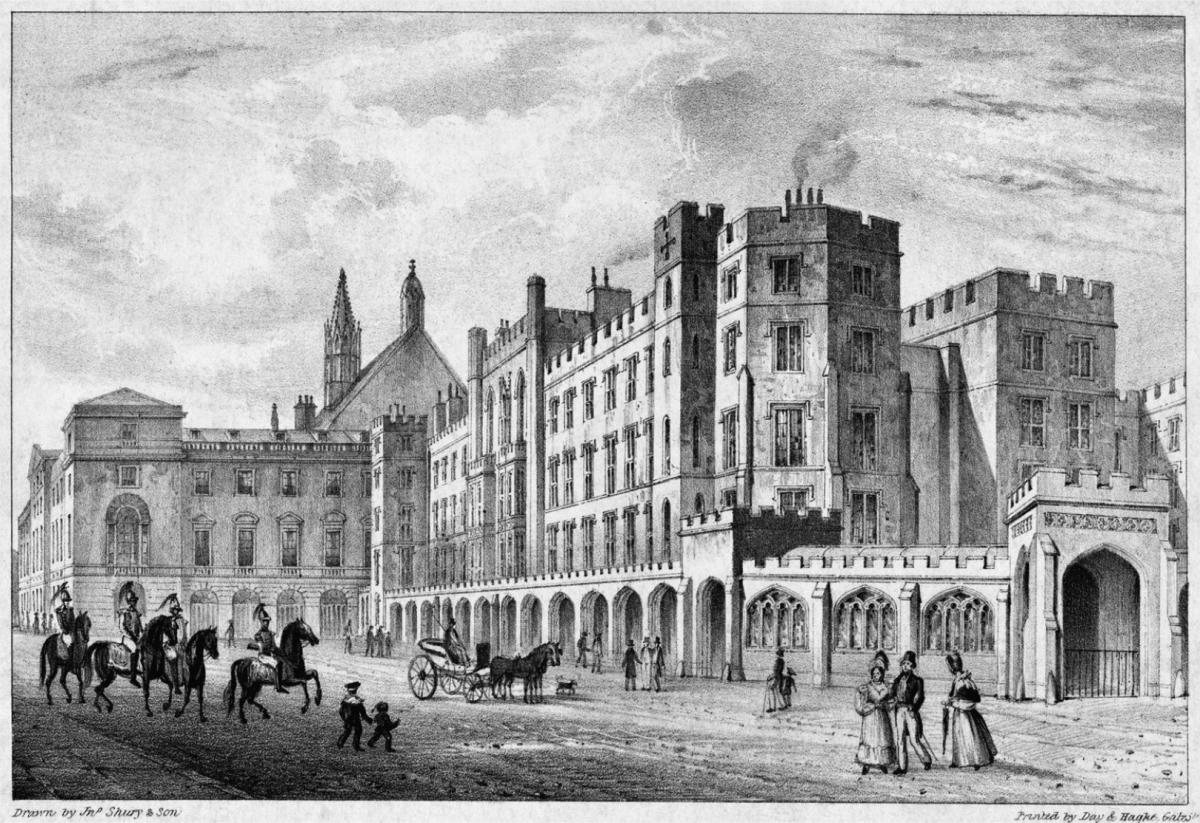
This is the drawing of the Parliament in London before the fire that occurred in 1834. In this Parliament building two acts were passed that influenced the chain of action that inspired The Body Snatcher. The first act was The Murder Act of 1751. The act states that any criminal convicted with murder would be pay its debt by hanging and some of the bodies were sent to be dissected and studied by doctors to further their knowledge. However, the supply for the corpses did not satisfy the demand. The medical professors and researchers were not only furthering their knowledge but also capital gain, students pay to be present and others interested as well to be present. To keep up with demand this professors started to pay people to go to cemmentaries and grave yards and obtain bodies for them. However, when the corpses wouldn't satisfy either as they weren't as fresh or in good state, they would turn to murdering innocent people to satisfied their needs. This horrendous act required the second act to be passed 81 years later: The Anatomy Act of 1832. This act allowed medical practiticioners to have legal access to unclaimed corpses, the poor, and the ones that passed in workhouses and prison. These two acts allowed the chain of action that inspired the Body Snatcher.