
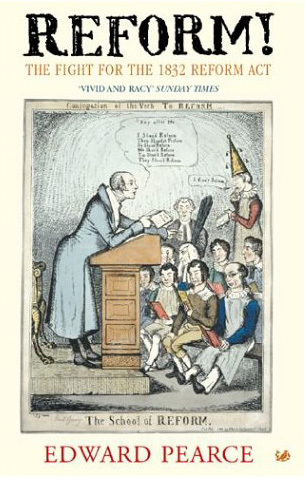
The First Reform Bill was meant to quiet the glowering inequalities between the traditional rural locals and the rapidly rising industrial areas of England, thus it was written by Prime Minister Charles Grey and introduced into the House of Commons in March 1831 by John Russel. However, it only passed with one vote in the House of Commons and did not pass in the House of the Lords. The subsequent sequel drafts of the First Reform Bill had similar issues with not passing the House of the Lord, and this prompted Grey to propose that King William IV allow Grey to create 50 liberal peers. King William refused and Grey almost resigned as prime minister until the Duke of Wellington failed to form a new government at the behest of the William. The bill ended up passing the House of the Lords, and became law in June 4, 1832. The First Reform Act itself changed the electoral system of Britain by redistributing seats and changing the conditions (some people even lost their electoral vote entirely). Ultimately, the Bill left large groups of the working and lower middle class without any vote. The new middle class had a bigger share in the politics of government and ended up quieting the discourse about who had a say in the inner workings of the English Government. Truthfully, the First Reform Bill was meant to make peace between the upper- and middle-class while continuing certain traditions.