
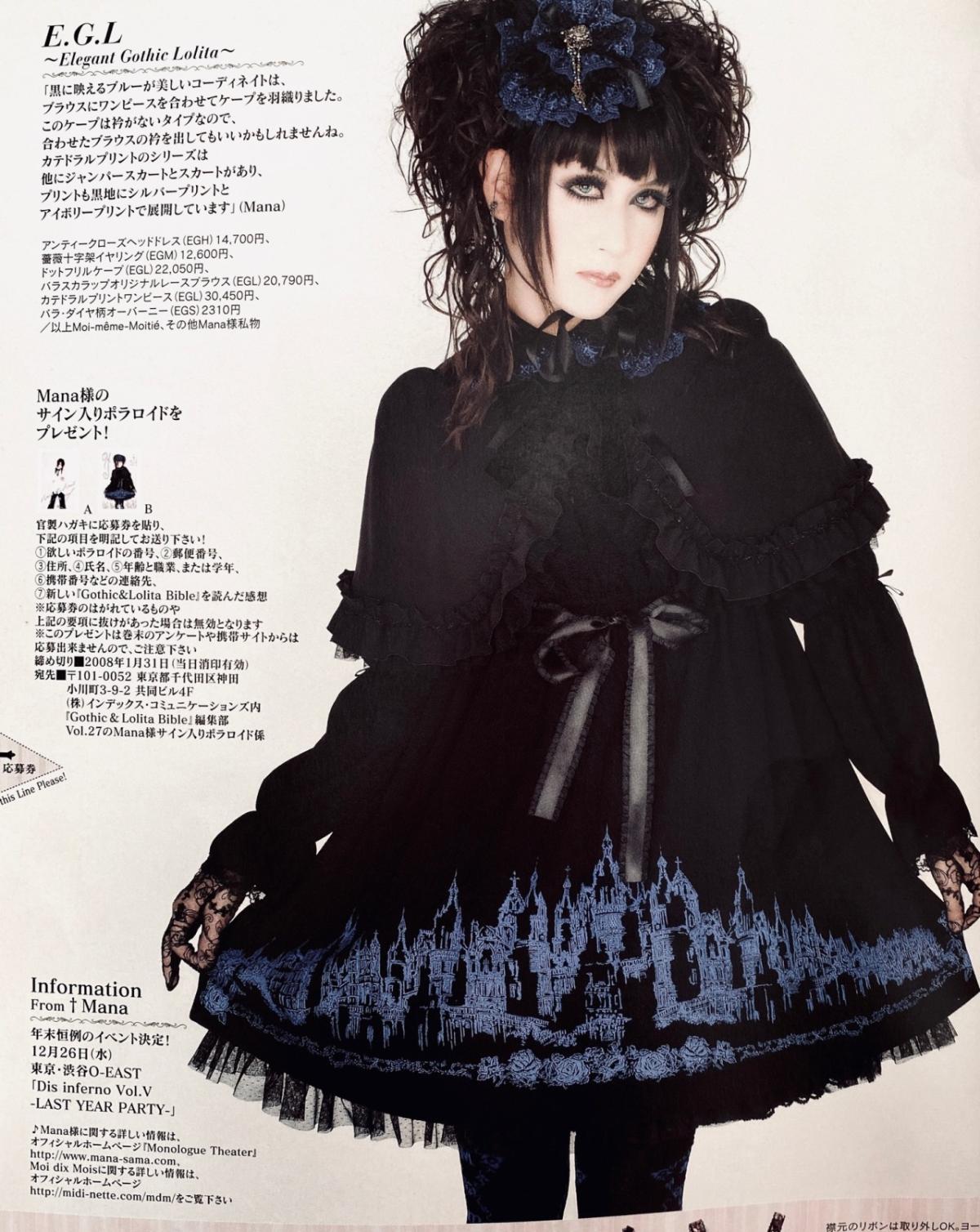
Mainly found in Japan, Gothic Lolita is considered a style that evolved independently out of the Visual Kei (see second photo) aesthetic during the 90s. As a subgenre of Lolita, it is heavily influenced by aristocratic Victorian clothing and styles from the Rococo period (thought, of course, it greatly differs). Alice and Wonderland was also a huge insperation for this style of fashion. While every outfit is different and suited to the wearer's style, there are commn motifs and imagery that are often seen in Gothic Lolita such as crosses, bats, coffins, skulls, castles, and deep red roses. Often in darker colors like black, gray, or navy, Gothic Lolita follows the iconic silhouette consisting of headdress, blouse, poofy skirt, petticoat, legwear, and lace accessories. Many people have made this style their "thing" on social media or in the fashion industry, like Mana (third photo). Lolita originated as a reaction against stifling Japanese society, emerging from a need for free expression. Young people were pressured to strictly adhere to gender roles and expectations so the Lolita style was created to combat these strict norms of society. Nowadays, it is not uncommon to stroll the streets of Tokyo and spot a few Gothic Lolita cosplayers walking around and taking photos with tourists. It has become widely popularized, even used by the government to promote Japan to foreigners.