
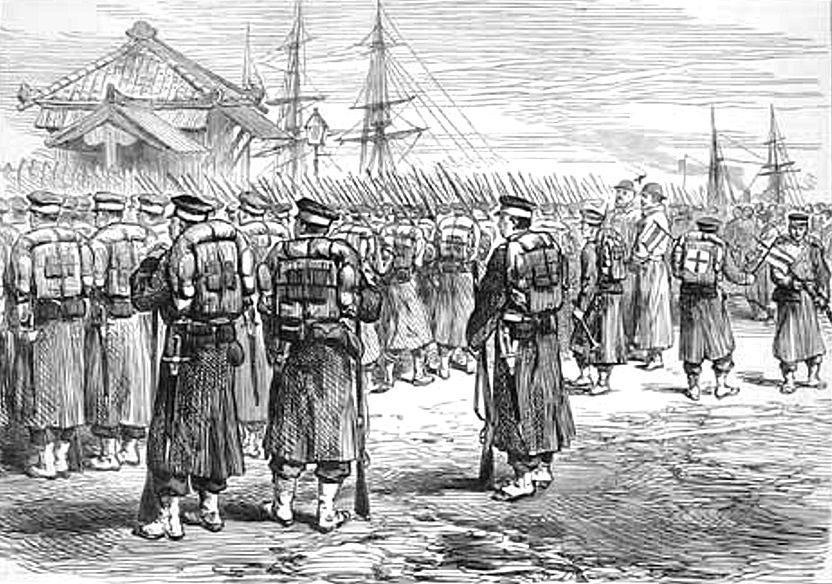
This image shows imperial troops, arrayed to fight the Satsuma Rebellion in 1877. The imperial army had just undergone drastic change in the shift away from Samurai and towards a conscript army. The new army, despite its success in suppressing the rebellion due to adopting modern military equipment, was actually seen as performing poorly due to a lack in fighting spirit. Units had apparently broken off and ran under fire, forcing broad changes in the army’s philosophy. Harsh discipline was imposed upon the force to suppress individuality and insubordination. Brutal physical training was used to make everything “simple” during battle. These changes were, in part, also meant to counteract popular sentiment about the virtues of individual expression.
The government’s actions with its army and the dissolution of the Samurai class make it clear that the goal in the coming years was to create equality in the upper and lower classes by suppressing uniqueness and fostering obedience to authority. For examples of this, one need only look at the above image. Note the legions upon legions of black and white, virtually identical rank-and-file soldiers. They stand there almost like statues, seemingly stripped of their very lives. There is no way to distinguish one soldier from another, apart from their physcical position. This image expemlifies the ideal army in the minds of the currrent goverment: a complete and utter lack of individuality. These ideals weren't merely limited to the army: the entirety of Japanese society at this time started to change. One's specific class became less and less important as the government began to prioritize one's skill over one's percieved "place" in the structure of society. These barriers were being torn down for goals of increased effectiveness and productivity in all aspects of life,
Sources:
Drea, Edward. Japan’s Imperial Army: Its Rise and Fall, 1853-1945. Kansas: University Press of Kansas, 2009.