
The Victorians, especially those of the upper class, valued aesthetics and displays of opulence. Pride in one’s wealth was presented in dress, décor, and furnishings. Large looking glasses as furniture, often called pier mirrors, are an excellent example of such ornamentation. Tall and gilded, these looking glasses were displayed in the homes of the wealthy and were featured as furniture in the Great Exhibition of 1851. Ornate framings and sizable heights exemplified these mirrors as impressive décor. What better way to display one’s wealth than to have an ostentatious item that can mirror one’s affluence right back at them? The following images and descriptions capture the splendor and grandeur of Victorian mirrors as shown in the Great Exhibition.
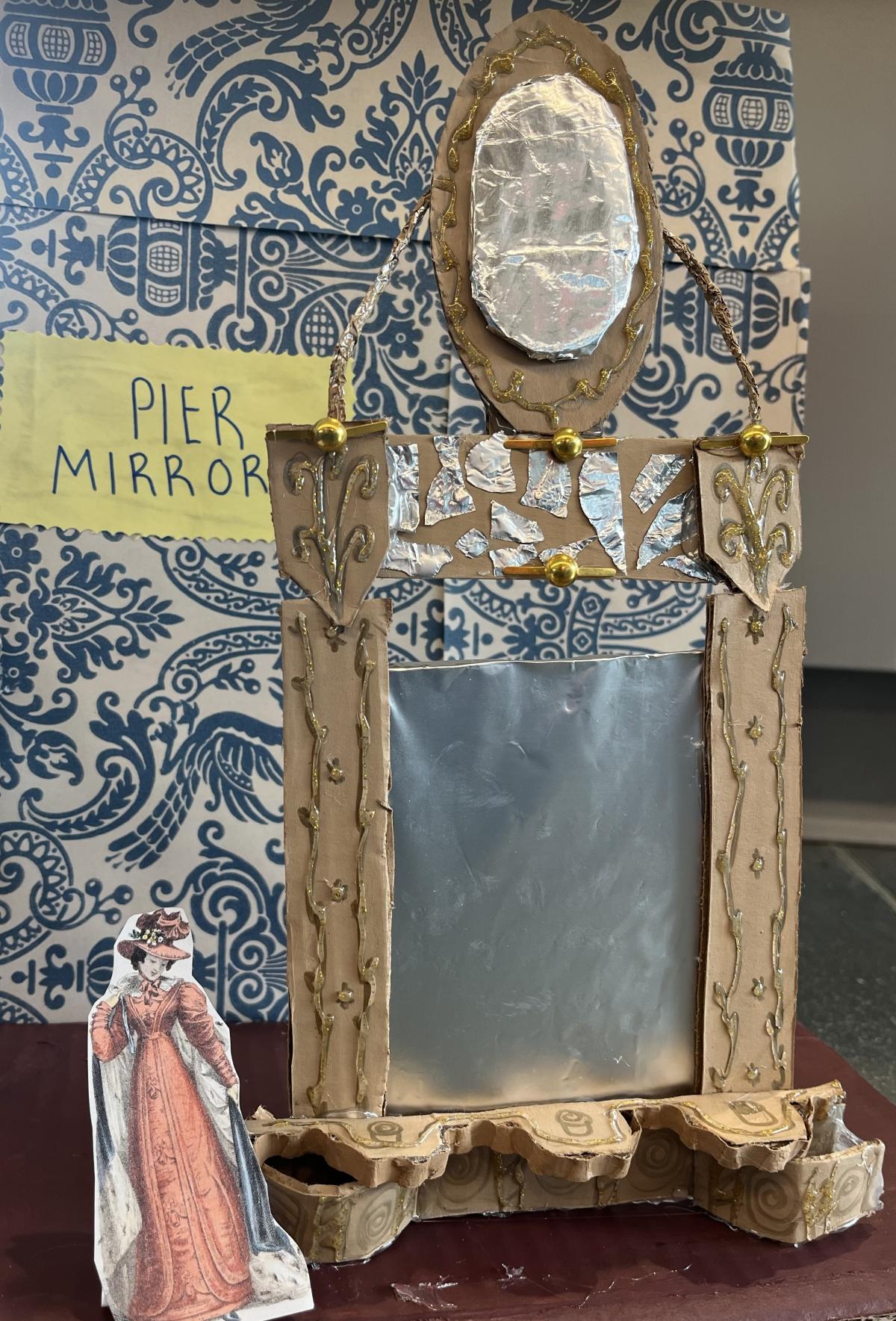
"Booth Creation: Reproduction of Charles M'Lean's 'Ornamental Console Table and Looking Glass,'" 2025, Margot Kelly. This model is based on a mirror by Charles M’Lean displayed in the original Great Exhibition of 1851. Constructed of cardboard, the mirror is painted gold to give a gilded appearance. Additional gold detailing is meant to resemble the intricate paneling and embellishments of the original item. The model is also designed to imitate the size of M’Lean’s product. Victorian characters were included in prints for size, emphasizing the tall height of the original mirror.
"Ornamented Console Table and Looking Glass," 1851, Charles M'Lean, Manufacturer, in The Official Descriptive and Illustrated Catalogue of the Great Exhibition of the Works of Industry of all Nations, Class 26, “Furniture, Upholstery, Paper Hangings, Papier Maché, and Japanned Goods” (volume 2, section 3), pp. 758-59. This mirror is the original that the hand-made booth is based upon. The table and framed mirror appeared on display in London during the Great Exhibition of 1851. While there are no details regarding the materials used in the making of this mirror, the piece is ostentatious and appears to be the product of fine materials. This is also an example of how large looking glasses typically doubled as more than a mirror--the sideboard elevates the piece’s status to furniture. The detailing on the mirror’s frame and sideboard is art in itself, and images of angels promote ideations of worship.
This item was manufactured to be worthy of the Great Exhibition. Note the mirror’s size; two individuals who admire the mirror barely reach the base of the reflective material. It must have been quite the display during the exhibition!
"Mirror in Carved Frame," 1851, Samuel Lecand, Designer and Manufacturer, in The Official Descriptive and Illustrated Catalogue of the Great Exhibition of the Works of Industry of all Nations, Class 26, “Furniture, Upholstery, Paper Hangings, Papier Maché, and Japanned Goods” (volume 2, section 3), p. 749. This looking glass was also on display during the Great Exhibition. As stated in the Exhibition catalogue, the piece is "carved in American pine and limetree, and double gilt in mat and burnished gold; with silvered plate-glass. The top of table is of statuary marble." The elaborate materials and rich design are "in the style of Louis XIV," further evidenced by the grandiose size of the object.
The placement of the looking glass in the exhibition would have reflected the event, doubling its visual presence and ultimately enhancing the extravagance of the Great Exhibition
“Carved Sideboard of English Walnut, and Chairs of Unique Design,” 1851, W. J R. and E. Hunter, in The Official Descriptive and Illustrated Catalogue of the Great Exhibition of the Works of Industry of all Nations, Class 26, “Furniture, Upholstery, Paper Hangings, Papier Maché, and Japanned Goods” (volume 2, section 3), p. 751. An additional mirror displayed in the Great Exhibition, this piece is featured as a sideboard accompanied by chairs. Thus, the mirror itself was not the sole item on display but accompanied by an entire sitting room or parlor scene. The sideboard and frame are constructed from English walnut, and designs of flowers, cornucopias, and dolphins are carved into them. The mirror itself is framed by elaborate details, and the center features “the head of Bachus,” as described within the catalogue. Bacchus, the Roman god of Wine, signals art and revelry.
This presentation combines both mirror and furniture to resemble a wealthy home interior. The exhibition description and catalogue caption explicitly note the “unique design” of this display. This comment contributes to the narrative that the homes of wealthy Victorians and the items of the Great Exhibition were a display of ornamentation with the intention of producing awe and admiration among visitors and viewers of the catalogue.
"Pier Looking Glass," 1853, Gift of Mrs. Frederick Wildman to the Metropolitan Museum of Art. The fifth image displays a pier looking glass held by the Metropolitan Museum of Art. It is framed by wood, marble, and cast iron. It is dated 1853 and was held by the Richards family of Massachusetts until it was gifted to the museum in 1964.
Though this mirror is not attached to additional furniture, such as a sideboard, it still holds an air of finery and exquisiteness on its own. The manufacturer allowed for detail in the thin framing of the item. Additionally, this mirror is included here with the intention of expanding the collection internationally, such that the influence of Victorian aesthetic in looking glasses was not halted by the geographic boundaries of Great Britain but extended to makers overseas.
Decorative Gilt Entryway Pier Mirror, circa late Nineteenth Century, Courtesy of the Collection of Catherine J. Golden. The final image shows a pier mirror that stands at 9 feet tall and 2 feet wide. Originally from Saratoga Springs, NY, it was purchased by Catherine J. Golden at an antique store in Ballston Spa, NY. The shelving at the base of the mirror holds antique bird statues, Golden family heirlooms.
Though originally items of the 1800s, looking glasses as furniture are still in circulation among antique stores and collectors, passed down as heirlooms through generations or available to be purchased by individuals interested in Victorian aesthetics. Perhaps when a viewer stands in front of a pier mirror, they will be able to imagine the glory of the Great Exhibition and see it reflected behind them through the mirror’s glass.