


INTRODUCTION
- Support for chattel slavery continues even past abolition. The support remains hidden, reduced to dog whistles recognized only by those who share like minded ignorant ideals. This collection highlights four political cartoons published in favor of slavery and seeks to make our viewers aware of the rhetoric and reasons used to justify chattel slavery. These images depict the victimization of white people through the demonization of black people, as well as revisionist stances and misinformation not unlike that found in Stephen Foster's The Old Folks At Home.
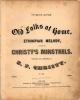
- The Old Folks At Home was a minstril song written as a comission for Christy's Minstrels. Minstrel shows themselves feature offensive, over-the-top caricatures of black people, with white people painting their faces black, their lips pink, and would talk in a stereotypically offensive southern twang. The lyrics of The Old Folks At Home are literally written to be pronounced with that same twang. The song features lyrics that depict black people as beenfitting from slavery. The singer laments his freedom and longs to return to his shackles. The entirity of the second verse consists of lyrics talking about the "good" memories the singer has from their enslavement, such as playing with other slaves. The singer even directly references his desire for servitude by expressing his desire to return to his "childhood station." It's pro-slavery propaganda directly stating that black people loved and felt gifted because of their enslavement.
- In some of our images, you can see the offensive and stereotypically racist depictions of black people, done so to tear them down and to build up white people as saviors of the uncivilized. Depictions of black people included over-the-top physical characteristics and speech bubbles written in the style of an offensive and grammatically incorrect southern twang. These were used to display black people as less intelligent beings who needed to be saved by the white slavers who had taken them from their homes. The implication that these people benefitted from their enslavement is abhorrent.
- Familiarizing yourself with this kind of language and imagery is important in a world with ever-dividing discourse fueled by hate, bigotry and white supremacy. Being able to recognize the talking points and understand what is actually being said through the dog whistles can help you combat the hatred that seeks to set our world back to a lesser, more ignorant time.
IMAGES IN THE SERIES
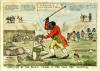
FIGURE 1. Dent, W. (1789) Abolition of the Slave Trade, or the Man the Master [Political Cartoon]
This photo depicts an angry response to the British abolitionist movement. The foreground depicts a comically evil looking black man dressed in a red lace coat, presumably a British military coat, holding a stick and beating a naked white man cowering on his knees. The background depicts two scenes: one where white people are forced to work and live in straw houses, and the other sees similarly dressed, aristocratic black men enjoying a banquet. The photo attempts to satirize the abolitionist movement by falsely claiming this to be the goal of the movement as if to say, "If we abolish slavery, then THEY will enalaved US!" This image is ubndoubtedly pro-slavery and uses the "us or them" argument to justify their mindset. It's a false dillemma fallacy because, if freed, enslaved people wouldn't hold any political or systemic power and it wasn't the goal of the abolitionist movement to enslave anyone, no matter the skin color. Like The Old Folks At Home, this image seeks to spread misinformation about the enslaved and how they view enslavement. It suggests that they desire to turn the tables on their oppressors and therefore they should be kept enslaved.
FIGURE 2. (1856) The Dis-United States- A Black Owned Business. Granger Historical Picture Archive [Political Cartoon]
This photo depicts an anti-abolitionist argument from the United States. This specific image is the only image in the gallery to depict slavery not directly influenced by Britain directly. The photo predates the start of the American Civil War and was no doubt inspired by the growing discourse between the northern and southern regions. The photo itself depicts an offensive caricature of an enslaved man ripping a map of the United States in half, separating the north and the south. On the south side, a "humble" farmer looks at the map in confusion while on the north, a man dressed in a fancy black coat and hat looks on curiously. It's as if the image is trying to build support for the southern cause by contrasting the simple small farm-owner with the rich and oppressive north attempting to abolish slavery. In the middle of it all is the enslaved who are simply wishing for basic human rights and decency. This piece refues to pin the blame on legislators and those who hold actual political power. It's the demonization of enslaved men and women, the mischaracterization of black people as agents of chaos, and the misplacement of blame that truly shows how fragile this sentiment is. It was not the enslaved that were tearing the nation apart, but instead those who wanted to treat human beings like cattel. It's important to take notice of the mischaracterization and how it conflicts with the ideas presented in The Old Folks at Home. It would seem as though the pro-slavery argument has conflicting views. Some say the enslaved loved their imprisonment while others believed that the enslaved wished to create a divide in which the roles are reversed. The inconsistencies in beliefs weakens the overall argument of those who are pro-slavery.
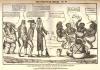
FIGURE 3. Grant, C, J. Slave Emancipation; Or, John Bull Gulled Out Of Twenty Millions [Political Cartoon]
This image depicts the emancipation of British slaves by John Bull, the personification of Britain not unlike America's own Uncle Sam. John Bull is surrounded by other lavishly-dressed individuals who each comment on the state of the enslaved. One indivual makes it a point to describe the slaes as "half starved" which is meant to be an ironic statement as the slaves depicted in the image are all seemingly overweight. The black men meet their emancipation with indifference and are protrayed as being almost comically ignorant. One claims that they love their imprisonmentTheir speech is written with the same southern twang employed by Stephen Foster. This image is a picture-perfect representation of mistrelsy. The rhetoric and artistic strategies used in this image is almost identical to that featured in The Old Folks At Home.
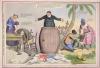
FIGURE 4. (1832) Freedom [Political Cartoon]
Our final image depicts two families, one enslaved in the Carribean, another in Britain. the image propagates slaves as living carefree and comfortable lives while the white folks in Britain are left to starve. The picture is seemingly both anti-abolition but also pro-worker, blaming the oppressed from across the ocean rather than the people who put these systems in place, much like our previous entry on The Dis-United States - A Black-Owned Business. The black family has been drawn with physical characteristics associated with minstrelsy such as the big, pink lips. Once again the artist has chosen to use offensive spelling as a way to mock the speech patterns of the enslaved. The aligns with Foster's belief that the enslaved were better off because of their enslavement. We know that not to be the case thanks to the pro-aboltionist pieces my partners have decided to focus on.