


The first stop on the tour focuses on the eldest of the Lorimer sisters, Fanny. Fanny is often described as the most traditional out of the sisters. In the novel, there is a strong sense of a conflict between the concept of a “new woman” and an “old woman”. Fanny, as a character, represents the classic, traditional “old woman” stereotype of this time period. It is noted that, “Frances Lorimer was behind the age. She was an anachronism, belonging by rights to the period when young ladies played the harp, wore ringlets, and went into hysterics.” (Levy ch. I). This old woman role that Fanny portrayed is especially highlighted when she is the first of the sisters to get married, fulfilling the role of a wife that a woman of that time was supposed to adopt. She and her husband end up settling down in a quaint house in Notting Hill.
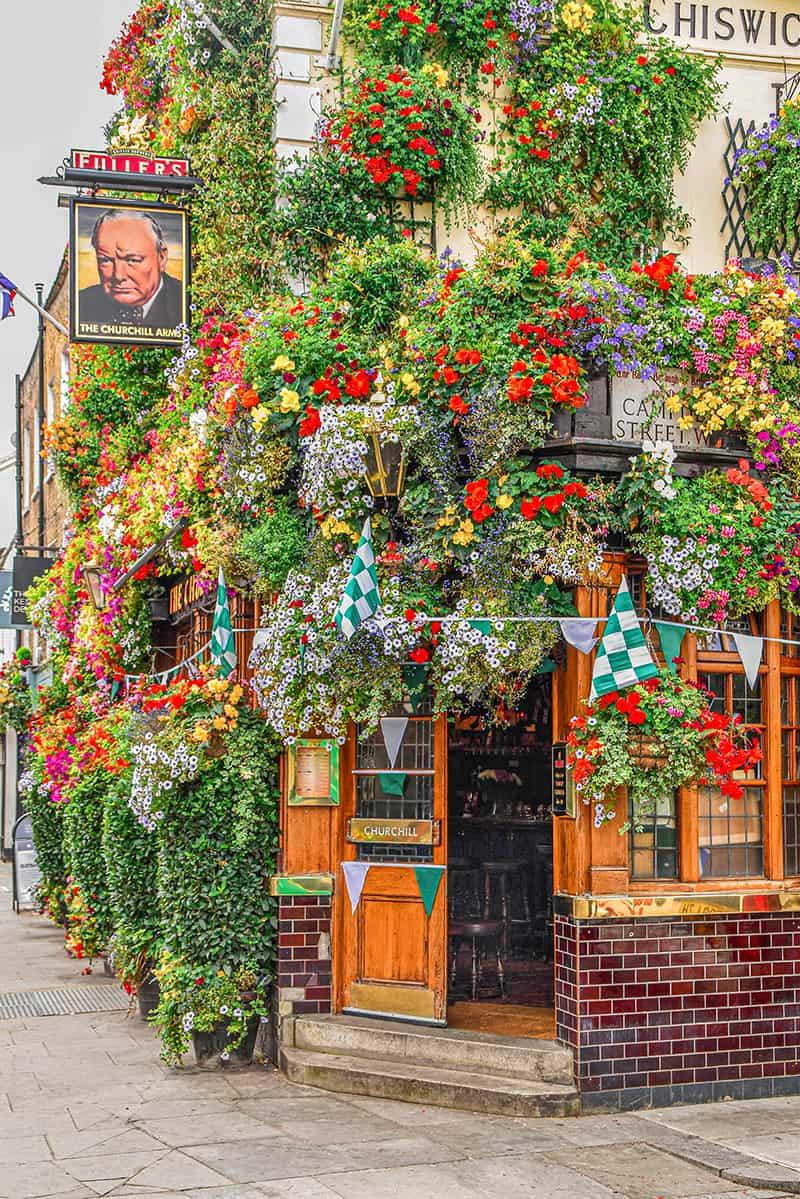
This leads to the first location, Notting Hill. Notting Hill is located in a district of West London. Throughout history, Notting Hill has been known for its stark contrast between the upper and lower classes. In the 1800s, the district became divided. It is said that, “the lower slopes of Notting Hill together with neighboring North Kensington were occupied predominantly by the working class in contrast to the residents at the top of the hill.” (Rogowski). Using the novel as a guide, it is evident to the readers that Fanny and her husband lived in the lower, working class sect of Notting Hill. Her house is described as, “A snug and hideous little house at Notting Hill.” (Levy ch. XVII).
Notting Hill has greatly evolved over the course of time. The disparity between the working and upper class continued until World War II when Notting Hill fell victim to attack. There were bombs littering the streets, and many streets were left uninhabitable. After the war, thousands attempted to immigrate to Notting Hill with the promise of a better life, but were instead greeted with unlivable conditions and meaningless jobs. As people continued to migrate into Notting Hill, racial tensions grew, and the town began to crumble. Luckily, by the late 1950s, Notting Hill experienced a “cleaning out” in which many of the unlivable buildings were demolished and turned into elevated motorways. (Rogowski). This led to the modernization of Notting Hill, but financial disparities in this district still continue today.
Levy choosing an area known for such financial disparity for Fanny to reside in was not a coincidence. Throughout the novel, the Lorimer sisters struggled with constantly having to struggle to support themselves financially. They are often conflicted with the upper class characters such as Constance Devonshire. Having Fanny end up in the lower area of Notting Hill shows that although she was able to do the “old woman” task of getting married, she still is a victim of poverty and will never fit into the upper class society.
Works Cited
“10 Best Notting Hill Hidden Gems.” Luxury Columnist, 28 Dec. 2021, https://luxurycolumnist.com/notting-hill-hidden-gems/.
Driggs, Sarah. “8 Reasons Notting Hill Is London's Most Charming Neighborhood.” Orbitz, 6 Oct. 2017, https://www.orbitz.com/blog/2016/12/8-reasons-notting-hill-londons-char…;
Levy, Amy. The Romance of a Shop. Boston, The Algonquin Press, 1889.
“Notting Hill Gate, London.” The Coronet Theatre, 103 - 111 Notting Hill Gate, London, http://www.arthurlloyd.co.uk/CoronetTheatreNottingHillGate.htm.
Rogowski, Robert. “A Brief History of Notting Hill.” A Brief History of Notting Hill, The History Press, https://www.thehistorypress.co.uk/articles/a-brief-history-of-notting-h…;