







With the popularity of eBooks and Kindles, do you fear book covers are becoming extinct? Tim Kreider laments in “The Decline and Fall of the Book Cover” (published in The New Yorker, July 16, 2013), “soon enough, book covers, like album covers before them—like albums themselves, or sheet music for popular songs, or dance cards—will be a quaint, old-timey thing you have to explain to the uninterested young” (p. 4). However, Kreider qualifies in this same article, “For some reason children’s books, Y.A. literature, and genre fiction still have license to beguile their readers with gorgeous cover illustrations, but mature readers aren’t supposed to require such enticements” (p. 3). This assignment invites you to design one such “beguiling” book cover for one of the three Brontë works we are reading this semester—Jane Eyre, Wuthering Heights, or The Tenant of Wildfell Hall. In designing your cover, also consider novelist John Updike’s advice in “Deceptively Conceptual: Books and Their Covers” (New Yorker, October 10, 2005): “A good cover should be a bit recessive in its art, leading us past the cover into the book itself” (p. 2). The following covers created by students in EN 248 on "The Brontës" lead us “into the book itself” by highlighting symbols, themes, and characters essential to Jane Eyre.
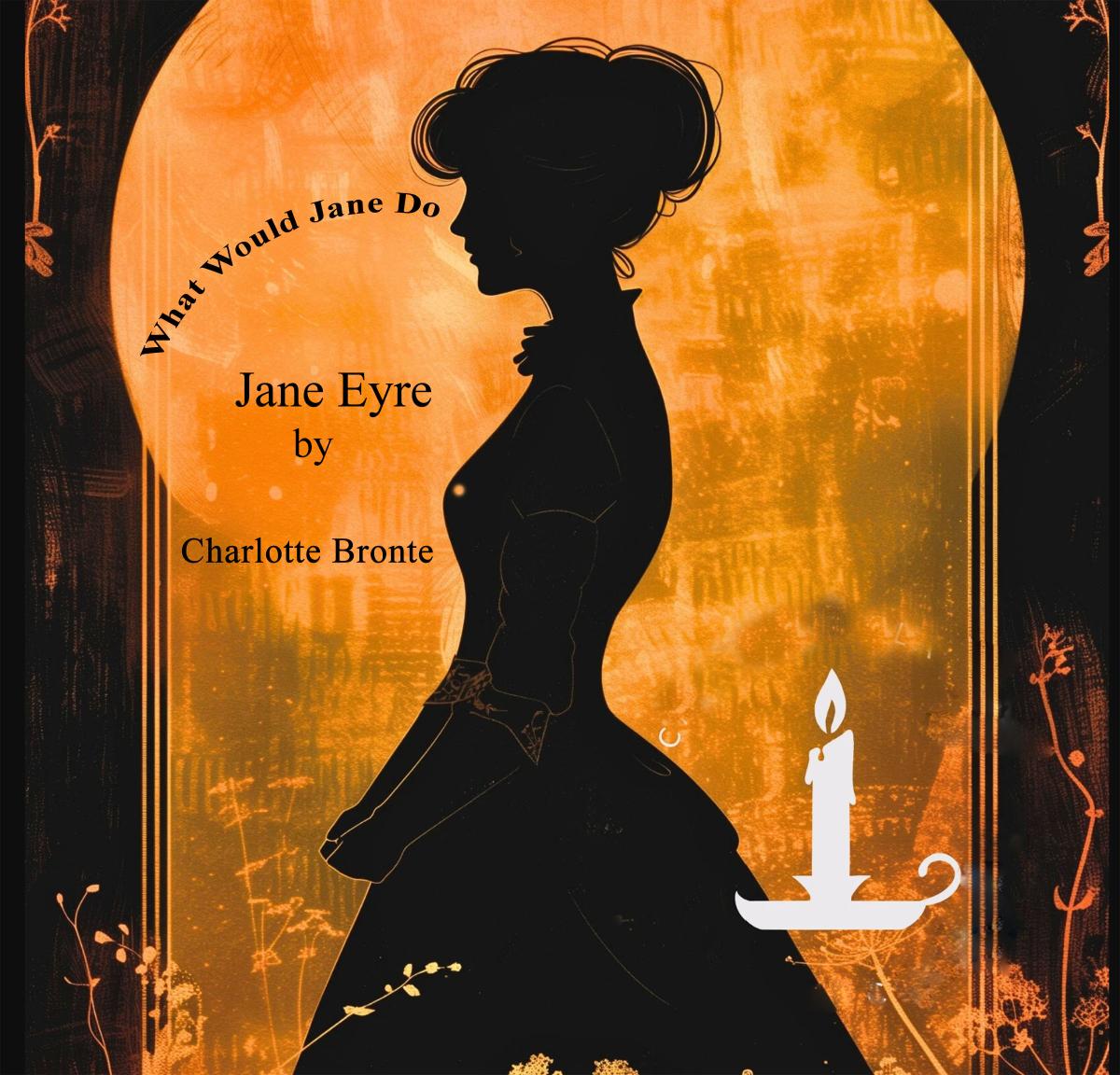
"What Would Jane Do?," Book Cover for Jane Eyre Created by Susan Hahm, 2026. I designed my cover as a riff on those bumper stickers that state, "What Would Jesus Do"? I substituted Jane’s name. The cover encourages readers to consider what choices Jane Eyre has available to her as a character in a nineteenth-century novel. What decisions might Jane make? Those choices could require Charlotte B. to posthumously re-write her story to fit the new conclusions!
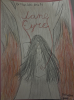
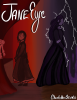
"Behind the Curtain," Book Cover for Jane Eyre Created by Jadyn Heselton, 2026. In the Victorian era, women were expected to be quiet, obedient, and morally pure. Passion, anger, and independence were qualities often discouraged or punished. Against this restrictive backdrop, Charlotte Brontë published Jane Eyre (1847), a novel that challenged traditional expectations by presenting a heroine who insists on emotional and moral autonomy. Although the novel is often read as a romance, it is equally a psychological exploration of repression, identity, and the consequences of suppressed passion. My book cover design highlights this deeper tension by centering Jane and Bertha--one shadowed and blue, the other fiery and orange--facing each other in a mirror framed by deep red curtains. Through color symbolism and mirrored imagery, I am arguing that Bertha Mason reflects Jane’s suppressed anger and desire and that red represents both trauma and transformation throughout the novel.
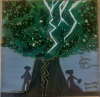
"Love Struck by Lightning," Book Cover for Jane Eyre Created by Hallie Pomerantz, 2026. Literature often turns to nature to convey what human connection cannot. In Charlotte Brontë’s Jane Eyre (1847), the chestnut tree serves as more than a mere background element; it symbolizes endurance. The tree itself remains central throughout Jane and Rochester’s love story, serving as a landmark throughout intimate moments. In chapter 23 of Jane Eyre, readers are first introduced to the imagery of the chestnut tree as Rochester proposes to Jane at Thornfield. The large green tree serves as a shelter where Jane and Rochester can share their love for one another, acting as a whole entity that shields them from the real world. For my book cover, I depict a vibrant, large chestnut tree split in two by a lightning strike to emphasize that Jane Eyre is not merely about love. Rather, it is a novel about love fractured by reality and truth.
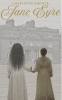
"Two Women, One House: Duality, Confinement, and Liberation in Jane Eyre, Book Cover for Jane Eyre Created by Jordan Kempner, 2026. Most reviews of Charlotte Brontë’s most famous novel, Jane Eyre (1847), describe it as a love story: a plain, lowly governess wins the heart of her brooding employer and, after many complications and much yearning, they finally marry. However, something far more interesting and unsettling lies beneath the surface of Jane and Mr. Rochester’s love story: two women trapped in the same house, held captive by the same man, and denied the same freedoms.My book cover focuses on Jane and Bertha, bringing them to the forefront of the story. I depict them from behind, mirroring each other, two sides of the same coin. Rather than depicting Jane alone as the novel’s singular heroine, my cover illustrates that Jane Eyre is fundamentally a story about doubling, confinement, and twhat it means for a woman to be free. Jane cannot be fully understood without Bertha beside her.
“Burning Books: Jane Eyre and Flames of Passion,” Book Cover for Jane Eyre Created by Nicolette Kirwan, 2026. Even to this day, Charlotte Brontë’s Jane Eyre (1847) is one of the most widely read and referenced works of literature by a Brontë sister. Fire is a central theme of this work. The fiery passions of Jane, Mr. Rochester, and Bertha, combined with physical flames throughout the novel, convey a strong message about the rage, jealousy, and fire within the novel. The main flame at the center er warns the reader that the story they are about to read is truly fiery and riveting. This flame works with and contrasts the blood-red background of the cover. The dark red conveys the darkness, mystery, and shame that the novel evokes. Dually, this red is reminiscent of the red room, widely known as one of Jane’s most impactful life events as the fear, anger, and shame she feels there light a metaphorical fire within her that will continue to guide her through the novel. Nearly every aspect of the novel fits with the symbol of fire, which is both a cornerstone of the novel’s themes and a recognizable symbol in popular culture, allowing this book cover to appeal to past or present readers of the novel.
"From Altar to Attic: The Madness of Jane Eyre and Bertha Mason," Book Cover for Jane Eyre Created by Brianna Sponheimer, 2026. Jane Eyre’s infamous madwoman in the attic, Bertha Mason, is generally regarded as an
obstacle obstructing Rochester and Jane’s happiness, but she and Jane are more similar than they appear on the surface, which forms the focus of my book cover. Besides their shared connection with Rochester, Jane is prone to episodes of fiery emotion that bear a striking resemblance to Bertha’s madness. My cover urges readers to think of Bertha as a foil for Jane and to wonder why a passionate Jane is a heroine and Bertha, driven insane, is in need of containment.
"A Tale of Two Women: Jane Eyre and Bertha Mason as One in the Same," Book Cover for Jane Eyre Created by Audrey Tignor, 2026. In Charlotte Brontë’s Jane Eyre, the titular character and the character of Bertha Mason, the “madwoman in the attic”, are often placed at odds with each other; the refined and independent Jane is juxtaposed with the wild and “hysterical” Bertha. However, at a closer glance, Bertha actually holds a mirror up to Jane and her decision to marry Rochester after Bertha’s death. When tasked to create a book cover, I knew that I wanted to involve their parallel. My book cover aims to represent the parallels between Bertha Mason and Jane Eyre through a silhouettes, a match placed between them, and bird imagery.
"Visualizing Complexity: Literal and Allegorical Images of Jane Eyre in Charlotte Brontë’s 1847 novel Jane Eyre," Book Cover Created by Alyssa Hubbs, 2026. Jane Eyre has lived a long life in the public eye with numerous reprints and covers throughout its time as a literary classic. The novel’s physical form still calls for visual representation, and as “book design is increasingly a matter of fashion—that is, of attention-getting” (Updike 2), it is important to balance intrigue with authenticity. With these principles in mind, my redesigned cover includes the lightning-struck chestnut tree, a door, pen and ink, a Bible, a fireplace, candles, curtains, and a caged bird within a radiating composition to pique curiosity and communicate key elements of Jane Eyre's journey including her discovery of Bertha, who represents what Jane could become.
"Windows into the Soul: The Journeys of Jane’s Desires and Passions in Charlotte Brontë’s Jane Eyre," Book Cover Created by Maggie Hogan, 2026. For every prettily designed cover of Jane Eyre, there are 20 other versions that feature a younger woman, who the reader could assume to be the main character, but such covers are devoid of any context of what the book is about. By using the symbolism of windows and fires within Jane Eyre, my book cover emphasizes Jane’s connection to her imagination and her discovery of her own desires.
"A Book Cover is Meant to be Judged: The Gothic in Charlotte Brontë’s Jane Eyre," Book Cover Created by Molly Danko, 2026. In my interpretation of Jane Eyre, I employ Fritz Eichenberg’s 1943 woodcut illustration of Jane and Rochester embracing alongside Gothic imagery and recurring symbols–fire, books, and a spectral bride–to encapsulate the novel’s central tensions. A deep red backdrop evokes blood, passion, and destruction, while flames curl around Eichenberg’s dramatic rendering of the couple, casting their intimacy in an ambiguous light that evokes a love on the brink of ruin. Opposite a ghostly woman in white, turned away and faceless, produces a chilling stillness that mirrors the secrecy and buried histories permeating the novel. Together, these elements that intelligent Jane must navigate create a distinctly Gothic atmosphere defined by emotional extremity, confinement, and the persistent allusion to the supernatural--that something unseen lingers just beyond the frame.
"Braving Isolation & Succumbing to Conformity in Charlotte Brontë’s Jane Eyre," Book Cover Created by Em Williams, 2026. Charlotte Brontë’s Jane Eyre (1847) unfolds from the autobiographical perspective of its titular character. A mature Jane recounts her isolated, tumultuous childhood and her adulthood, leading to romance, self-discovery, and regrettable conformity. Despite Jane being a free, defiant spirit in her youth, the standards of Victorian society force her to acquiesce to the constraints imposed on a woman with no social standing. For my book cover, I illustrate this transformation through two famous symbols in the novel: the red-room and the lightning struck chestnut tree. The former represents Jane’s isolation and demonization by her aunt, Mrs. Reed, and Lowood’s director, Mr. Brocklehurst; the latter
stands for Jane’s choice to conform to society, temporarily forsaking happiness with Mr. Rochester—still married to the madwoman in the attic, Bertha Mason. Jane’s wit and individuality never waver, and she does find happiness with a widowed Rochester in the end. The bright red background portion of the book cover representing Jane’s youth transforms into a dull-gray and purple background, signifying her subdued personality as she ages. The lightning that strikes down the chestnut tree signals Jane’s ascent into adulthood, extinguishing the fiery personality that she nurtures in her childhood.
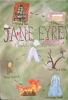
"Jane Eyre: A Journey Through Objects," Book Cover Created by Tess Overstreet, 2026. Jane Eyre (1847), Charlotte Brontë’s most well-known novel, is a tale of the journey and growth of the book’s namesake, Jane. Alone in the world, the orphaned Jane travels from place to place, finding her family, her friends, and most importantly, herself. While she faces hardship, Jane proves time and time again that she is determined, imaginative, and does things her way. As Jane Eyre is a novel concerned with journeys, I wanted to honor that aspect of the story with my design of the book cover. The cover features a chronological map of symbolic objects in Jane Eyre. Between all of these objects, I’ve included a dotted line and the names of key places to show the sense of progression and exploration Jane embodies throughout the novel. I chose objects that don’t spoil the book, but reveal greater meaning for readers as they progress through the book. As Updike says in his article about the importance of book covers, “[a]ny artistic creation collaborates with the viewer, reader, or listener” (Updike 2005). By including a map of important elements in Jane Eyre’s journey, I allow the reader to follow Jane's journey to discover the cover art's significance.
"The Outsiders Reflected on a Cover," Book Cover of Jane Eyre Created by Tessa Bigelow, 2026. Charlotte Brontë’s Jane Eyre (1847) focuses on racialized and class-based discrimination through physical and intellectual slavery. The Brontë sisters, particularly Charlotte, were aware of England’s involvement in racial capitalism and oppression. Susan L. Meyer in “Colonialism and the Figurative Strategy of ‘Jane Eyre’” brings in contextual evidence, writing that “in
[Brontë’s] childhood and adolescence in the late 1820s and ‘30s, Charlotte Brontë wrote hundreds of pages of fiction set in an imaginary British colony in Africa. . . . she makes reference to the Ashanti Wars of the 1820s… other aspects of Brontë's juvenile stories suggest her knowledge of events in the British West Indies as well” (249). In the wake of ebooks and Kindles, it has never been more necessary for a book cover to reflect the essence of the novel. With Charlotte’s awareness and discomfort with racial and class based discrimination, I have created a book cover which reflects the two foils of oppression in her novel: Jane Eyre and Bertha Mason. These two characters experience similar treatment as outsiders—to varying degrees, they are simply locked away. My book cover places Jane in the Red Room and Bertha locked in the attic of Thornfield Hall as reflected in a mirror to show how both outsiders are connected in their drive to destroy the exclusionary constructs that imprison them in Jane Eyre.