
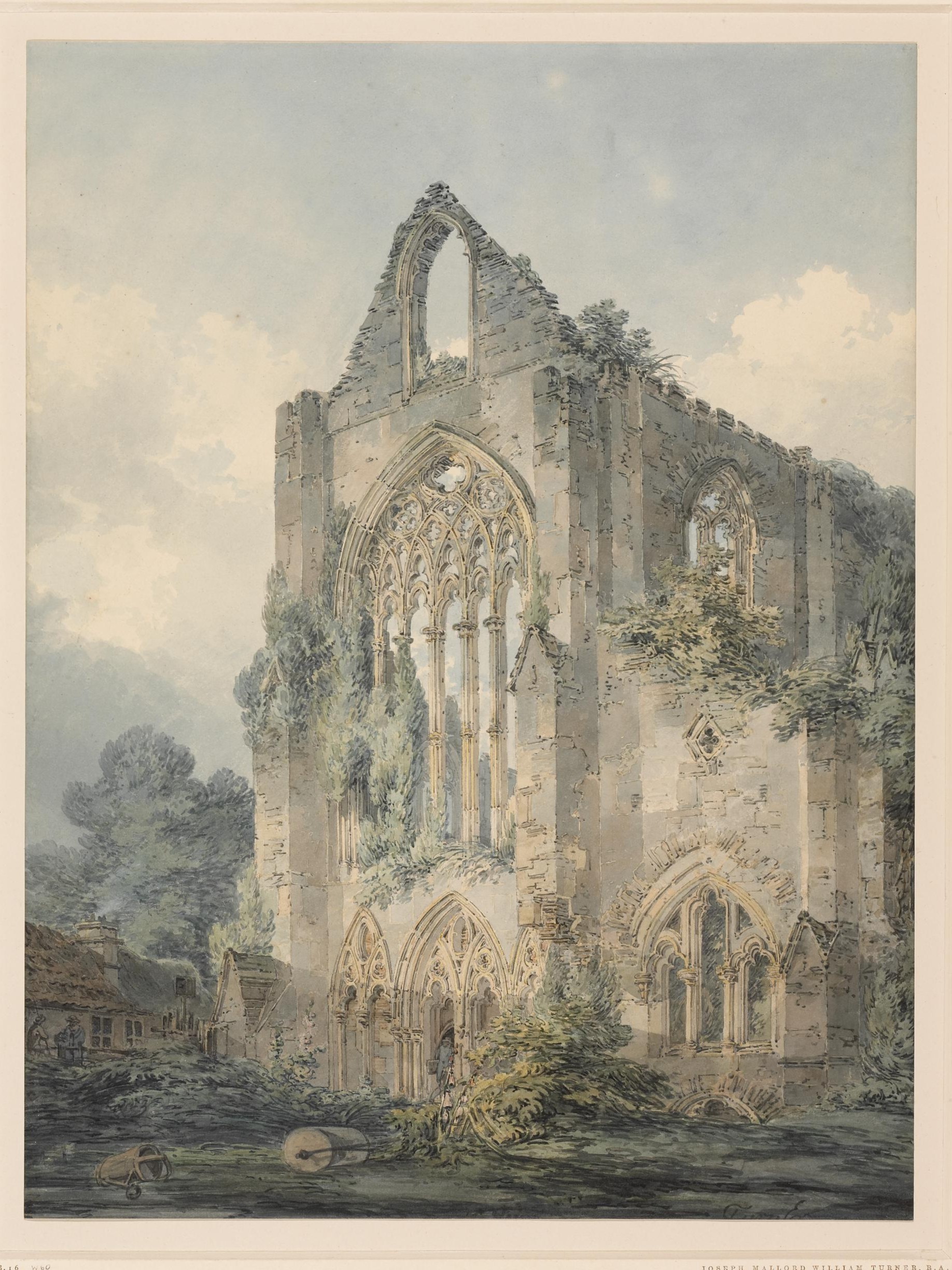
Characteristics of the Picturesque Tour
The Picturesque Tour (1760-1800), a tourism and artistic movement across Britain in the late 18th century, arose as an alternative to international landscape tourism as the country’s borders closed from war with France. During this period, poets and visual artists alike aimed to describe natural landscapes as if they were pictures, focusing more on imaginative details and composition as opposed to associating them with classical tropes. Specific words in poems and artistic techniques in paintings were chosen to describe or illustrate the landscape as a whole composition of parts instead of a mere piece of land.
Furthermore, poetry and paintings idealized the pastoral way of life and viewed it as an escape from typical courtly responsibilities. These tourists, most of whom were coming from the city, viewed the rural landscape as a “Golden Age” in which man and nature lived in harmony.
The Picturesque Tour was also an attempt at establishing British culture as its own; artists slowly moved from incorporating Roman figures and myths in their works as a connection to “high” art to simply illustrating the landscape’s composition for beauty’s sake. Once again, both poets and painters became highly influenced by memory, imagination, and associations between the stunning natural landscapes they were viewing and their feelings during the experience.
The Wye River Tour
The image of the exterior of Tintern Abbey (above) was painted by artist J. M. W. Turner (1775-1851) and is currently housed in the British Museum.
The Wye River served as one of the main attractions for the Picturesque Tour. Along the river was Tintern Abbey, which was a great source of awe and inspiration for each artist that traveled past it. William Gilpin (1724-1804), author of several picturesque guidebooks, initiated this Picturesque tourism movement throughout Britain with his work Observations on the River Wye…Made in the Summer of the Year 1770 (1782). In his book, he instructed his readers on how to view certain landscapes and scenery as pictures; thus, poets and painters alike could capture a particular moment in time and adequately translate it to their particular medium.
Works Cited
Andrews, Malcolm. The Search for the Picturesque: Landscape Aesthetics and Tourism in Britain, 1760-1800. Scolar, 1989.
Hussey, Christopher. The Picturesque: Studies in a Point of View. Routledge, 2020.