
Character Commentary
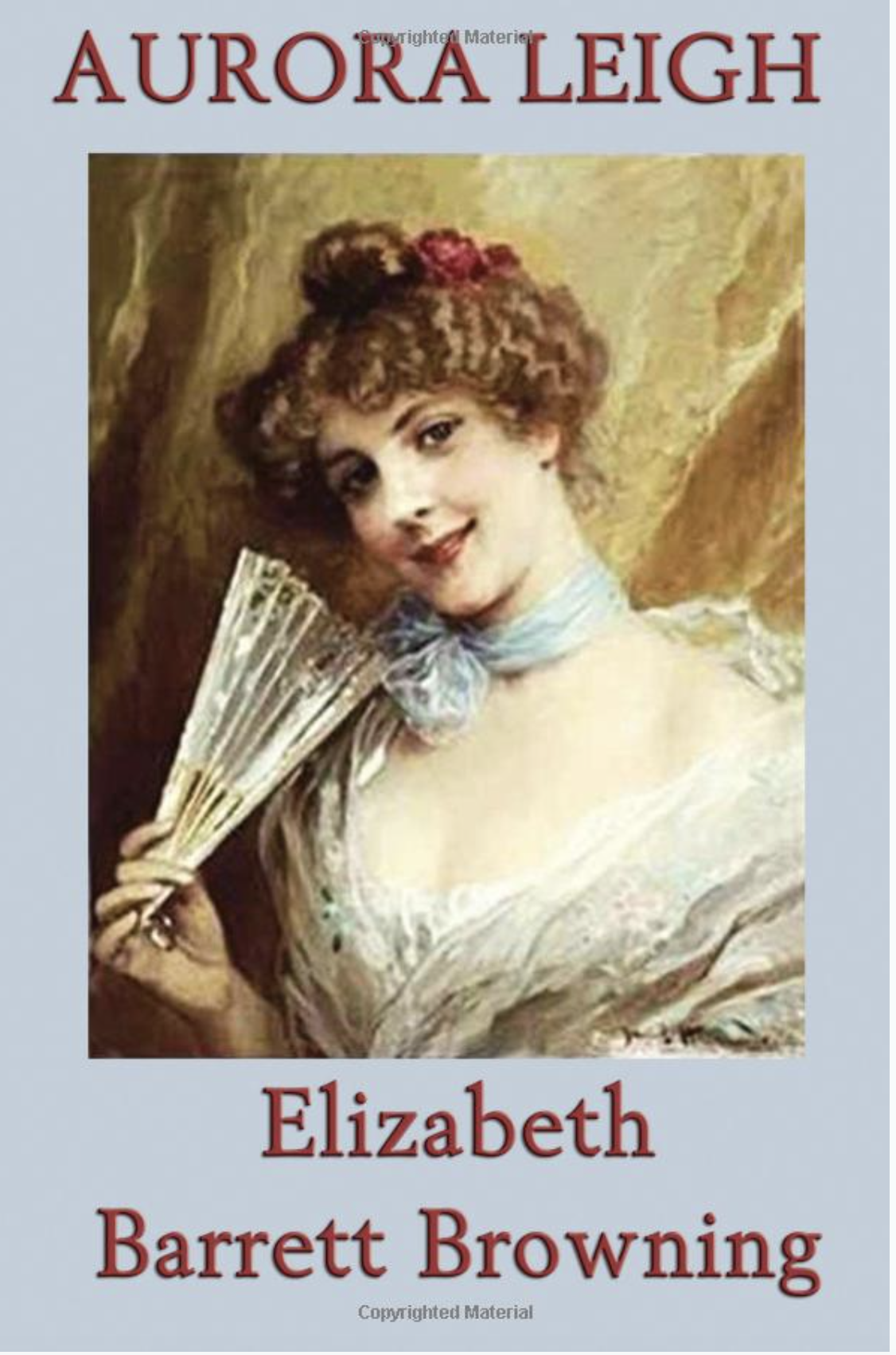
This novel was given to me by the infamous suffragist Millicent Fawcett at a demonstration in London. She told me I reminded her of herself when she was young and inspired to change society for women, and told me that I will do amazing things as long as I don't lose hope. When I got home, I couldn’t stop reading as I was amazed by the powerful writing by Elizabeth Barett Browning. I saw myself in the heroine of the story, Aurora Leigh. She was a strong willed woman who defied the societal norms for women during the Victorian Era. Aurora rejects the ideas of marriage and pursues a career and writing in poetry, even though this was heavily frowned upon. Nights when I couldn’t fall asleep I would think about how Aurora ignored what society said about her and continued to do what she wanted with her life. I decided that from then on, I would be Aurora. I would further promote the “controversial” female ideas and live my life how I want to, and not how society says I should. She rejects those who believe she shouldn’t work by saying “And when people came and said 'you work too much, you are looking ill' I smiled for pity of them who pitied me”.(Browning) I will carry this quote with me when society says I can’t work or be granted the rights us women deserve to have. I was in tears when I finished the ninth book, as it made me remember how I felt as a young girl when I didn’t know a woman could have control over her life. Sometimes I feel as If I can’t be as strong as Aurora, but then I remembered that thousands of women are behind me in the fight to change society for women, regardless of those who look down upon us. If Aurora can do it, then so can I.
Scholar Commentary
The poem-novel Aurora Leigh By Elizabeth Barrett Browning develops the concept of the new women while demonstrating the obstacles that women were faced with in the Victorian Era. Aurora Leigh, who portrays strong independent women in the novel, represents the face of working women during this era. The novel shows the struggles of a woman wanting to pursue a career while dealing with the pressure from society and as well as family. Browning uses her characters as a way to portray different aspects of the Victorian Era. For instance, Aurora represents the new woman ideal, while Lady Waldemar represents the Old Woman ideal, as she is characterized by the traditional victorian sterotype and sexist gender roles. Romney Leigh, Aurora’s love interest, represents the typical victorian man, looking for a woman to marry and start a family. The New Woman has given way to the ideas that are shown in Aurora Leigh as the novel focuses on a woman in the working class wanting to disassociate herself from Victorian society as she attempts to find her way through life independently. (Gelpi) We also see the problems with love, as Aurora discovers that she does want to marry Romney yet she doesn’t want to be grouped in with the stereotypical victorian family. Aurora realizes that she wants to marry and love, but on different terms than those exhibited in a traditional Victorian Marriage. (Gelpi) The New Woman may have had a connection to Aurora as “The New Woman can be hard on man, but it is because she believes in him and loves him. [...] She sees the God in him, and means to banish the brute. (Grand) This relationship demonstrates the similar ideas that women had regarding marriage and gender roles during this progressive era.This approach helps further develop the gender roles and social norms that are presented in Victorian Society while maintaining the overall theme of oppression and feminism.
Citations
Browning, Elizabeth Barrett., and Helene Mercier. Aurora Leigh. Tjeenk Willink, 1906.
Gelpi, Barbara C. “"Aurora Leigh": The Vocation of the Woman Poet.” vol. 19, no. 1, 1981, pp. 35-48, https://www.jstor.org/stable/40003145?seq=9#metadata_info_tab_contents.
Grand, Sarah. The New Woman And The Old. 1898