
From the 16th century to the Slavery Abolition Act in 1834, Great Britain enslaved an estimated 3.1 million Africans and shipped them to areas in Britain and to British colonies in the Americas; especially to Britain's island of Barbados where large sugar plantations were grown and worked by African Salves, commonly under the direction of strict owners. Britain financially relied on the sugar and cotton plantations in Barbados which gave Britain a strong hold on the global trade market and increased economics. As sugar became more popular among the wealthy in Britain and in higher demand across the globe as they knew it, Britain continued to ship slaves to the island so more sugar could be harvested and produced and traded.
The road to freedom for African slaves was a long one. Beginning in the 1770s, more people became aware of the mistreatment of slaves that opposed their Christian views and spoke out against the slave trade and the use of slaves. Namely, "the campaign of [anti-slavery] in Britain was led by signifigant Quaker anti-slavery groups who made public their concerns and brought it to the attention of politicians who were in a position to enact real change" (Brain). One politician that made an initial change for abolition was a judge named Lord Mansfield. Dmla uring a court case in 1772 between a slave, James Somerset, and Charles Stewart, a customs officer, ruled that slaves could no longer be transported to England against their will. Although the verdict of the court case did not abolish slavery in that moment, the verdict grabbed the attention of many in the public which ultimatley initiated an anti-slavery movement being formed in 1783.
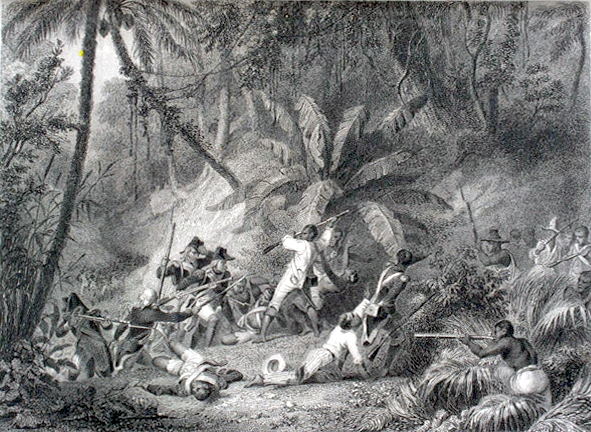
Of these abolitionists was philanthropist and Parliament member, William Wilberforce. His standing in society made him a great influential figure in this movement and an advantage in reaching high political figures that others could not talk to. Several times, Wilberforce gave many speeches to the House of Commons where he condemned the slave trade, but at that point, did not advocate for the total abolition of the slave trade. The push for abolition of slavery continued to gain followers, and throughout the years gained the following of slaves themselves. Slaves pushed for abolition through resistence - resistence to work, to be transported, but the greatest resistence to slavery from the slaves was to run away. There are documents and newspapers that demonstrate the frequency of these revolts from the slaves, with "Missing Slave" fliers and even violent revolts such as the one that happened in Haiti.
Another push for abolition was ignited through William Fox's pamphlet An Address to the People of Great Britian printed in 1791, which condemed the sugar plantations in West Indies. This pamphlet was printed during a time when British citizens showed more of an interest in the boycott of "slave grown sugar" (Holcomb 612). Using graphic imagery to sway more citizens to join the boycott, Fox "claimed that each pound of West Indian sugar contained two ounces of African flesh.. Laborers... murdered so that 'fine ladies and protstitues might be outfitted as they gathered around the British tea table' " (Holcomb 612). The imagery of women using goods from murdered laborers and the metaphorical use of the "British tea table" that represented gender, consumerism, and class, had a distinct impact on consumerism of sugar with the upper class and resulted a successful percentage of boycotters of the upper class in Britain. Abolition of slavery was a topic talked about at every table and throughout the streets, and the impact of boycotts and a call for reformation was powerful.
Parliment felt the pressure from all sides, and passed the Slave Trade Act in 1807. This outlawed the trading of slaves, but not slavery itself. Soon, the Slave Trade Felony Act in 1811 made slavery a felony. Eventually, all of Europe was experiencing major society and moral change through the Enlightenment movement, the French revolution and more reported uprisings and violent revolts led by slaves in Barbados, Demerara and Jamaica. The legislation to abolish slavery was presented to Parliment July 26, 1833, but it wouldn't be until August 1st 1834 when the legislation was fully accepted, enforced, and slavery was abolished. This was because the first bill did not mention the East Indaia Company, Ceylon or Saint Helena, and Great Britain would pay slave owners (20 million pounds collectively) for the loss of slaves as a compensation for them.
Works Cited:
Brain, Jessica. “The Abolition of Slavery In Britain.” Historic UK, Historic UK, 29 Oct. 2021, www.historic-uk.com/HistoryUK/HistoryofBritain/Abolition-Of-Slavery.
Holcomb, Julie L. “Blood-Stained Sugar: Gender, Commerce and the British Slave-Trade Debates.” Slavery & Abolition, vol. 35, no. 4, 2014, pp. 611–28. Crossref, https://doi.org/10.1080/0144039x.2014.927988.
The National Archives. “Slavery and the British Transatlantic Slave Trade.” The National Archives, 27 Apr. 2021, www.nationalarchives.gov.uk/help-with-your-research/research-guides/bri….