
Gallery Introduction
The divide between the top 1% and the 99% was astronomically large back in the Victorian era. Each year the wealth of the richest factory owners was growing rapidly and while their wealth was growing the commoners wasn't. There weren't any minimum wages laws or really any laws in place that were at the benefit of the workers. Just the mere threat of workers rights was an outrage to the owners of these factories. In Charles Dickens book Hard Times there is one such owner, Bounderby, who absolutely hated this idea claims that the workers are basically asking "to be fed on turtle soup and venison with a gold spoon." Needless to say the mindset of the owners when it came to providing decent wages and safe working conditions to their workers wasn't a positive one. In this exhibit you will see the expectations the 1% had for their workers.
When talking about this dichotomy F.M.L. Thompson mentions that "the success of social control in taming and civilizing the working classes in moulds shaped to fit the needs of bourgeois society must take its place alongside the iron disciplines of wage labour, and the coercive power of the state, as a key factor in the shaping of modern society"(189).This just goes to show how widely accepted this treatment of the workers was in the Victorian era.
The images that have been selected all have something to do with just how the 1% was treated and what was expected of them. With these images we can see just how the conditions were when it came to everyday life. We can also see just what families had to do as it was expected of them from society as a whole. Be sure to carefully look at each description as well as some of the finer details of each photo.
Works Cited:
Thompson, F. M. L. “Social Control in Victorian Britain.” The Economic History Review, vol. 34, no. 2, 1981, pp. 189–208. JSTOR, https://doi.org/10.2307/2595241. Accessed 31 Mar. 2024.
Dickens, Charles. Hard Times. Wordsworth Editions, 1995.
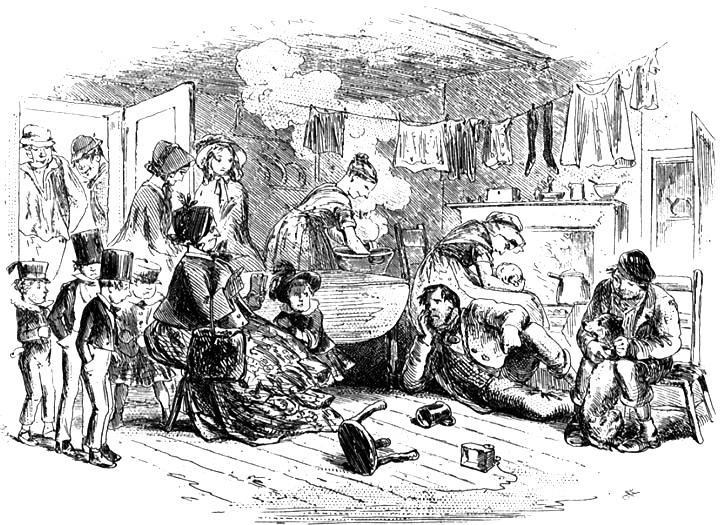
Fig. 1. "The Visit to the Brick-makers in Bleak House," by "Phiz". Courtesy of the Victorian Web,
https://victorianweb.org/art/illustration/socialrealism/3.html
This image comes from another one of Charles Dickens books Bleak House in which one of the characters visits the Brick Makers house. This illustration shows us the living conditions of the lower-class worker and his family. Looking at how small and cramped the room is you see just how little they have. Instead of hanging their clothes outside to dry they instead do it inside by the fire. Noticing the two men on the right we can see that their clothes differ drastically from the men and children on the left. The scene depicted in the book these men are stained with mud and clay. This overcrowded damp room was an all too familiarity for the everyday working class in the Victorian era. Without the means to afford big enough housing oftentimes they would have to cram up into rooms like this usually with many people. The 1% just refusing to pay their workers a decent wage led to this exact scenario all over England.
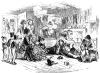
Fig. 2. "Plug Plot Riots in Preston" from The London Illustrated New 20 August 1842. Victorian Web,
https://victorianweb.org/periodicals/iln/38b.html
https://www.liverpoolmuseums.org.uk/plug-riots
Appearing in The Illustrated London News in 1842 this image depicts a very grim scene. Commonly known as the Plug Plot Riots this illustration shows a fight between the factory workers and troops sent in by the government. At the time there were strikes happening all over Britain partly due to an economic depression. The depression came about when wages were reduced but things like food had risen in price. As a result cotton mill owners decided to reduce their workers wages leading the workers to become outraged and start striking. To ensure production fully stopped during their strike the workers pulled the plugs on all machinery hence it became known as the Plug Plot Riots. These strikes really caught not only the owners but the government off guard and to manage the situation sent in troops to arrest the workers. This incident just shows how little society as a whole valued the workers as they felt the need to reduce what little wages these workers had to begin with.
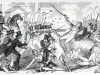
Fig. 3. "Rich and Poor---Plate I.---Playing at Charity." 1866. Courtesy of Cove,
https://editions.covecollective.org/content/rich-and-poor-plate-i-playi…
As you can see, this image depicts a rich family “playing charity” and giving money to the poor. The wealth disparity is really on display looking closer at the image. Looking at the pooper family we can see what looks to be ragged simplistic looking clothes. These clothes have clearly gotten used as they even have patch work done in random spot’s implying that their clothes were full of holes. Turning attention towards the richer family we can immediately see the difference in the clothes they’re wearing. The clothes are a lot cleaner with the girls dresses having big poofy skirts as opposed to the poorer girls' more flat dress. Even the demeanor between the two families is different, with the biggest contrast coming from the fathers. Taking a look at the poorer fathers demeanor we can see he looks a bit ashamed but also grateful as he’s tipping his hat to the rich wife. Looking over at the other father we can see from his standoffish look that he would rather not be there and that this is something he’d rather get over with. This exact scene is something basically wouldn’t happen back in Victorian times as helping the poor was seen as “too much” as like Bounderby said in Hard Times the workers already had everything they needed.
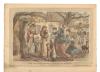
Fig. 4. "Child Pulling Coal in a Mine, "from World History Encyclopedia,
https://www.worldhistory.org/image/17201/child-pulling-coal-in-a-mine/
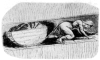
This last image is honestly the most disturbing image in this part of the gallery. This image depicts a small child pulling a tub of coal out of a mine. This was an all to common site in the industrial era until 1842 when the 1842 mines act which restricted women and girls to work underground as well as making the minimum age a boy could work underground age 10. The reason they would use children in the mines was due to their small size they could get into tight shafts and work. Due to wages being so little it forced every member in the family to earn their keep even 5 year old children. This working of children is one of the most diabolical things that the 1% made the workers do. What's even worse was how much they normalized it as well, it really shows how much of a strangle hold they had on people. There was no complaining either as until 1842 laws weren't passed to prevent this so these were the expectation was from the 1% was that you work and that you work hard.