
The Attack on Pearl Harbor
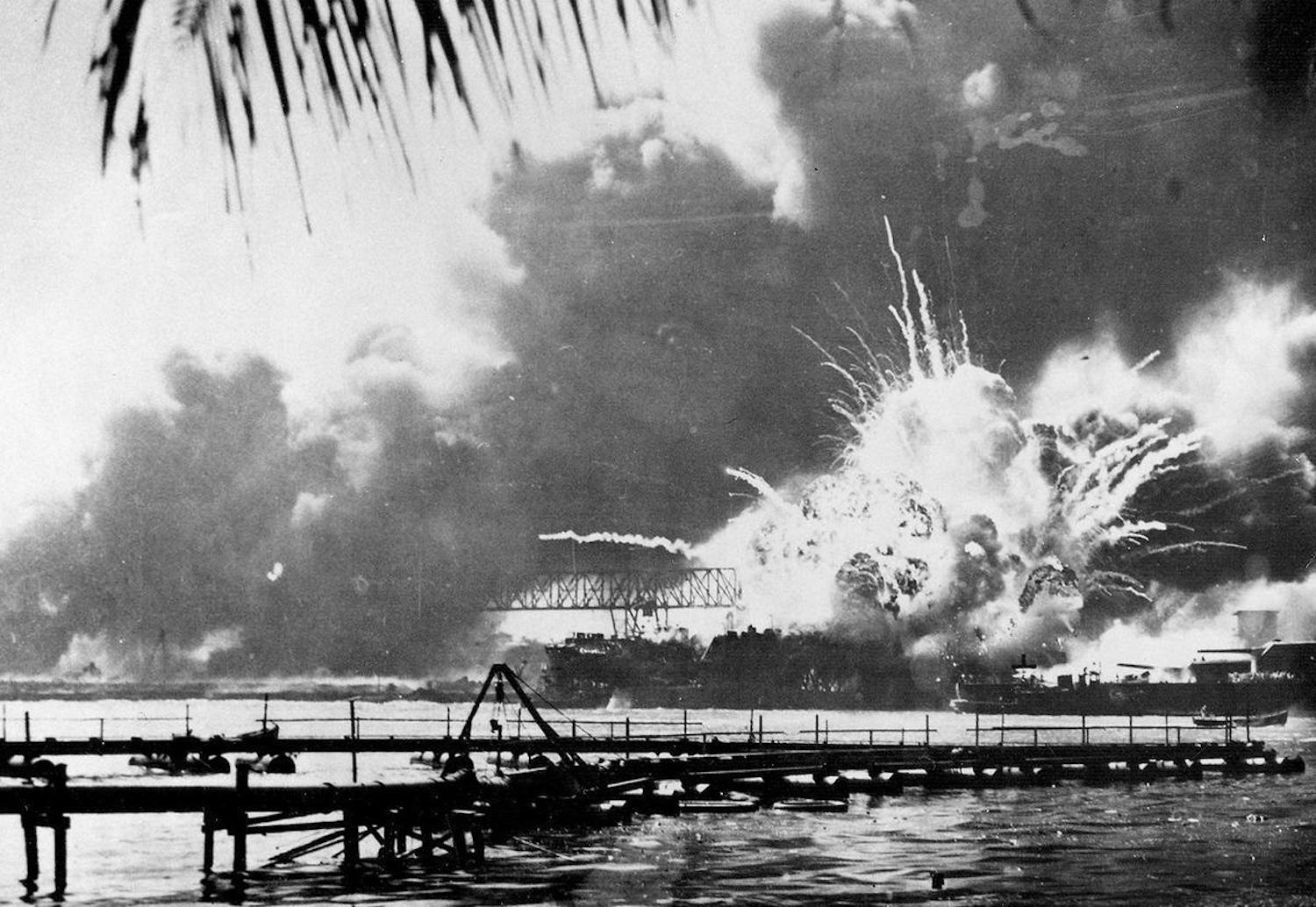
The United States had an official neutral position during the first two years of the war. However, in July of 1941, Roosevelt froze Japanese assets in the United States, ending relations between the two nations. Many histrions believe this was a move that initiated United States involvement. Soon after, in October of 1941, the Lend Lease Bill was passed. This gave the President the power to direct material aid without a break of neutrality. These supports went to the Allies. Roosevelt also previously placed the US Pacific Fleet into Pearl Harbor. These events were perceived as threats by Japan, which provoked an attack. On the seventh of December 1941, Pearl Harbor was bombed by Japan. This was the first attack on American land. This is forever known as the event that caused the United States to enter World War II. This caused another influx of men in the military. While the Selective Training and Service Act revising the ages of men that must register to include a wider range of ages was majorly responsible, it is not the only reason. This event caused an uproar of enlistees, reportedly, every recruitment record for the armed forces was broken. The men of the United States wanted to help protect their homeland, even if that meant risking their lives for their country.
The reason I offer historical context for those three events is because it helps me to explain what Birthday was doing socially when Dorothea Tanning created it. She created this self-portrait piece in 1942, not long after the war had begun, and the United States had become officially involved. These events affected her because she was a citizen of the United States. Certain aspects of this painting can be interpreted as metaphoric messages and representations relating to the three events previously mentioned. She is turned away from the door behind her with an uncertain and saddened look on her face. Although she is uncertain, she is opening the first door and preparing to turn down the hallway. Her facial expression could represent the start of the war and the uncertainty that accompanied it. It looks as if she is taking a deep inhalation to prepare for what comes next. Much like the future, she has no idea what is awaiting behind the door. Her feet are bare because she is unprepared, as she does not know what to prepare herself for. Her whole life has been easy as a woman who does not work the tooling jobs that men do, so she has never needed adequate footwear before. The hallway is full of doors, which are symbolic for opportunities that were presented to women when jobs started to open because of the draft. Before this influx of men joining the armed forces, women would stay at home and the men would work. The nakedness of her chest is representing women breaking free of these norms as they begun to take on what was normally a man’s job. She is also wearing a purple blouse, a rare color to see in nature, which is intact and looks almost brand new. This purple symbolizes that it was rare to see a woman in the workforce; it is a brand-new concept. The green on her skirt is starting to fray and looks worn out. Unlike purple, green is very common in nature. This shows how women were stuck in these gender norms that are now falling apart. She intentionally chooses a flying lemur to show the audience the naturalness of the men going to war. Typically, in the lemur species, the male lemurs will fight to protect their land. The wings of this lemur are ready to take off, and it is about to protect the territory, very similar to men in the United States protecting their homeland after it was attacked by Japan in the event of Pearl harbor. Understanding the historical background of the events that influenced Dorothea Tanning’s Birthday, can help us better understand this piece and what is was trying to socially present.
A&E Television Networks. Germany Invades Poland. 2009
https://www.history.com/this-day-in-history/germany-invades-poland
Accessed 29 Mar. 2022
Anderson, Chris. Happy 80th PL76. 2020
https://stephenambrosetours.com/happy-80th-pl-76-the-selective-service-act-of-1940/
Accessed 29 Mar. 2022
German Federal Archive. Aerial View of Warsaw, Poland. 2010
https://ww2db.com/image.php?image_id=11202
Accessed 29 Mar. 2022
United States Holocaust Memorial Museum. 2021
https://encyclopedia.ushmm.org/content/en/article/world-war-ii-key-dates
Accessed 29 Mar. 2022
Higgs Roger. How U.S Economic Warfare Provoked Japan’s Attack on Pearl Harbor. 2006
https://www.independent.org/news/article.asp?id=1930
Accessed 29 Mar. 2022
Warbirds. 3 Reasons Why Japan Attacked Pearl Harbor. 2015
https://pearlharborwarbirds.com/why-japan-attacked-pearl-harbor/
Accessed 29 Mar. 2022
Taylor Alan. World War II: Pearl Harbor. 2011
https://www.theatlantic.com/photo/2011/07/world-war-ii-pearl-harbor/100117/
Accessed 29. March 2022