
Canadian Rebellions of 1837 and 1838
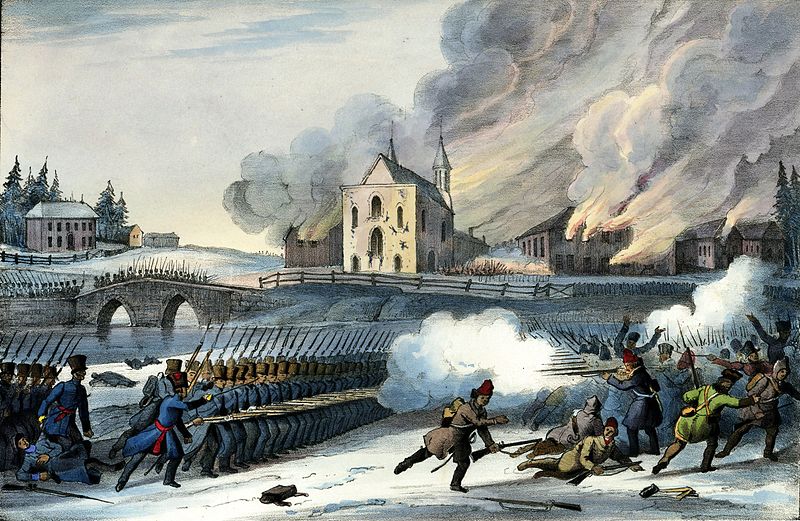
In November of 1837 in Lower Canada, a group of French Canadian rebels fought British soldiers and volunteers in a series of skirmishes. This rebellion was the result of years of built up sentiment against the British government that was exacerbated by an economic depression in the 1830s. Specifically, the rebels opposed the authority of the Caltholic Church and the powers of the British governor and advisors. Initially, the rebels were peaceful, but their demands were rejected by the British government in London. After the rebellion in November 1837, the rebels fled to the United States. In November of 1838, a second rebellion was launched in Lower Canada. This rebellion included American volunteers as well as the Canadian rebels. These two uprisings killed 325 people including only 27 British soldiers and 298 rebels.
After the first rebellion in Lower Canada, rebels in Upper Canada, led by William Lyon Mackenzie, took action against the British. On December 5, 1837, a group of farmers exchanged gunfire with British militiamen. A few other rebellions followed this in the next few months including raids against Upper Canada that lasted for over a year. While both of these rebellions failed at their ultimate goal, they resulted in the uniting of Upper and Lower Canada in 1841.
The Canadian Rebellions occurred during the term of the first Reformed Parliament. John Stuart Mill discussed the British response to the Candian Rebellions in his Autobiography as an example of opinions and policies the men in parliament disagree with (Mill, page 152).
SOURCES
https://www.britannica.com/event/Rebellions-of-1837
https://www.thecanadianencyclopedia.ca/en/article/rebellions-of-1837
https://www.historymuseum.ca/cmc/exhibitions/hist/canp1/ca16eng.html