
FDR Wastes No Time and Institutes "New Deal"
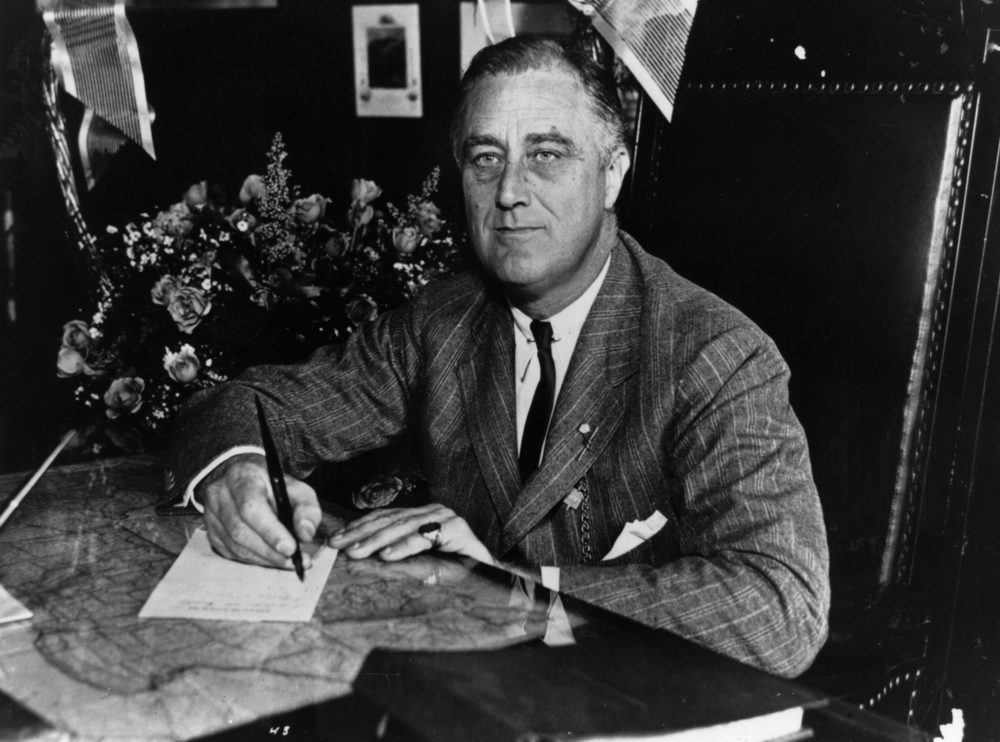
Franklin Delano Roosevelt, the thirty-second President of the United States, took office in 1933. A time when America was broken by the Depression and needed help more than ever. Taking office, he declared that “The only thing we have to fear is fear itself”. With that inspiring speech, he began to move to massive reforms that he had promised during his candidacy run. He began by closing banks in what was called The Emergency Bank Act and urged Americans to return savings to the banks. This reopened nearly two thirds of the banks within only a month’s time. Then, the real time of reform that would be known as the “New Deal” would begin in Roosevelt’s “First Hundred Days” of office. FDR began by repealing prohibition allowing alcohol sales to be legal once again. Reducing crime and increasing revenue. He also signed bills that would pay farmers to rotate their crops to boost prices as well as many other laws to help home owners and businesses. This New Deal met with moderate success but did not propel the American economy like it was expected to. So, FDR implemented a second round of policies called “Second New Deal”. This would be focused more so on unemployment and workers unions. FDR was winning by sheer volume of policies implemented alone. Ultimately, the economy would begin to recover and then explode with the beginning of American involvement in WW2 in 1941.
History.com Editors. New Deal. 28 Mar. 2022. https://www.history.com/topics/great-depression/new-deal
"FDR 1936". wbur.org. 28 Mar. 2022. https://www.wbur.org/onpoint/2020/05/27/what-we-learn-from-fdrs-new-deal
The reason I included each of these events was because the subject of the photo, Florence Owens Thompson, could’ve been affected by all of them. She was a farmer. Originally from a Native reservation in Oklahoma and in the 1920s, moved with her family to California. This is significant because the land in the Midwest was drying up and farmland was beginning to form into the conditions that would contribute to the dust bowl later in 1930. I included FDR and the New Deal because she was a migrant farmer whom didn’t have stable employment at this time. The plans in the new deal affected farmers as well as those unemployed by finding them jobs. She may have been able to reap the rewards of such programs. Another major event during this time is the market crash and the following depression. The country as a whole was struggling to find work and to survive. Florence was no exception. When the market crashed, it was often minorities that were fired first. She was a Native American and a woman and could’ve been the first let go if a company could no longer support their employees. Overall, I believe this time period is an amalgamation of all of these events combined and interacting simultaneously to produce the suffering endured by Thompson. She would endure these troubling times and raise seven children as a widow. This historical background will help those observing the image feel the desperation and hardship of the times I believe.