
The Matrimonial Causes Act
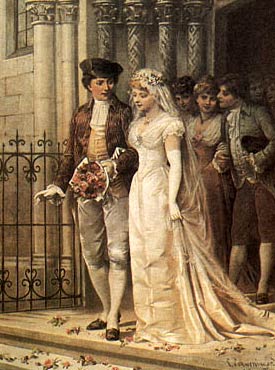
The Matrimonial Causes Act of 1857 and Marriage in Victorian England
The Matrimonial Causes Act of 1857 mandated “the transferal of divorce proceedings from Parliament to a special court” (UK Parliament). Before the implementation of this act a couple had to go through a Private Court of Parliament to obtain a divorce, and re-marriage could only be sanctioned after having had a proper, documented divorce. As a result, between 1700 and 1857 there were only about 314 divorces, typically initiated by husbands and exclusively done by the wealthy (UK Parliament). Even though the Matrimonial Causes Act made divorce easier and more accessible through a special court of Parliament, it maintained clear patriarchal tendencies. “Divorce was granted by Parliament only for adulty” however, “wives could only initiate a divorce Bill if the adultery was compounded by life-threatening cruelty.” (UK Parliament). In other words, women were chained to their husbands, no matter how mentally abusive or how unfaithful they were, unless their husband beat them to the brink of death. This corresponds with the disturbingly prevalent sexism in England during the whole of the nineteenth century. Ever since the coverture, a doctrine apart of the extremely old, original English Common Law, a woman lost her identity through marriage. Wife and husband were seen as “one person in the law and that person was represented by the husband” (Wood).
This correlates directly to Oliver Twist, exemplified by the relationship between Mr. and Mrs. Bumble and the exposure of Mrs. Bumbles criminal activity. When Mr. Browlow and Mr. Grimwig basically force, through the testimony of multiple witnesses, Mrs. Bumble to confess having consorted with Monks and selling him the locket and ring originally belonging to Oliver’s mother, Mr Bumble attempts direct all the guilt towards Mrs. Bumble and thus render himself innocent. However, Mr. Browlow points out that Mr. Bumble is “’more guilty of the two in the eye of the law, for the law supposes that [his] wife is under [his] direction.’” (Dickens, 436). This fact mirrors the sexism of English society I discussed earlier; Mrs. Bumble has no identity of her own and thus her guilt is manifested through her husband, who is her identity. Legally, she is not recognized as her own person and con not even claim ownership of her own decisions. Furthermore, the Matrimonial Causes Act also explains why the very unhappy couple did not get a divorce. Even though there was some domestic abuse brought on by Mrs. Bumble and an excessive amount of quarrelling between the two, adultery is never mentioned in the novel. Therefore, they never had any real grounds for divorce even if they had access to the Matrimonial Causes Act, which was created just a couple decades years after the publishing of Oliver Twist.
Works Cited
Dickens. Charles. Oliver Twist. Penguin Classics. 2002. Print.
UK Parliament. “Obtaining a divorce.” 2021. Accessed 17 Feb. 2021 Obtaining a divorce - UK Parliament
Wood, Margaret. “Marriage and Divorce 19th Century Style.” Library of Congress. Feb. 2018. Accessed 17 Feb. 2021. Marriage and Divorce 19th Century Style | In Custodia Legis: Law Librarians of Congress (loc.gov)
Image Citation
Victorian Era. Victorian Era England & Life of Victorians. Accessed 17 Feb. 2021. Victorian Era life in England. Victorians society, Literature & daily life (victorian-era.org)