
Midwest Haze Leaves US Eating Dust
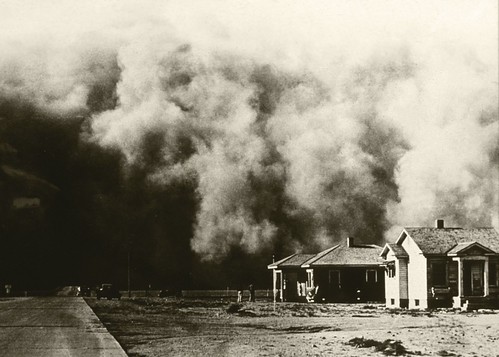
The Dust Bowl, as it became known, was an environmental disaster caused by people that would last from 1930-1936. Incentives such as the Homestead Act created opportunity and influx of farmers to the Midwest. Many of whom did not possess the correct level of experience. Over-farming of the land would lead to topsoil drying up to a moondust consistency. Americas bread basket would be turned useless in a matter of decades. This caused many farmers to abandon the land in search of greater farmland. Around 1930, weather patterns would experience large gusts of harsh winds. These winds would lift and carry the newly formed dust across the Midwest and much of the country. The dust was so thick that families would have to often tie ropes to places outside of their homes, lest they get lost from their front door to their cars. The dust was attributed to loss in agriculture as well as major health problems to those living in the conditions. Often being pneumonia from lungs filling with dust. Homes would experience thick dust levels as well despite using wet rags on the borders of door and windows. It would take the dust blowing to Washington D.C. to convince those in power to help those experiencing the dust bowl and its effects.
History.com Editors. Dust Bowl. 28 Mar. 2022. https://www.history.com/topics/great-depression/dust-bowl
"A Huge Dust Storm". USDA.gov. 28 Mar. 2022. https://www.usda.gov/media/blog/2012/11/16/pbs-film-explores-history-dus...