
The Romantic Movement
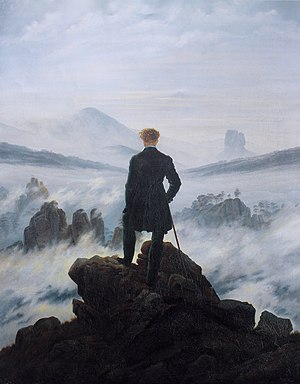
The Romantic Movement was a period in the 19th century that championed individual uniqueness and thus challenged traditional strictures of social, political, and economic values. In its celebration of the individual, the Romantic Movement emphasized the subjective, emotional, and imaginative experiences of living. In part, Romanticism was a reaction against 18th century rationalism. Romanticism of the 19th century was conveyed through changes in literature, music, and art – all of which put the individual at the center. Mill’s focus on the individual became vital to him and to his beliefs: “I left off designating myself and others as Utilitarians, and by the pronoun ‘we,’ or any other collective designation” (99). Mill also placed the individual at the center in terms of his beliefs on education. He argued against systems that would cram students “with the opinions or phrases of other people” that would work as a “substitute for the power to form opinions of their own” (44). Mill wished to create a thriving society in which educated individuals had the means to act autonomously and enact change from the inside.
Sources:
“Romanticism -- Britannica Academic.” Accessed February 13, 2021. https://academic-eb-com.proxy.uchicago.edu/levels/collegiate/article/Romanticism/83836.
Davis, Elynor G. “Mill, Socialism and the English Romantics: An Interpretation.” Economica 52, no. 207 (1985): 345–58. https://doi.org/10.2307/2553857.
Mill, John. Autobiography. Edited by John M. Robson. London: Penguin Books, 1989.