
Boston, Massachusetts
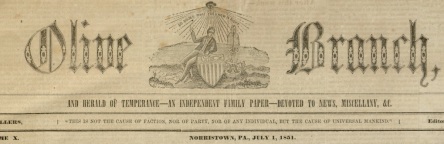
C. The Olive Branch: Birthplace of Fanny Fern
In 2005, the South Atlantic Review published Karen A. Weyler’s article titled “Literary Labors and Intellectual Prostitution: Fanny Fern's Defense of Working Women.” This article focused extensively on Fanny Fern as a writer, stating that Fern’s writing showcased her sympathy for women in the workplace, specifically woman factory laborers. Many newspaper articles that Fern wrote in response to society's view and perceived value of working-class women are included, placing an emphasis on the point that she fully supported and defended all working-class women regardless of occupation. The fact that Fern wrote so adamantly and continued to speak out about the value of these women, the terrible conditions in which they were being forced to work, and the unjust view society had of them, showed first hand how the feminist movement in America differed greatly than that in Britain because it was focused on using their voice to help the working-class women achieve equality and independence. This source also highlights how Fern defended prostitution as a financial means, wondering why more women don’t turn to prostitution given that their labor was already repetitive, degrading, and poorly compensated. This source brought to light how prevalent those class disparities and gender inequalities were in regards to the workplace through the words of Fern. The big discovery from this source was Fern’s dedication to fighting against the terrible conditions laboring women were subject to and the fact that she supported prostitution so wholeheartedly even going so far as to flip the societal blame onto the men who participate in the culture of prostitution, bringing to light the hypocrisy of the sexual double standard. This information regarding Fern’s views on working-class women helped us understand why her protagonist in Ruth Hall was written the way she was.
Coordinates
Longitude: -71.058880100000