
Pope's Moral Essays
By Maggie Tregre
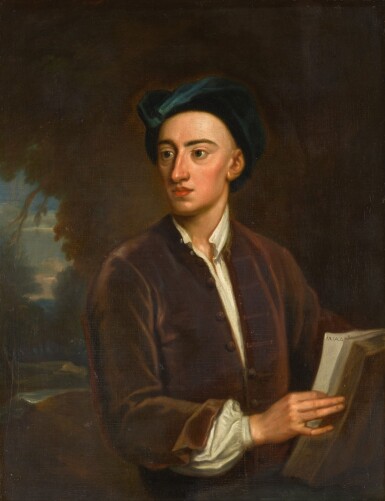
Both Epistles 1 and 2 explain Pope’s feelings about capturing the nature of the individual in a painting. He argues that if each person contains their own individual nature, how can they be portrayed in a single style that omits the individual elements of each person? In Epistle 1, he explains his belief that men are constantly changing and evolving, so they are never the same. He views individual nature as a complex and changing thing. On the contrary, Epistle 2 discusses the character of women. His belief is that women have no character at all, and their appearance is all that matters - the exact opposite of what is believed about men. He criticizes the Grand Style for taking away the features that make each person unique and straying away from individual nature. He does this with his description of his good friend, Martha Blount, where he provides specific details of her character and their friendship, which contradicts what was favored in the grand style. In his own portraits, Pope is portrayed as a skilled writer who has accomplished unprecedented feats. For example, in Kneller’s 1719 portrait of Pope, he is seen holding a copy of the Illiad, featuring the original Greek writing that he translated into English verse. By including this in his portrait, he is establishing himself as the writer who was able to do something as complicated as the translation of an epic poem. Despite this achievement, the Epistles themselves still provide a stronger showcase of Pope’s abilities as a writer.