
Created by Bella Lagatta on Mon, 02/17/2025 - 22:08

Description:
Books used to be seen as something that was a collector's item, read and obtained by the wealthy. However, as modes of production became cheaper, so did accessibility. The middle class could now purchase books for cheaper, but the books still looked as if they were of high quality. They were easier to produce in bulk yet maintained their stunning exteriors. Middle-class buyers wished to purchase aesthetically pleasing books but could not afford the cost, so these books were simply emulations of elaborate aristocratic volumes. Nevertheless, the Victorian era brought a new wave of literacy, with a large percentage of the middle and upper classes being literate. With this increased literacy came an increased need for faster and more efficient book production. The Great Exhibition of 1851 showcased a variety of elaborate books from many different publishers, either to promote their companies or simply show how stunning bindings could be.
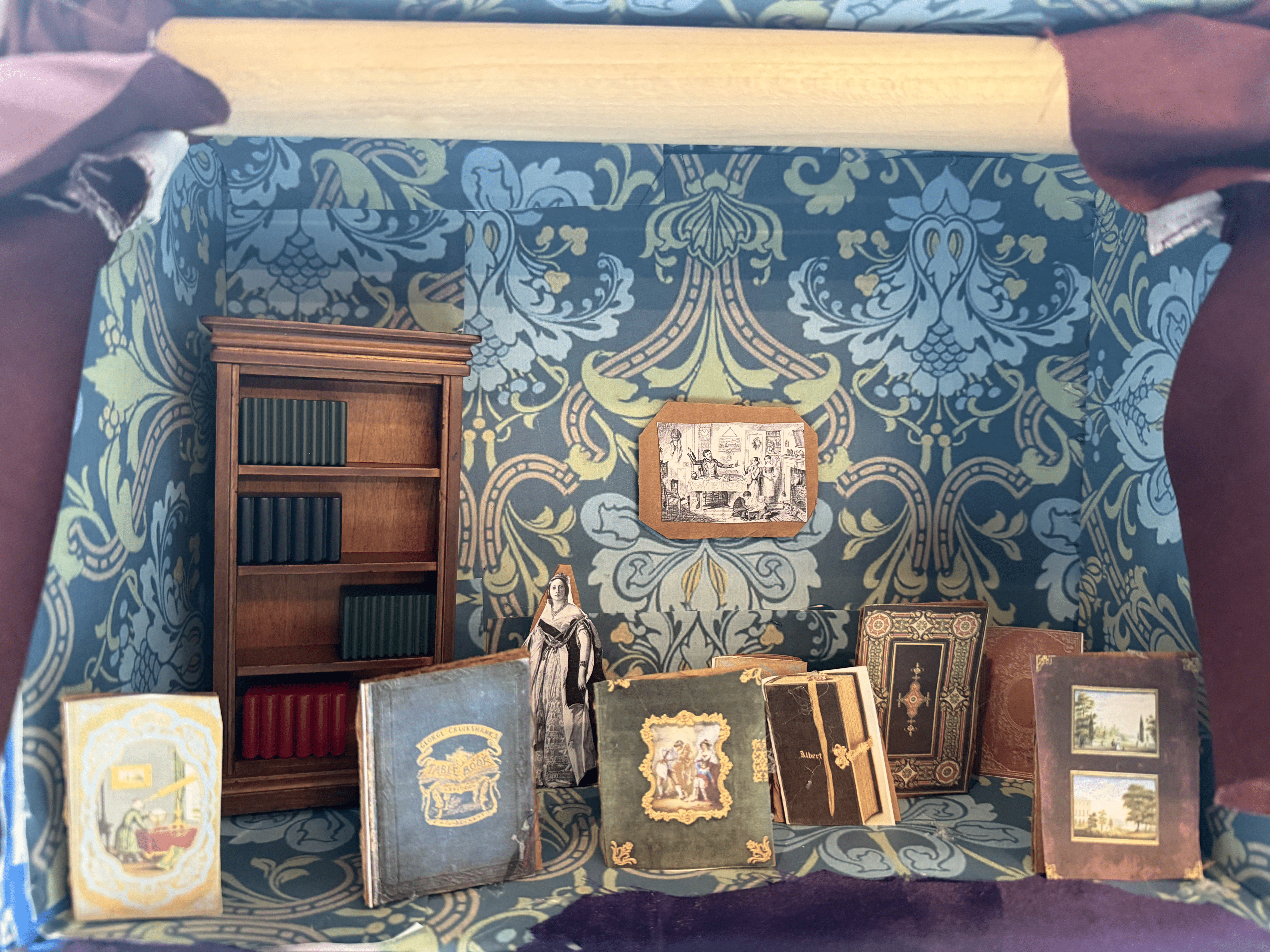
My Booth: Completing this booth in full took about 8 non-consecutive hours. I acquired a shoebox from my friend and covered it all in white cardstock paper to even out each side. Next, I browsed several.different styles of Victorian wallpaper and chose the one that I Iiked best. From there, I hot glued all of the wallpaper to the interior. I covered the outside of the box in purple fabric for ease, rather than individually cutting and pasting each part again. I then created a curtain by cutting and stapling pieces of red fabric and affixing these pieces to a long dowel across the top of the box. For the finishing touches, I cut out the books in my exhibit to display them and arranged them in the way I wanted. I am satisfied with the final product.
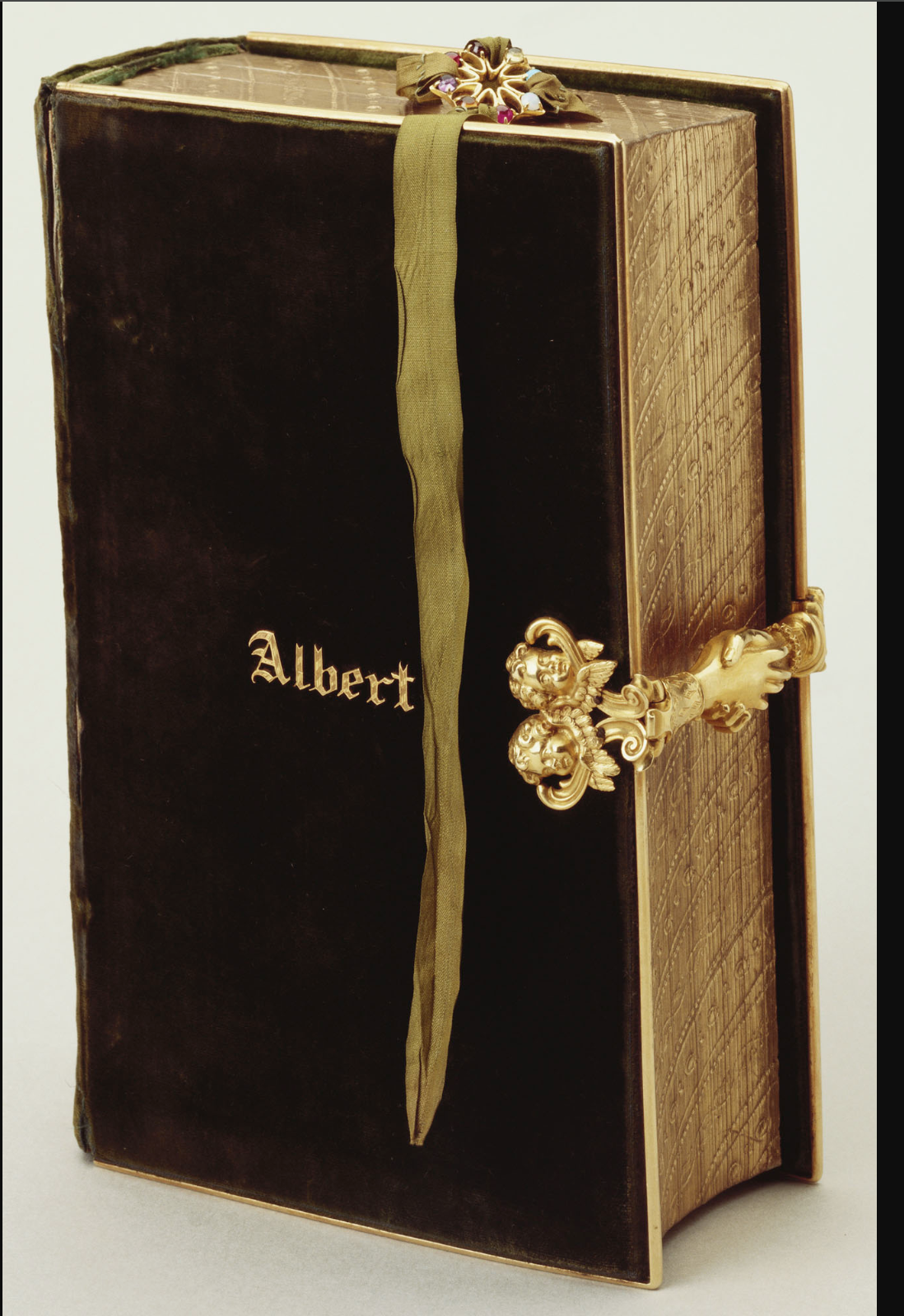
The Form of Morning Prayer. J Hatchard, Oxford, UK, 1837. This book is considered a companion to Queen Victoria’s Book of Common Prayer. It was given to Prince Albert by Victoria, Duchess of Kent (Queen Victoria and Albert were first cousins!). The German inscription inside the book reads: “To my much-beloved Albert in memory of his Wedding Day from his ever-loving Aunt Victoria” (Royal Collection Trust). Both this book and Queen Victoria’s own feature clasped hands as fastenings, meant to showcase both the literal and figurative “joining” of two people in marriage.
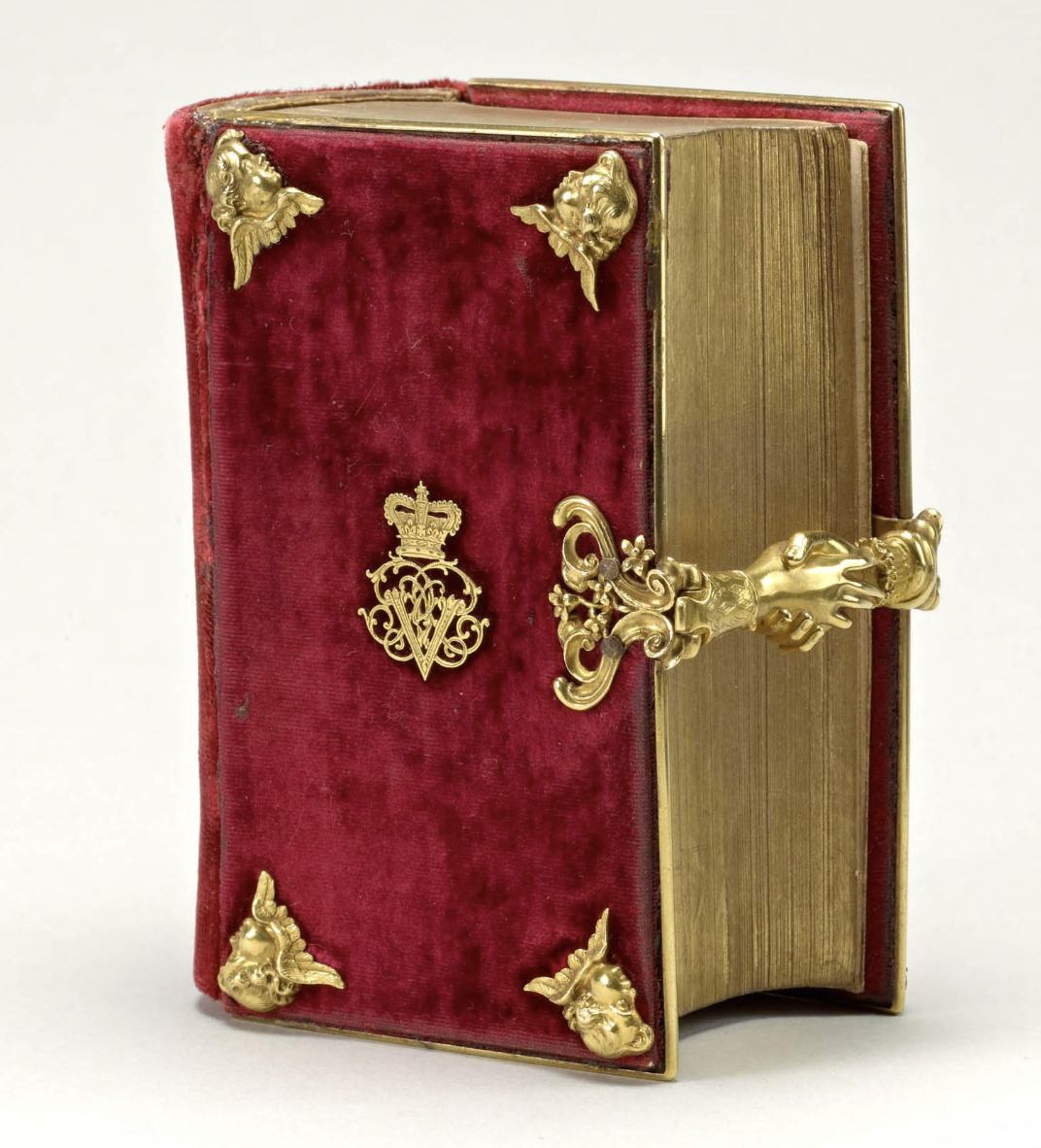
The Book of Common Prayer, and Administration of the Sacraments. S. Collingwood, Oxford University Press, 1839. This gorgeous book was gifted to Queen Victoria on her wedding by her mother, the Duchess of Kent. The front of the book features Victoria’s monogram, while the back shows the date of Victoria and Albert’s marriage, which is February 10th, 1840. On the inside of the book, Victoria’s mother has inscribed “Given To my beloved Victoria on her Wedding Day by Her most affectionate Mother.” Notably, the book also features an elaborate bookmark, which is inlaid with eight precious stones: chrysolite, turquoise, opal, ruby, jargoon, and amethyst, whose first letters spell out “VICTORIA” after the queen. This exact book may not have been shown at the Great Exhibition, but the exhibition likely featured a “presentation copy” to show exhibition goers. Book giving was a very common practice during the Victorian era. Many members of the aristocracy would give each other books for occasions such as birthdays, weddings (as in Victoria’s case), anniversaries, and graduations. Many Victorians would have kept a book of prayers, but it is doubtful that their copies were as elaborate as the queen’s.
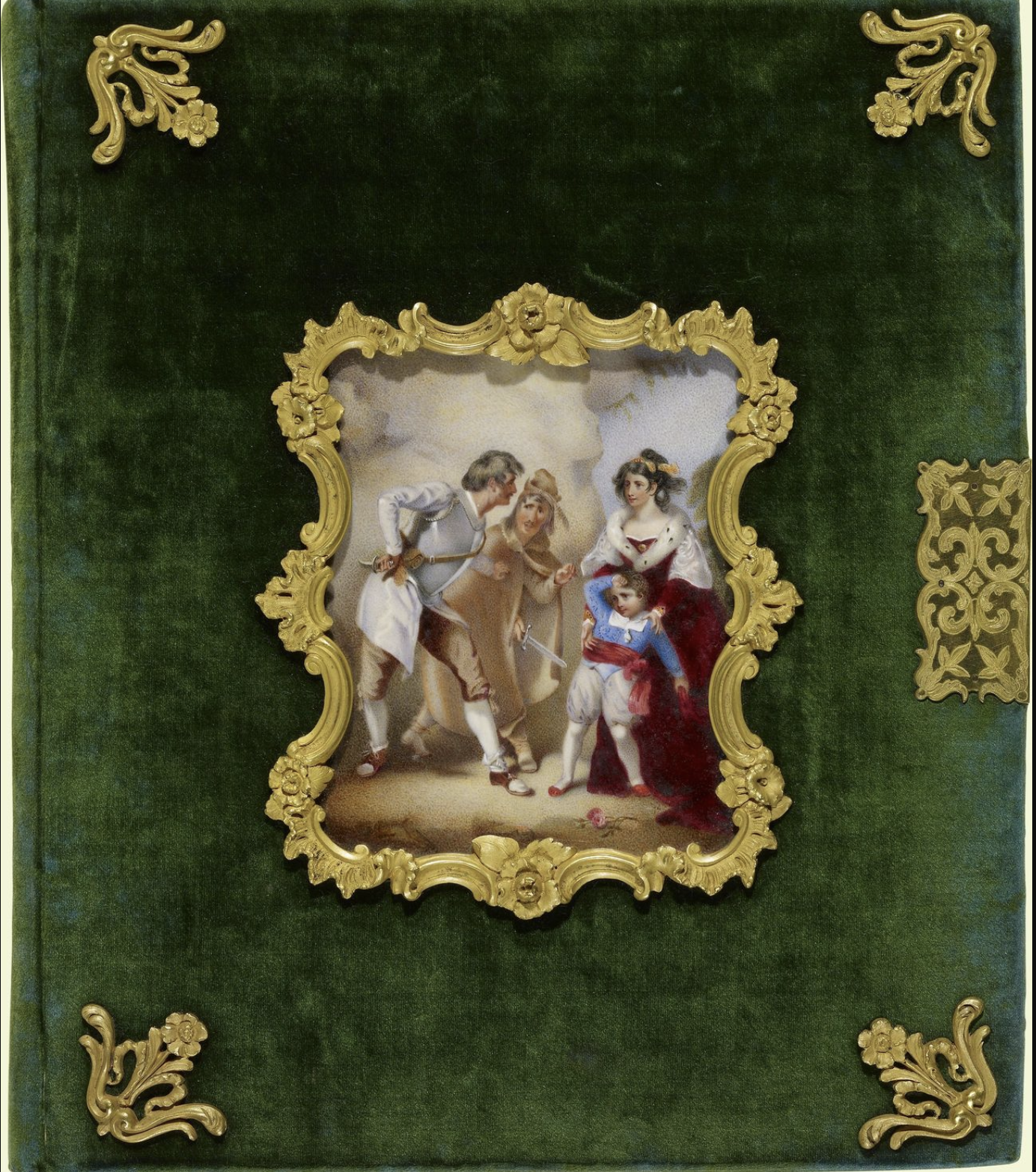
Princess of Hohenlohe-Langenburg, Feodora, Sir G. Hayter, and Queen Victoria. Lady Charlotte St Maur Album, 1840. This album is bound in green velvet, featuring gilt clasps and corner pieces. The illustration on the front, which is inlaid in ivory, depicts a man threatening a woman and a young boy. The album also contains drawings and watercolors, which appear to be favorite mediums of Queen Victoria. Most of the pictures in the book were inserted by Victoria’s half-sister, Princess Feodora of Hohenlohe-Langenburg, but it was given to Victoria on her birthday in 1833 by Lady Charlotte St. Maur. Charlotte was a “Lady of the Bedchamber” who was responsible for the queen’s personal needs.
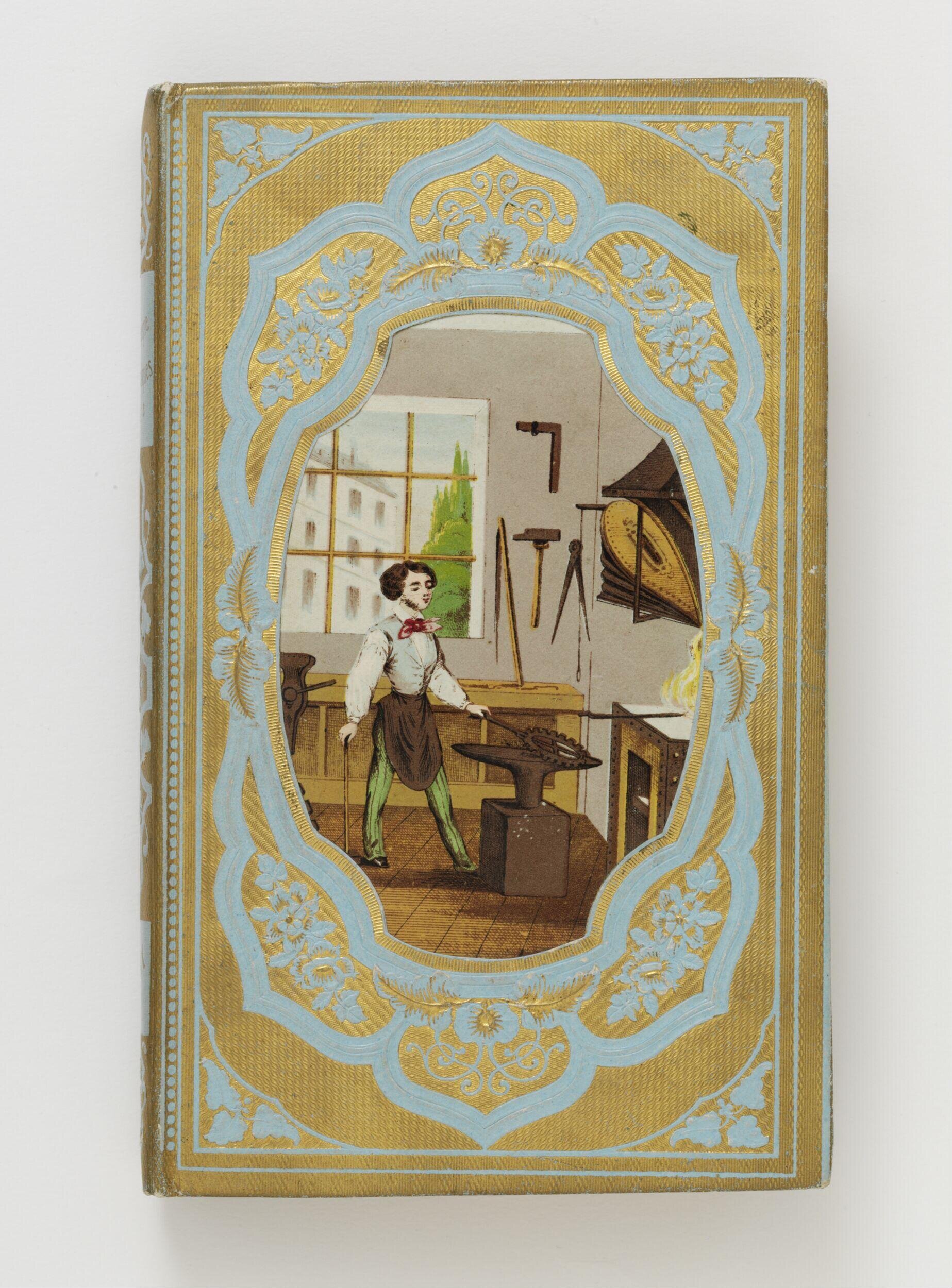
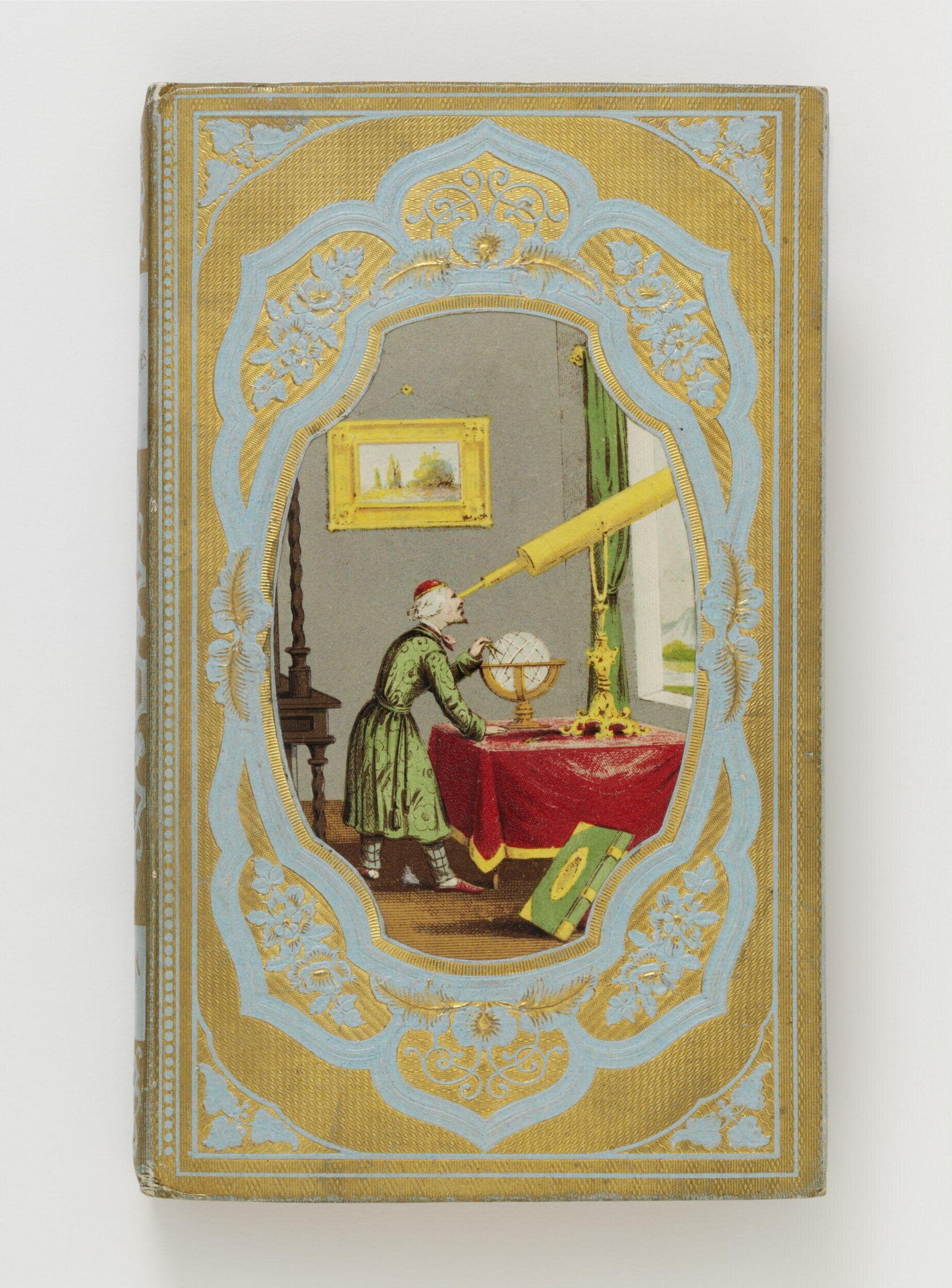
Mazure, Paul-Adolphe. Petite Bibliothèque Des Chroniques De l’Histoire De France, Volumes 1 and II. Lehuby, Pierre-Charles, Paris, France, 1842. These volumes were both published in 1842 in Paris, France. In 1855, they were awarded to a top geography student at a French boarding school. These titles emphasize the Victorian emergence of trade publications; the covers were created by the publisher, not strictly a bookbinder. The pages were glued together, which was much more efficient than sewing them by hand.
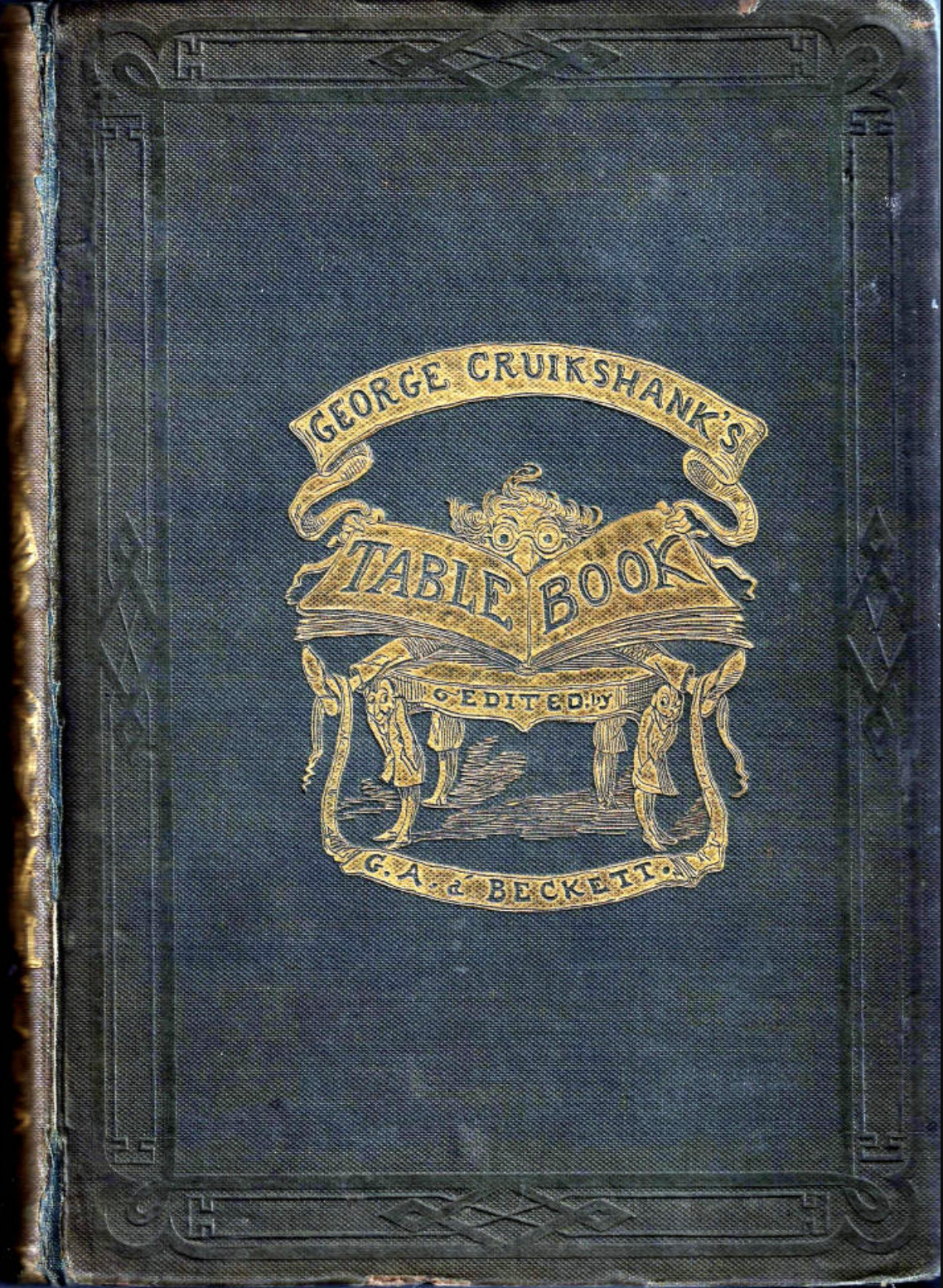
George Cruikshank’s Table Book, edited by G. A. A’ Beckett. London: The Punch Office [Bradbury & Evans], 1845, The Victorian Web. This photograph, taken by Simon Cooke, is of George Cruishank's Table Book, which is a collection of illustrations, sketches, and stories created by the Victorian-era illustrator and author. The cover itself is made from a smooth cloth and includes a gilt design. Cooke estimates that Cruikshank created upwards of a hundred gilt designs for his own and others' books.
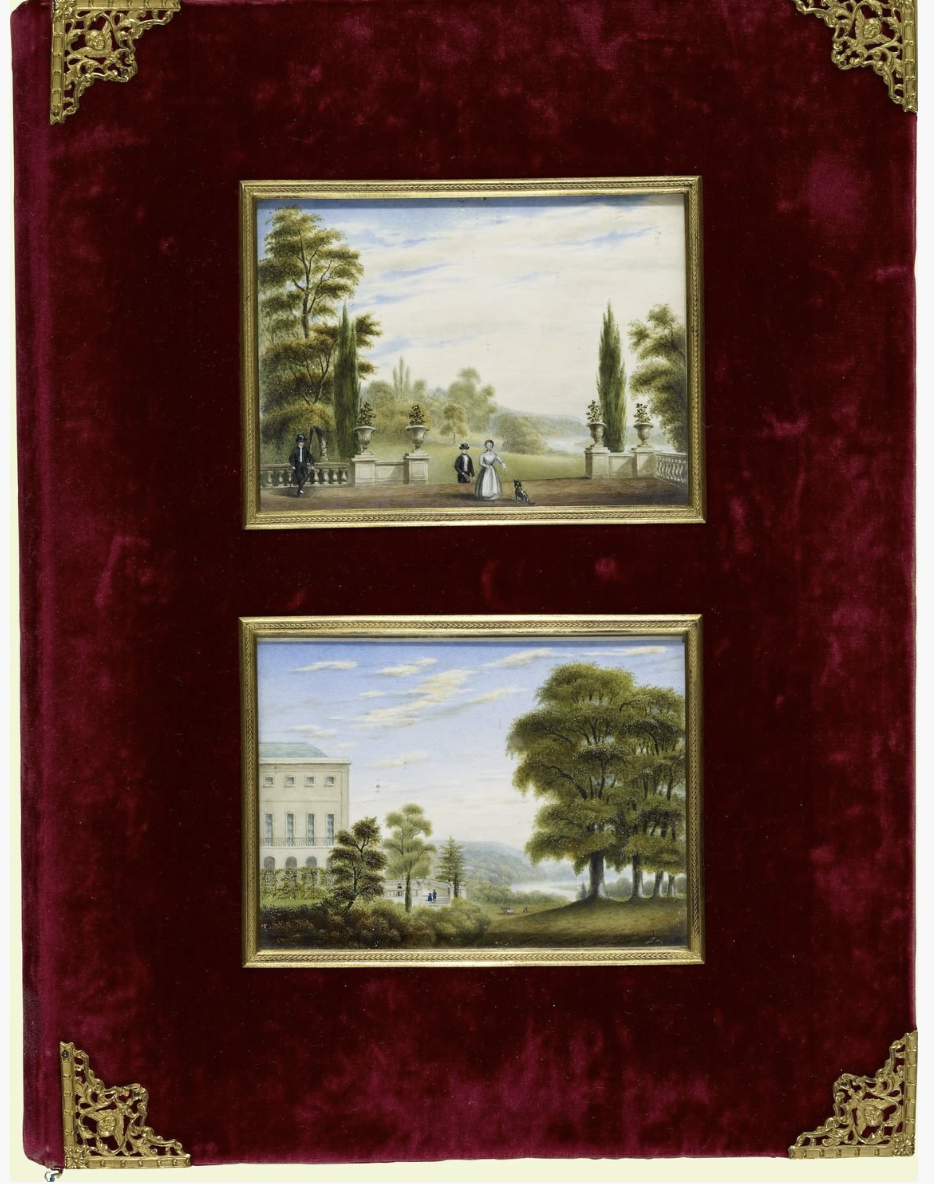
Duchess of Kent, Princess Victoria. Watercolour Album VI, 1850-60. Here is another stunning book that was directly influenced by the Duchess of Kent. The album has two red velvet covers with framed photos of Nuneham Park, Oxfordshire. The binding also includes gilt metal corners with watercolor paintings and drawings included and compiled inside. As stated in the Royal Collection Trust, “The represented artists include Queen Victoria; Lady Augusta Cadogan (1811–82), lady-in-waiting to the Duchess of Cambridge and acquainted with the Queen since at least 1835; Lady Dalmeny (1819–1901), who had been one of the Queen’s train bearers; Ferdinand II, King Consort of Portugal (1816–85); Princess Elise (1830–51) and Princess Feodora (1839–72) of Hohenlohe-Langenburg, the Queen’s nieces; Emperor Nicholas II of Russia (1868–1918); and Baron Stockmar” (Royal Collection Trust). Although this likely was not displayed at the Great Exhibition, it is undoubtedly the type of book one could find there.
Copyright:
Associated Place(s)
Timeline of Events Associated with The Great Victorian Book Binding: Books and Binding at the Great Exhibition of 1851
Part of Group:
Featured in Exhibit:
Artist:
- George Cruikshank