
INFLUENCE
Created by Audrey Wawrynovic on Mon, 04/28/2025 - 09:37
“This timeline provides a sociohistorical context for Luciano Castellis 1974 art peice Spiegalsaal.
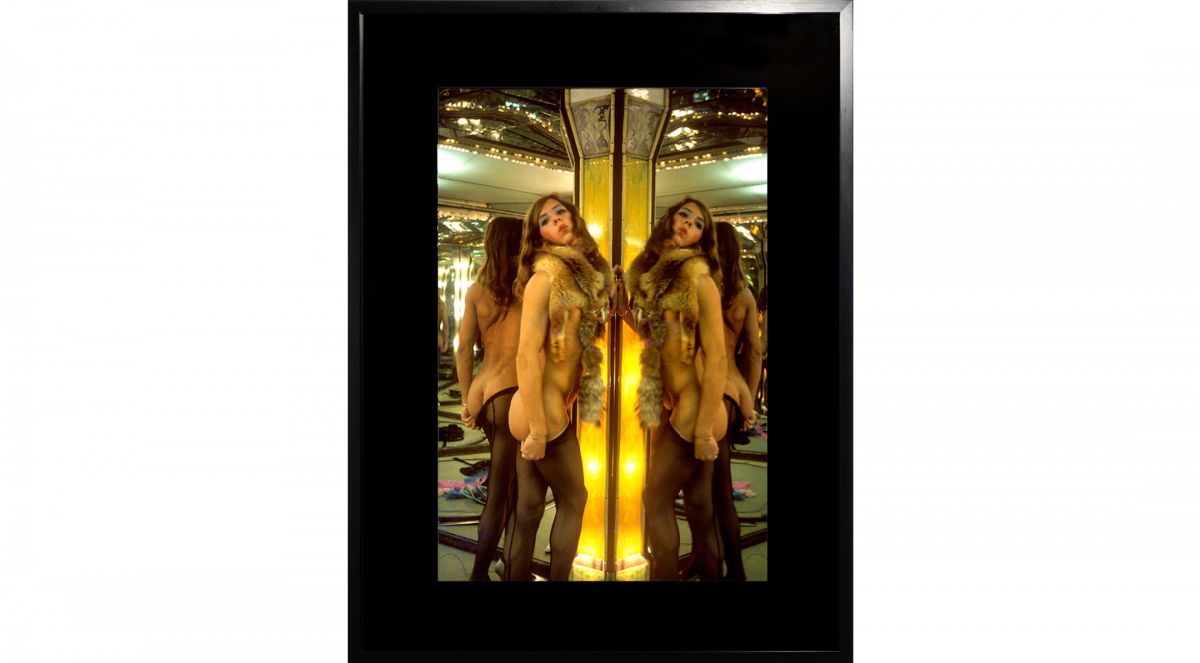
“Luciano Castelli | Spiegelsaal (1973) | Available for Sale | Artsy.” Artsy.net, 2016, www.artsy.net/artwork/luciano-castelli-spiegelsaal-1. Accessed 11 Apr. 2025.
Timeline
Chronological table
| Date | Event | Created by | Associated Places | |
|---|---|---|---|---|
| circa. 4 1968 |
The Teacher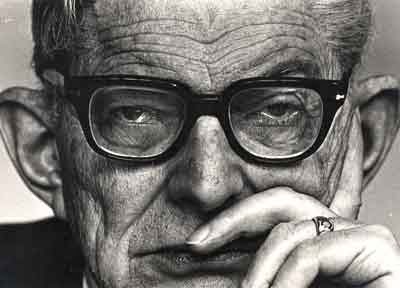 Alex Von Moos The event that connected me as the guide to the work, and certainly the first in terms of importance would be the years spent at the School of Arts and Crafts in Lucerne, Switzerland in the very late 1960’s and early 1970’s, where Castelli studied under the far older artist Max Von Moos. For artists, sometimes the ones who influence us the most are the art teachers who gave us the space to experiment and encouraged us to try something new or branch out from the flock. The years spent learning the foundations of your artistry can impact a creator for the rest of their life. Von Moos was born in Germany but spent his later life in Lucerne. Both of them were preferable to the more local scenes of art and expression then the wider European scene. Von Moos was not just an artist but was also a man who survived and escaped nazi persecution to America, and with great courage, returned to his home continent of Europe after the war ended where he continued his work. Not much is documented about the private interpersonal relationship between Moos and Castelli, but I can only image what an influence that must have been for Castelli, a queer man of the time, to see his own teacher survive and thrive in spite of societal and cultural persecution. |
Audrey Wawrynovic | ||
| circa. 1970 |
The Friends along the way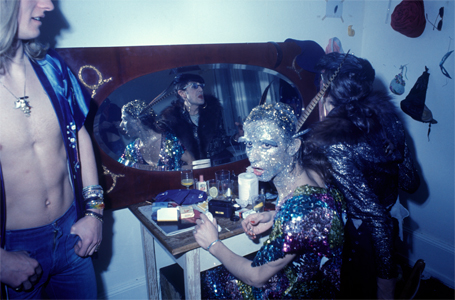 A snapshot from castellis place The event connected with the artist Castelli, would be his time in the Early 1970’s in Lucerne, Switzerland, prior to his move to Berlin. Those formative years of having a tight and intimate circle of fellow queer artist friends, often regarded as the long-haired freaks around the flamboyant painter Luciano Castelli shaped him. Many nights were spent between artists aiding in each other's work. For queer folks of that time, to be out and proud could potentially gotten them ostracized from greater society, or at worst have them killed. Aside from clubs and private circles, it was not safe for queer folk. Having like-minded friends living and working together, encouraging, and melding ideas together for wonderful and exciting new expressions of art is such a crucial happening for any artist. Having a circle like that was most definitely rare for many queer people in that time. The things learned in those foundational years are evident in most pieces he has created. The flagrant disregard for gender depictions fostered in those years can be seen in his photography that is so free flowing, with unabashed experimentation of self-projection, and the constant conversation that comes from much of his work around gender and sexual liberations. |
Audrey Wawrynovic | ||
| circa. 1974 |
The Connection to higher places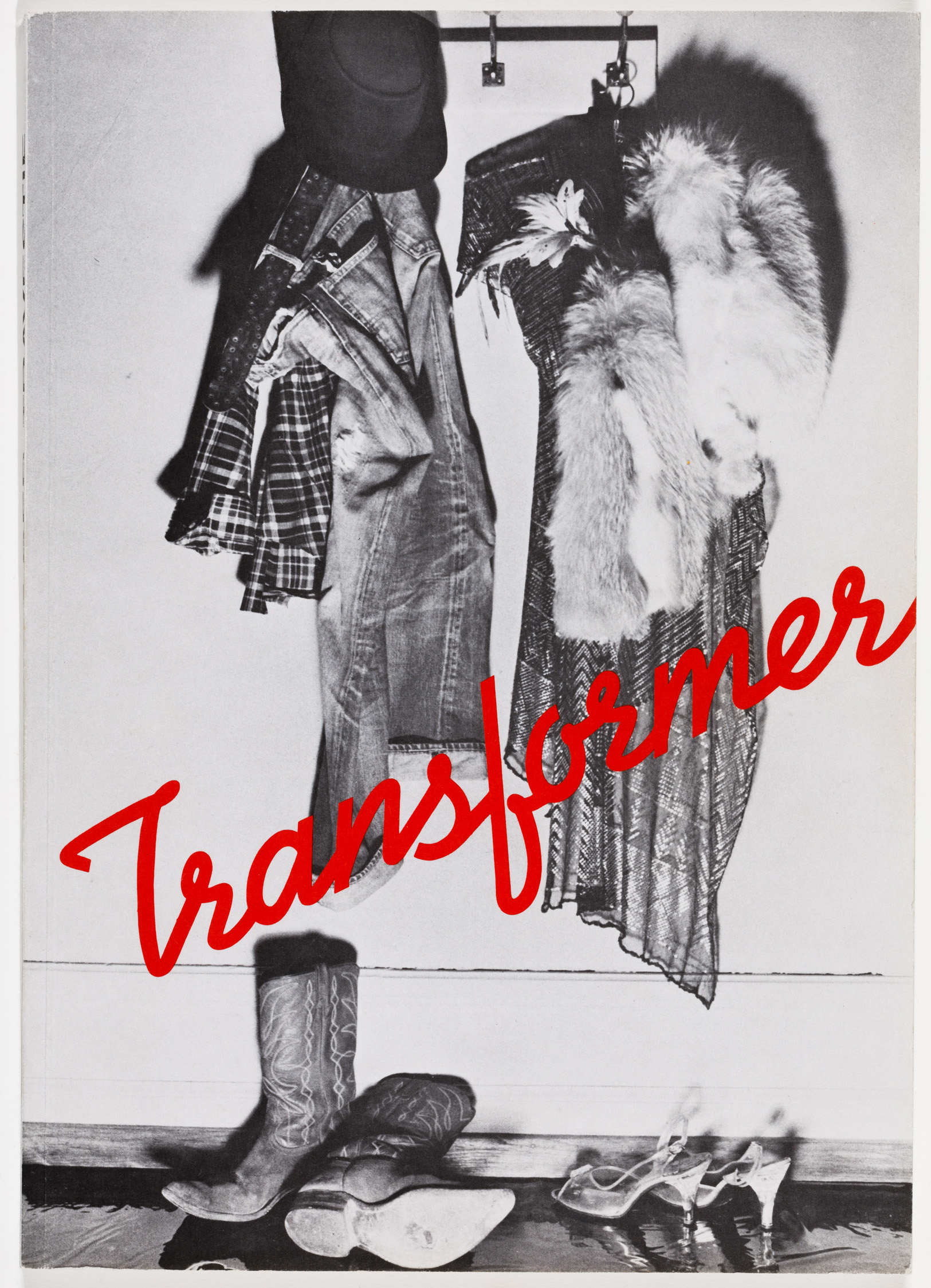 The famous exhibition of these two The event connected to the Subject, who in this instance is Castelli, would be the meeting of Castelli and Jean-Christophe Ammann. Jean-Christophe was a well-known curator and fellow artist. He was also a former assistant to the director of the Lucerne Museum of Art. He shared similar bohemian tastes to Castelli. Upon his move to Lucerne, he made it his mission to meet and connect with the local young art scene, engaging them in their new and Avant-garde ideas. At the time, Ammann was in a higher position of influence within the art community, and people like that are needed when it comes to the publishing of things considered illicit by the public. He would go onto collab with Castelli on the 1974 ‘Transformer’ exhibition that Spiegelsaal was featured in, this exhibition collaborated between Ammann and Castelli was a profound success, and for many years would be the only of its kind. His purposeful co-mingling of the local Swiss art scene around Lucerne with the wider European and even American scenes can be argued is what propelled the greater part of Switzerland to be a haven for Artists and other free thinkers. Without the meeting of these two minds, the photoshoot in question might not have ever happened. |
Audrey Wawrynovic | ||
| circa. 2025 |
The Influence of InfluenceThe reason that I offered that background concerning those three events is because it helps me to explain what Castelli, in Speigalsaal, as well as those around him were doing socially and culturally when Castelli created it. Studying under Von Moos, his young bohemian friends, his friendship with Ammann. They all tie together literally as influences in the life of Castelli, these pillars in their different ways and actions pushed and shaped the way Castelli experimented, had the space to do so, and had access to higher places and spaces to uplift him to a level where his artistic expressions were seen by a wider audience. These are steps in the path of his life, from classroom to the quiet late night collaborated projects, onto the first friendship that lead him to his first of many famously known exhibitions. Positive influences such as these are so crucial to the creations of an artist's edge, their pursuit, and their passions. Without these spaces to experiment with, this photoshoot could have been entirely different or might not have happened at all. Castelli might not have been an artist who experimented in gender and sexual dynamics had he not had the close circle of fellow queer artists, accepting art curator friends, or a teacher who inspired him. Without acceptance enough to allow such sexual expression and gender experimentation, queer voices like Castelli die. Works Cited
|
Audrey Wawrynovic |