
Created by Catherine Golden on Tue, 08/26/2025 - 19:03


Description:
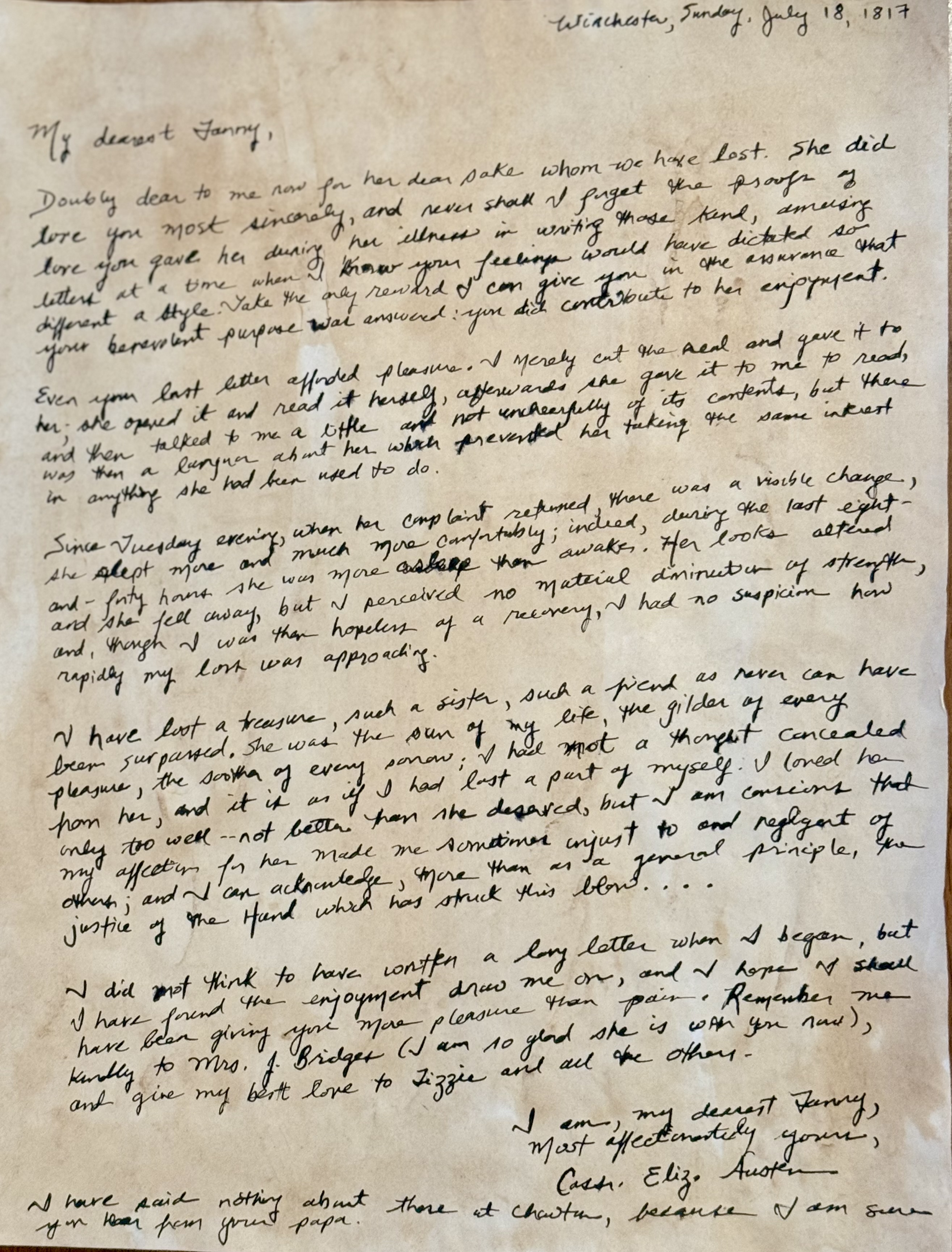
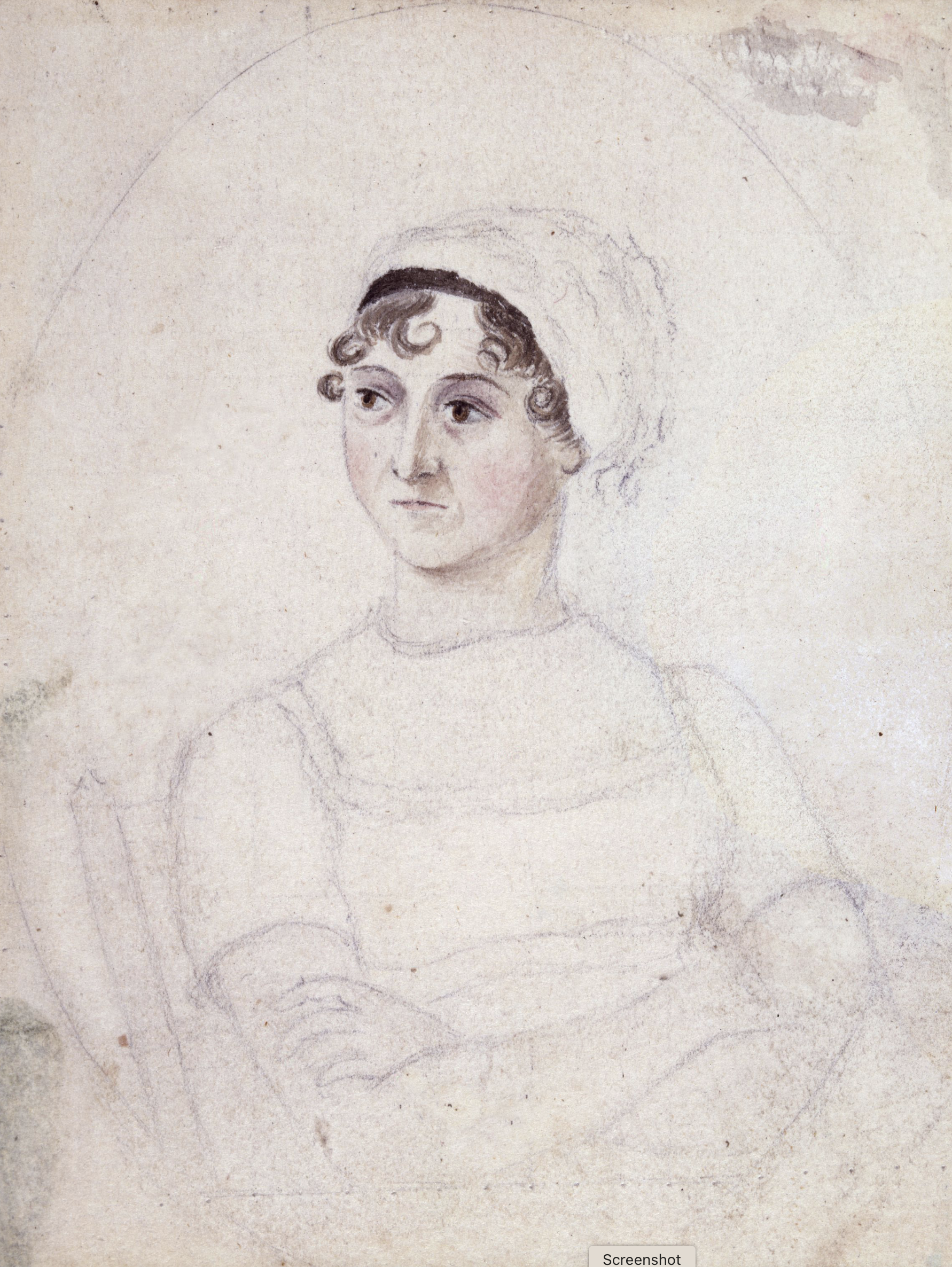
Cassandra Elizabeth Austen was devoted to her sister, Jane. The words she penned in this letter to her dear niece, Fanny Austen Knight (daughter of her brother Edward), convey the depth of the sisters' attachment and the devastating loss Cassandra experienced with the death of her beloved Jane. She told Fanny in her letter dated July 18, 1817--the very day Jane Austen passed away--that "I have lost a treasure, such a sister, such a friend that can never have been surpassed." The handwritten letter reveals the talents of Cassandra, who excelled as a water colorist and knew how to write an engaging letter. This virtual display case focuses the spotlight on the famed novelist's older sister, who deserves recognition. Included are two of her watercolors that show her sensitivity as an artist. The fourth image reveals Cassandra's infamous censoring of parts of her sister's letters following her death; even if critics speculate the lines Cassandra cut away were excised to safeguard her sister's reputation, the loss to Austen scholars and fans is regrettably indeed. Nonetheless, without Cassandra, we would never have known what Jane Austen looked like. Cassandra's sketch of the "gilder of every pleasure, the soother of every sorrow" hangs proudly in London’s National Portrait Gallery and remains the basis of countless visual adaptations of the famous novelist.
Recreation of Cassandra Austen's Letter to Fanny Austen Knight, July 18, 1817, by Catherine J. Golden, 2025. In copying this letter slowly and carefully, I was struck by how beautifully it is composed and by the depth of attachment between Cassandra and Jane Austen. In addition to Cassandra's exquisite use of parallelism is the diction she chose to describe her sister. Not merely a friend, Jane is a "treasure," something highly valued, a precious jewel. Jane was the "gilder of every pleasure" as well as the "soother of every sorrow," vocabulary that suggests Jane's ability not only to comfort her sister but also to share in every joy of her life.
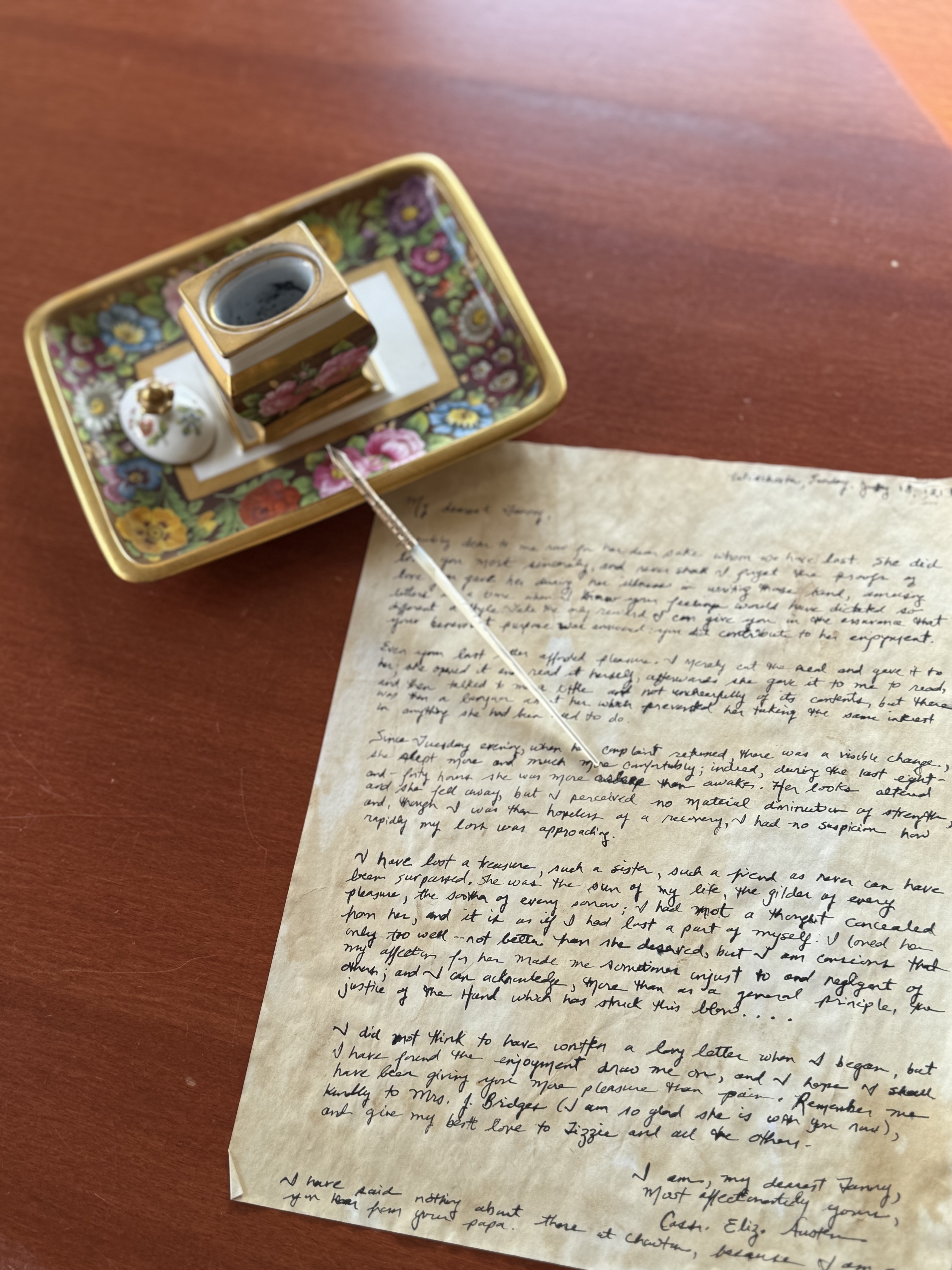
The Creation Process of Cassandra's Letter to Fanny Austen Knight, Photograph by Catherine J. Golden, 2025. To recreate this Regency letter with a sense of authenticity, I made tea-stained paper, selecting British black tea to coat white paper. When the paper dried, I used a 19th-century dip pen, black ink, and a china inkwell to compose the letter. I did my best to copy the letter exactly as written. I made a few smudges, but I am pleased with the outcome. I could not copy the letter in its entirety as it is very long, but I made sure to include the important segment of the letter about Jane being Cassandra's lost "treasure."
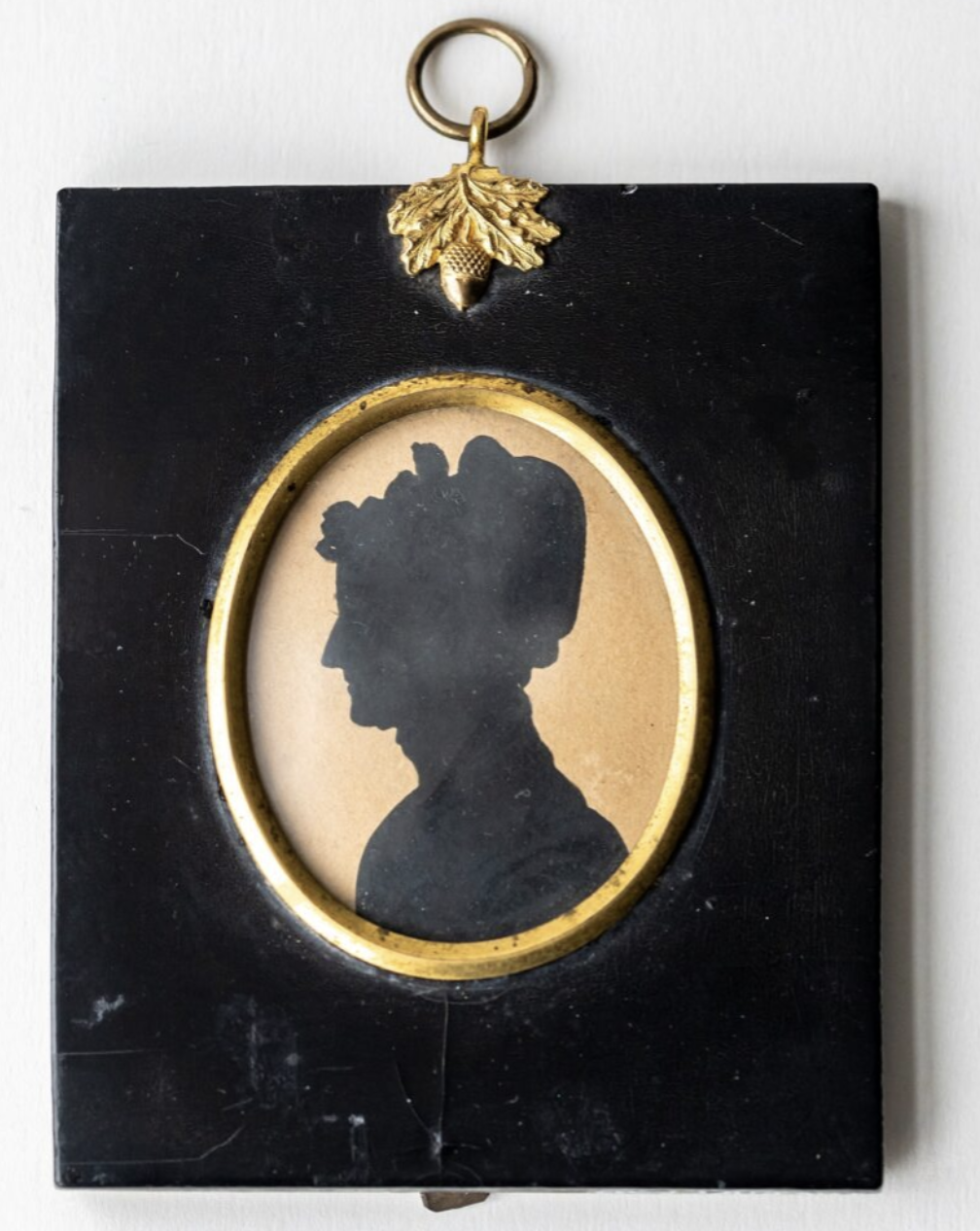
Oval Silhouette of Cassandra Elizabeth Austen (1773-1845), Jane Austen's House Museum, photograph by Catherine J. Golden, 2025. Cassandra, three years older than her sister, was Jane's best friend in life and staunch champion after her death. She nursed her in her final illness and distributed Jane's personal items and locks of hair to close relatives after her death. Along with her brother Henry, Cassandra helped to promote and protect Jane's literary legacy. This silhouette, placed in an ebonized gilt metal frame, is of the early nineteenth-century school according to the Jane Austen's House Museum in Chawton. The silhouette shows Cassandra to have a sharper profile than that of her sister--a more pointed nose and a longer neck. Her hair is piled high on her head and tucked into a cap, as was the custom of the day. Interestingly, Cassandra's silhouette is not included in the family tree that includes her mother's silhouette, the famous sketch of Jane drawn by Cassandra, and portraits of her father and five of her six brothers. This omission speaks to Cassandra's neglect despite being one of the most prominent figures in Jane Austen's life and her role in keeping Jane's legacy vital.
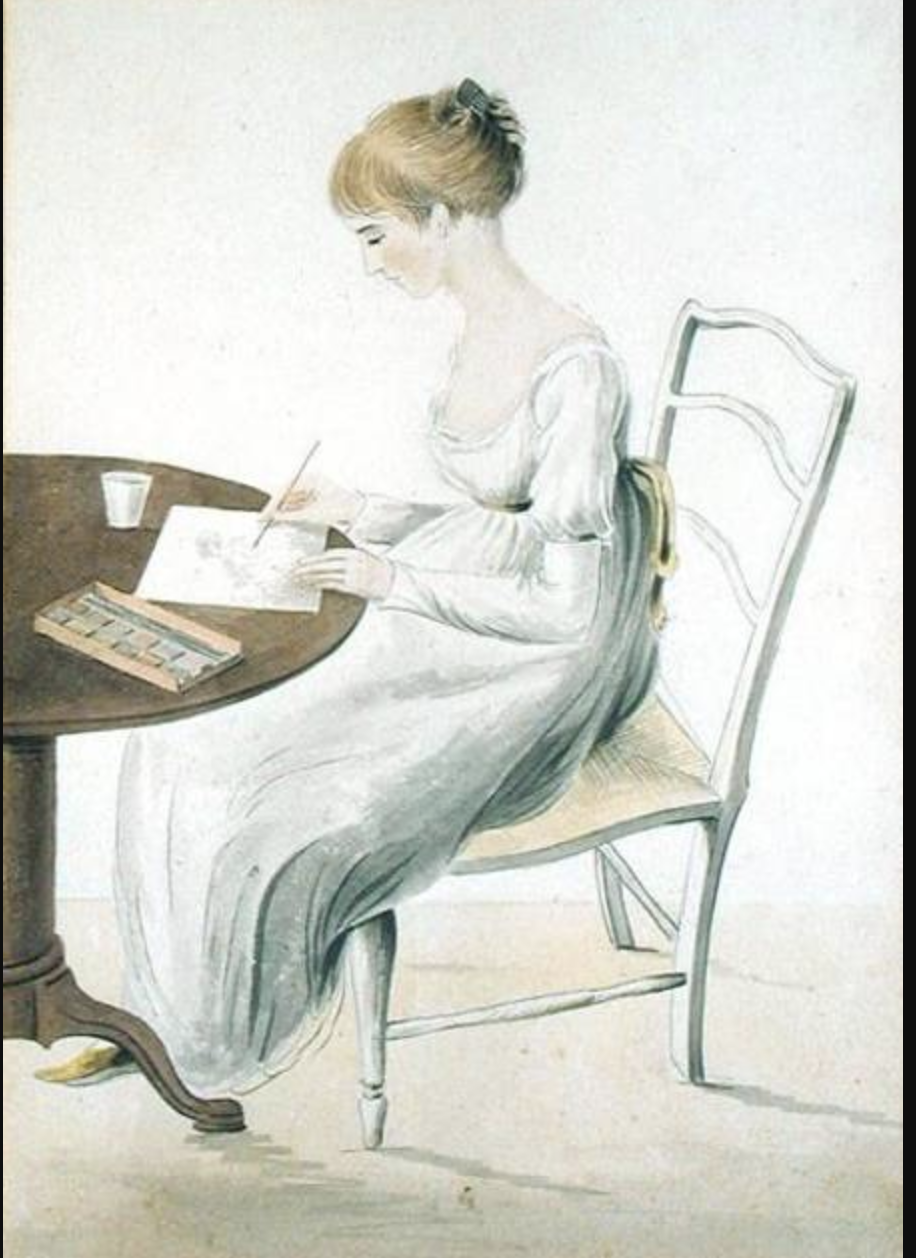
Cassandra Elizabeth Austen, sketch of "Fanny Austen Knight," ca. 1805-07, Jane Austen's House Museum, Chawton, Wikimedia Commons. The portrait is likely one that Fanny referred to in 1805 in a diary entry. She notes that "Aunt Cassandra took my likeness." The watercolor depicts a slender young woman of 12 to 14 years of age wearing a high-waisted dress, her light brown hair held backin a comb. Interestingly, Fanny, who sits at a small circular table, is also painting; included is her open paint box. The portrait, more finished than the iconic portrait of Jane Austen, reveals Cassandra's gentle touch as a watercolorist attentive to color and nuance.
Autograph Letter from Jane Austen to Cassandra Elizabeth Austen, dated April 18-20, 1811, The Morgan Library and Museum, Photograph by Catherine J. Golden, 2025. Jane wrote this letter to her sister while residing in London. She told Cassandra that when touring museums, she was more attentive to "the company than the sight." She also mentions the skills of a singer and a harpist. Following Jane's death, Cassandra selectively censored many of her sister's letters that she thought were worth preserving and destroyed others in both cases to guard her sister's reputation. The Pierpont Morgan Library that displayed this letter at "A Lively Mind: Jane Austen at 250" indicates in wall text that the excised line likely was a cutting remark about a relation. In some cases, Cassandra cut out words, and in other cases she excised sentences as in this case.
Cassandra Elizabeth Austen, Sketch of Jane Austen, circa 1810, 4 1/2 inches by 3 1/8 inches, National Portrait Gallery, London, Wikimedia Commons. Jane Austen's nephew, James Edward Austen-Leigh, searched for a portrait of Jane to use for Memoir published in 1870. This emerged as the only portrait of the famous novelist. The family considered it Cassandra's "scribble" but nonetheless sent it to to Mr Andrews of Maidenhead, who made a copy from which a print could be engraved. Although Cassandra's sketch has met with much criticism including from members of her family, this is the image we associate today with Jane Austen. It is now an iconic representation, and the "scribble" hangs in the National Portrait Gallery (NPG 3630) in an exquisite gilded frame.
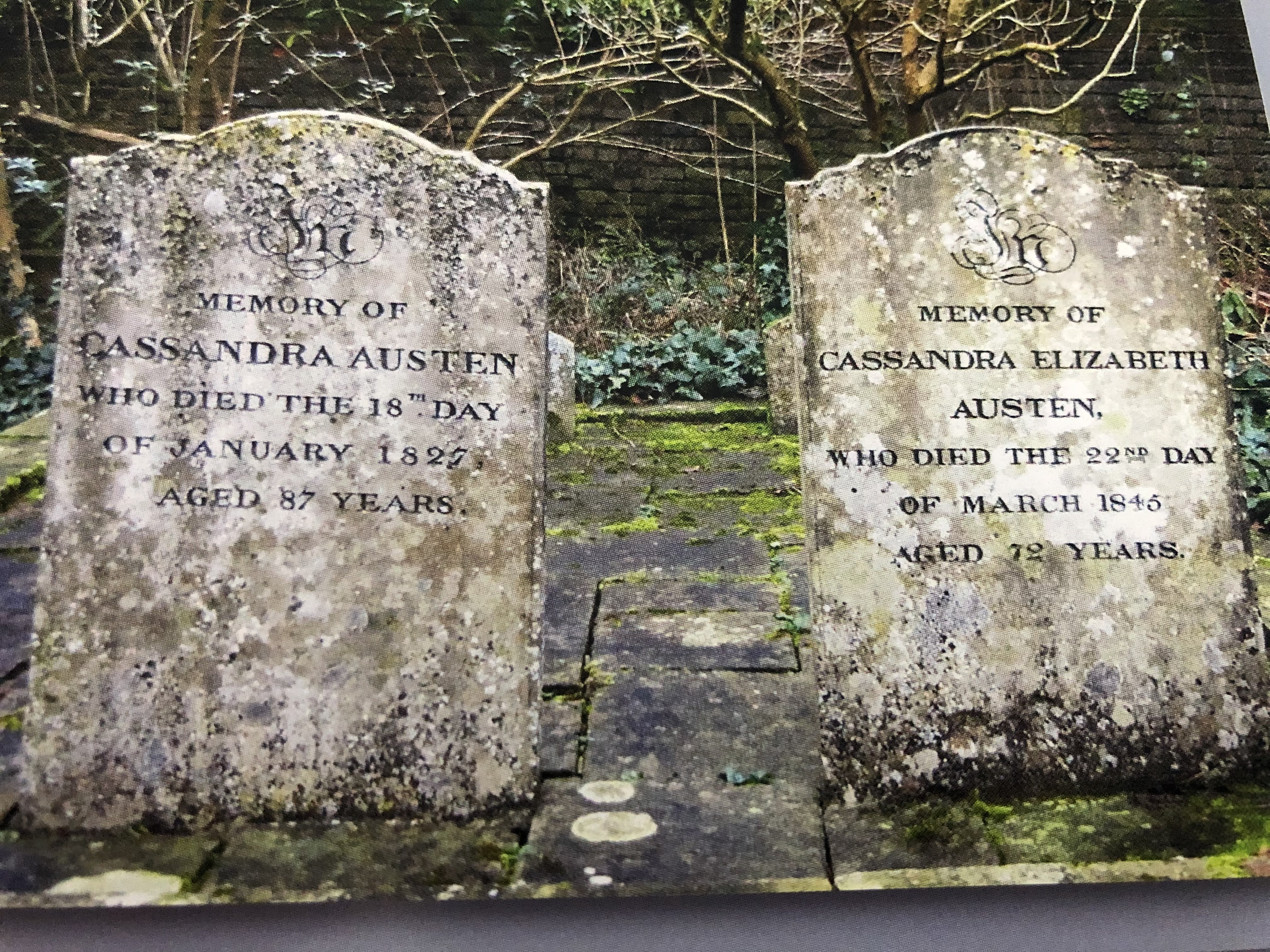
Graves of Cassandra Leigh Austen and Cassandra Elizabeth Austen, St Nicolas Churchyard, Chawton, Hampshire, photograph by Catherine J. Golden, 2023. Cassandra outlived her sister by over a quarter of a century. During her life, Cassandra made sure that her many nieces and nephews learned about their famous Aunt Jane. Cassandra, who died at 72, was buried beside her mother. The two graves in the St. Nicolas churchyard rest in a quiet spot that is easy to miss, but cherished by Janeites today.