
Created by Elena Chawla on Wed, 10/29/2025 - 12:50

Description:
Silhouettes became popular in th eighteenth century and continued in popularity well into the nineteenth century. Silhouettes played an important role in society, art, friendship, and novels. Skilled artists have created enough silhouettes to be able to create them quickly. Jane Austen incorporated the making and completing of silhouettes for several of her characters throughout many of her novels. Since silhouette making was featured several times in Austen's novels, Austen is alluding to the idea that most people can create this kind of art. In Emma, Harriet gets her portrait made by Emma herself. This is a sign of a specific kind of friendship between Emma and Harriet that will be explored in this case. Emma's ability to create a silhouette-type image of her friend proves its value in society while also showing how it is accessible for everyone.
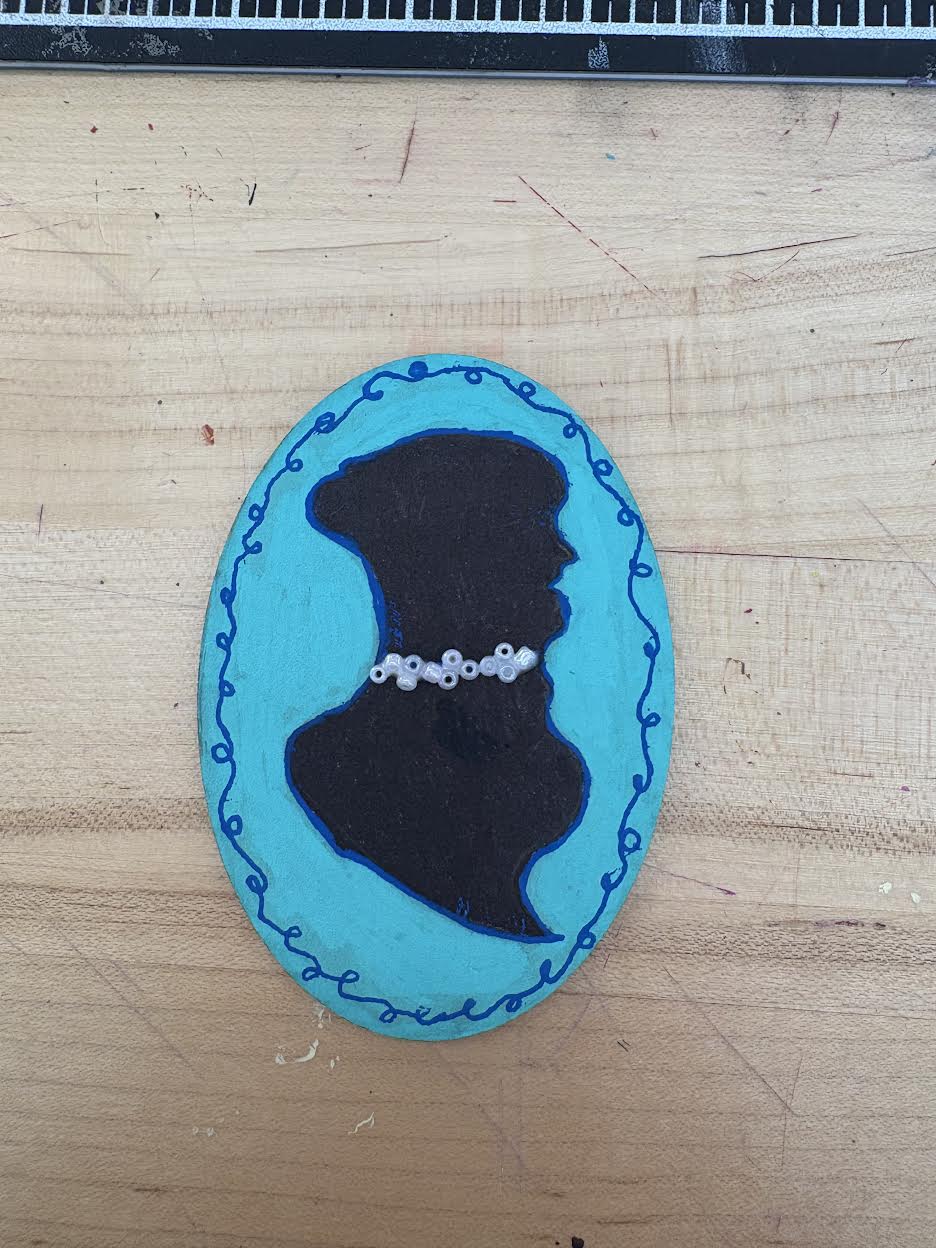
Silhouette of Harriet Smith from Emma, by Elena Chawla, 2025. I wanted to create a simple silhouette of Harriet Smith to focus on the external factors that shaped her life instead of the internal factors that created her as a person. Focusing on an outside perspective on Harriet reflects my takeaways as a reader of Emma. I spent a lot of time understanding Harriet through her relationships with other people, so focusing on the external factors of her life helps me display my views of her as a character. I wanted to capture the idea that Emma had good intentions in helping Harriet, but her execution failed.
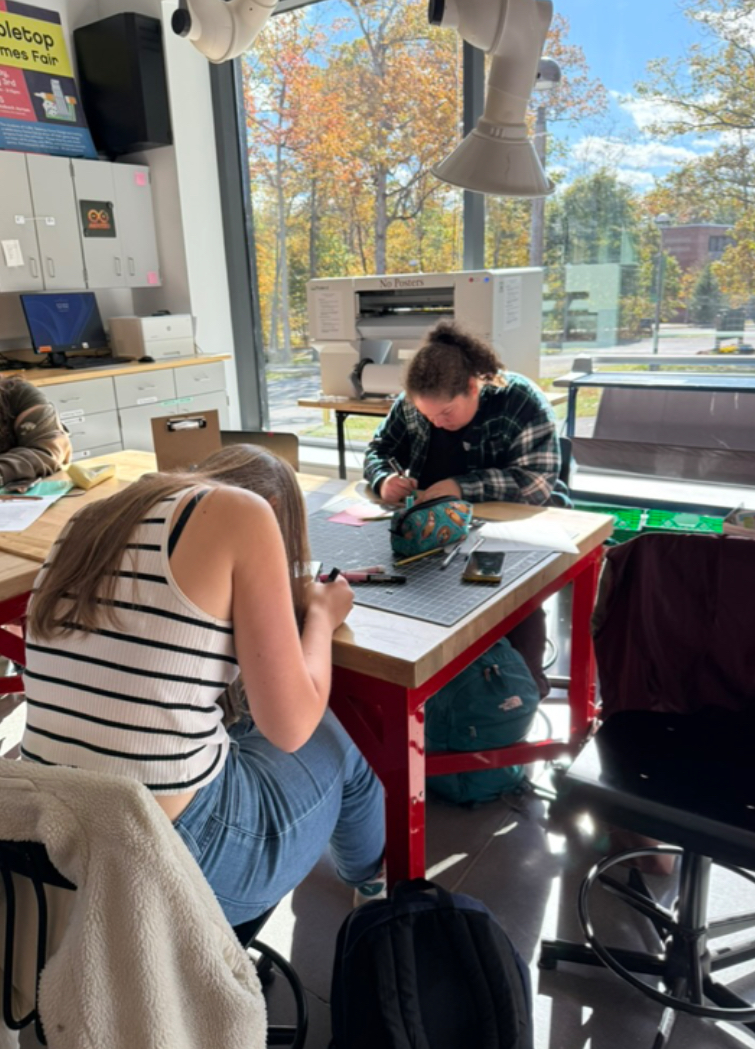
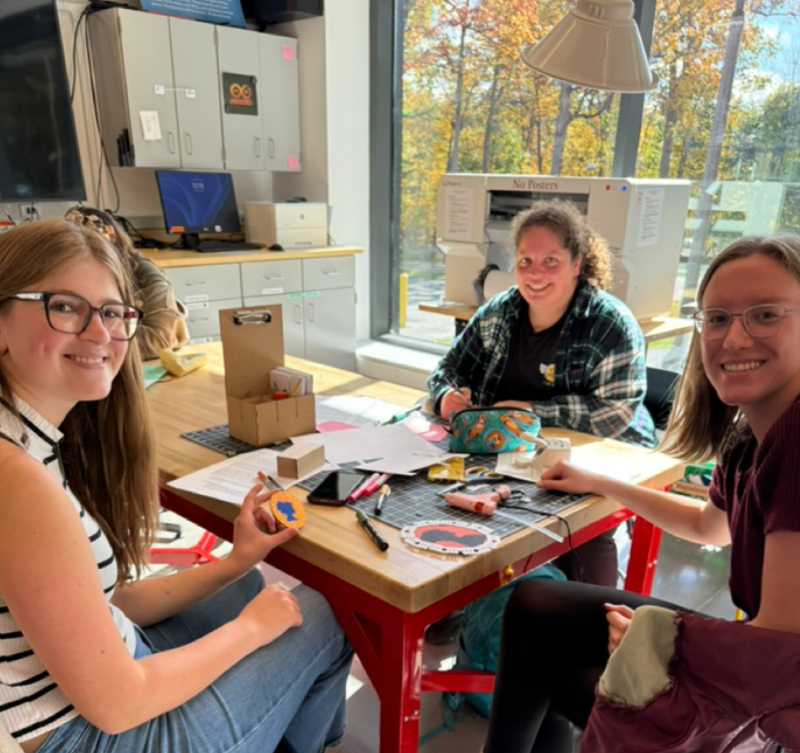
Crafting a Harriet Smith Silhouette, Two Photographs by Dr. Catherine Golden, 2025. These two photographs capture my rendition of Harriet from Emma. I chose a simple silhouette because I wanted to highlight Harriet's unknown parentage and upbringing at Mrs. Goddard's school. I added some smaller details around the silhouette to capture her friendship with Emma. I chose blue for the background because it reflected the time period. I spent a lot of time considering different shades of blue before landing on a lighter blue background and a dark blue pattern around the edge because I wanted depict the upscaling of Harriet's appearance. I used beads to create a necklace on the silhouette and traced its outer edges in blue. I wanted my artistic choices to be minimal to focus on the difference between Harriet's actual appearance and the way Emma wants Harriet to be. I focused on the ways Emma dresses Harriet up to make her more appealing to the kind of husband Emma wants Harriet to have. I chose color and jewelry as a way of depicting this change because I wanted to visually represent Emma's ideas of how a person should look.
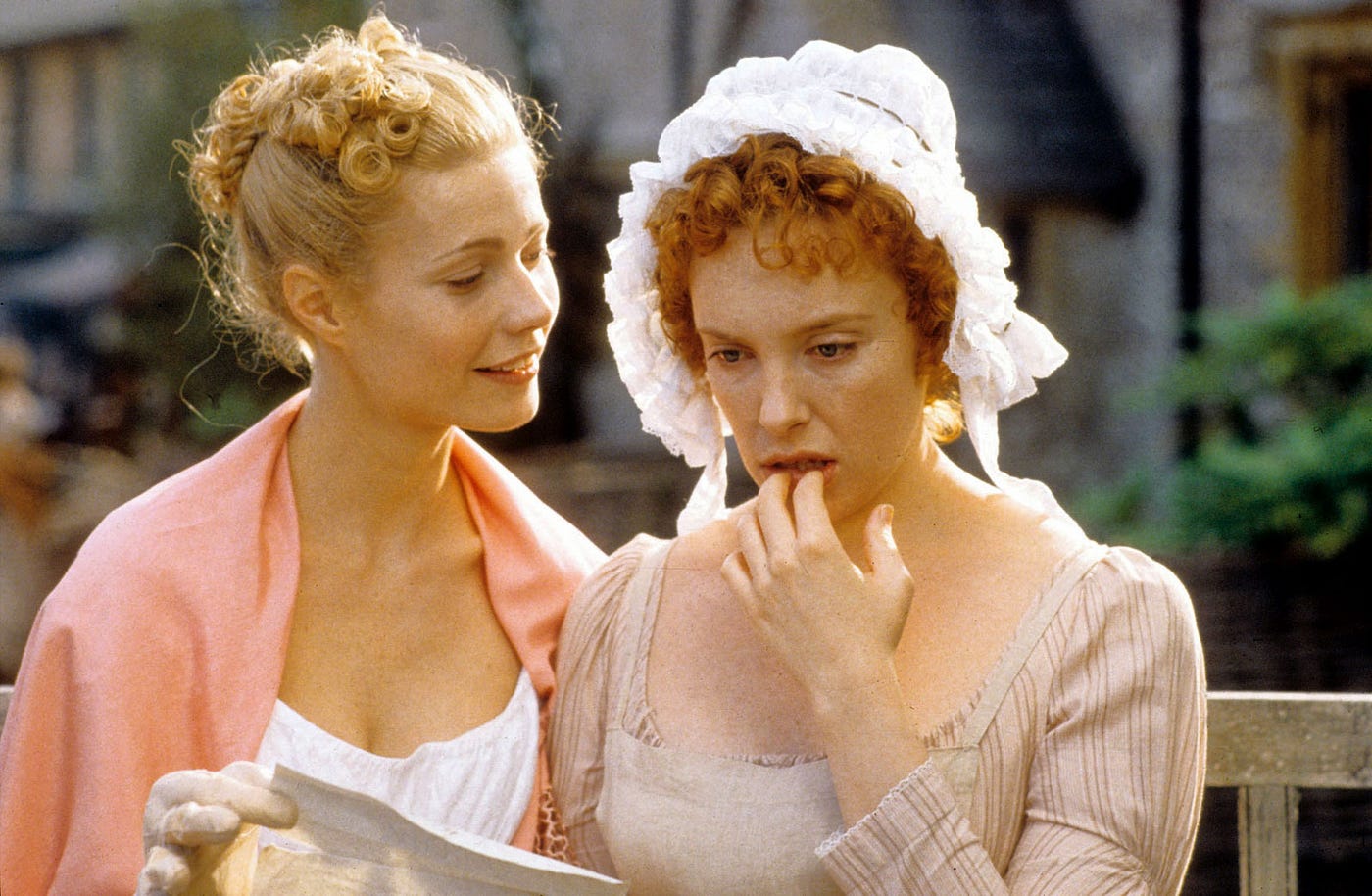
Emma, film directed by Doglas McGrath, 1996. This photo captures Emma (left) "helping" her friend Harriet (right). Emma befriended another person with whom she later learned did not have the same views on marriage. Throughout their friendship, Emma spends a great deal of time trying to find the right marital match for Harriet. This image depicts Emma challenging Harriet's way of thinking. This image is relevent to the potrait I created because this image showcases Emma's passion for helping Harriet while my silhouette depicts the the physical changes Harriet was forced into embodying after befriending Emma. Emma's confidence and radience in helping Harriet comes through when she is feeding the indecisive Harriet the "right" information.
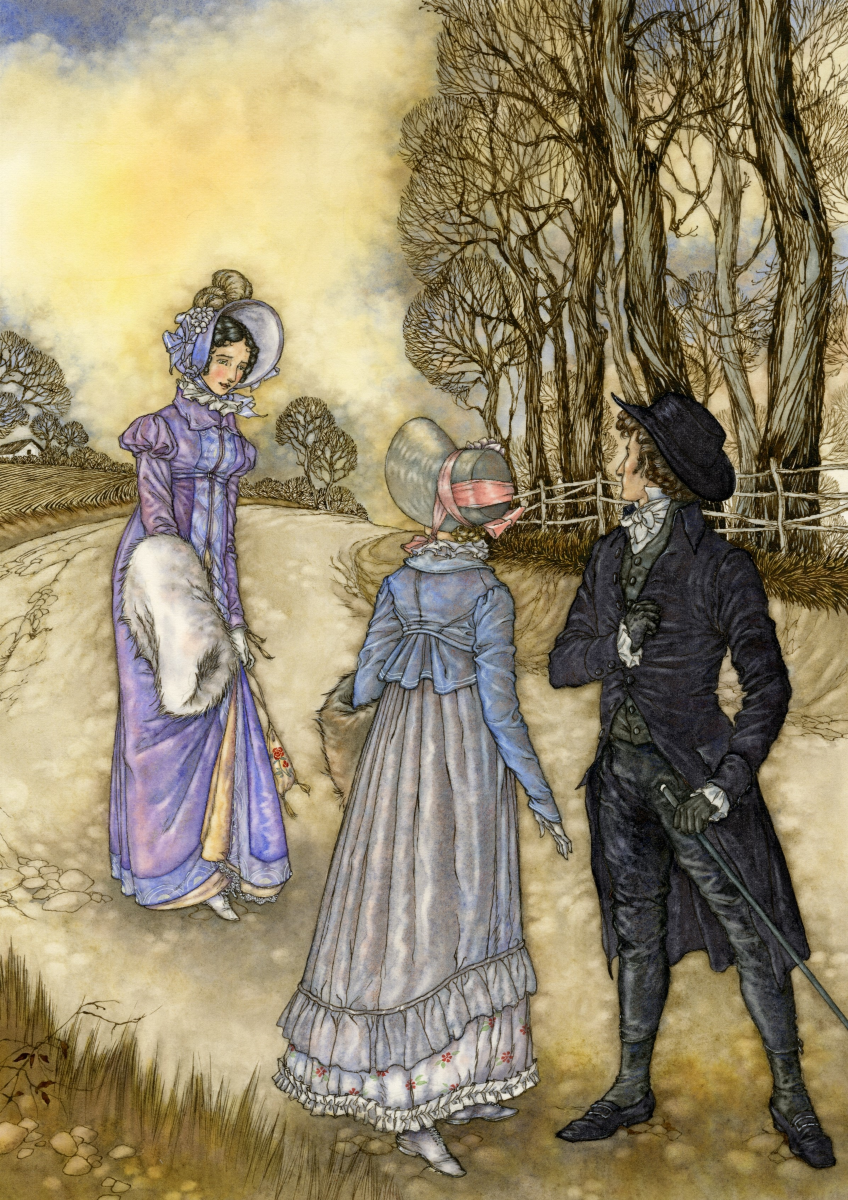
"Harriet Smith, Emma Woodhouse, and Mr. Elton" in a watercolor painting by Sam Wolfe Connelly, published by the Folio Society, 2007. Throughout the earlier parts of Emma, Austen used her characters to create a love triangle. While Mr. Elton was pursuing Emma, Emma misinterpreted his intentions to be for Harriet. This plotline is one of the several in this novel where Emma falsely convinces Harriet to raise her social status in order to marry well. Woolfe's watercolor painting depicts one of Emma's attempts to secure Harriet with a good future by using Elton to obtain it. Although Harriet is wearing clothes that appear similar to Emma's, her outfit is made with less desirable colors. In this image, Harriet looks to Emma while Mr. Elton and Emma are looking at each other. This distinction is important because it depicts Emma's desire to set Harriet up in a way she thinks is successful. Through trying to set Harriet up with Mr. Elton, Emma is making great efforts to turn Harriet into someone she is not by making Harriet more like herself.