
Holland - Mordecai's Origins
Personally, I found Mordecai to be one of the most influential characters. Through him, Eliot expressed a the Jewish people's pride for their religion and culture. He spearheaded the argument against assimilation and in favor of an upheld and protected Jewish identity. He alluded to a homeland for the Jewish people, which was a large point of discussion among the Jewish community at the time, as was the debate regarding assimilation, or how much a Jewish individual should abandon their own culture for the culture of the country they happen to live in. Furthermore, Mordecai has a profound impact on Daniel. It begins with Daniel’s offer in Chapter 40 to help Mordecai publish his work and thus spread his ideas. Mordecai forces Daniel to question his own lineage, considering the possibility that he is of Jewish descent, the effect that being Jewish would have on him as well as how it would provide new purpose to his life. This speculation, we find out later, is true. Mordecai dies happily in the end knowing that Daniel will carry on his work.
Mordecai's beliefs where mainly a product of his earlier years, before he lived in England. He explains that "'in [his] early years when [he] was studying in another land...ideas, beloved ideas, came to [him], because [he] was a Jew.'" (Eliot). He explains that he studied under a specific Rabbi who taught him about the Jewish faith, culture, etc. The Rabbi had such a powerful influence over Mordecai that he felt his "true life was nourished" (Eliot) and essentially fell in love with his Jewish identity; the origins of his current belief system regarding Jewish identity and assimilation presented in Book Six. He continued to study in Germany after the death of the Rabbi. It was through these studies he became acquainted with the idea of a homeland for the Jewish people, which would eventually become a key aspect of his belief system that he would advocate heavily for.
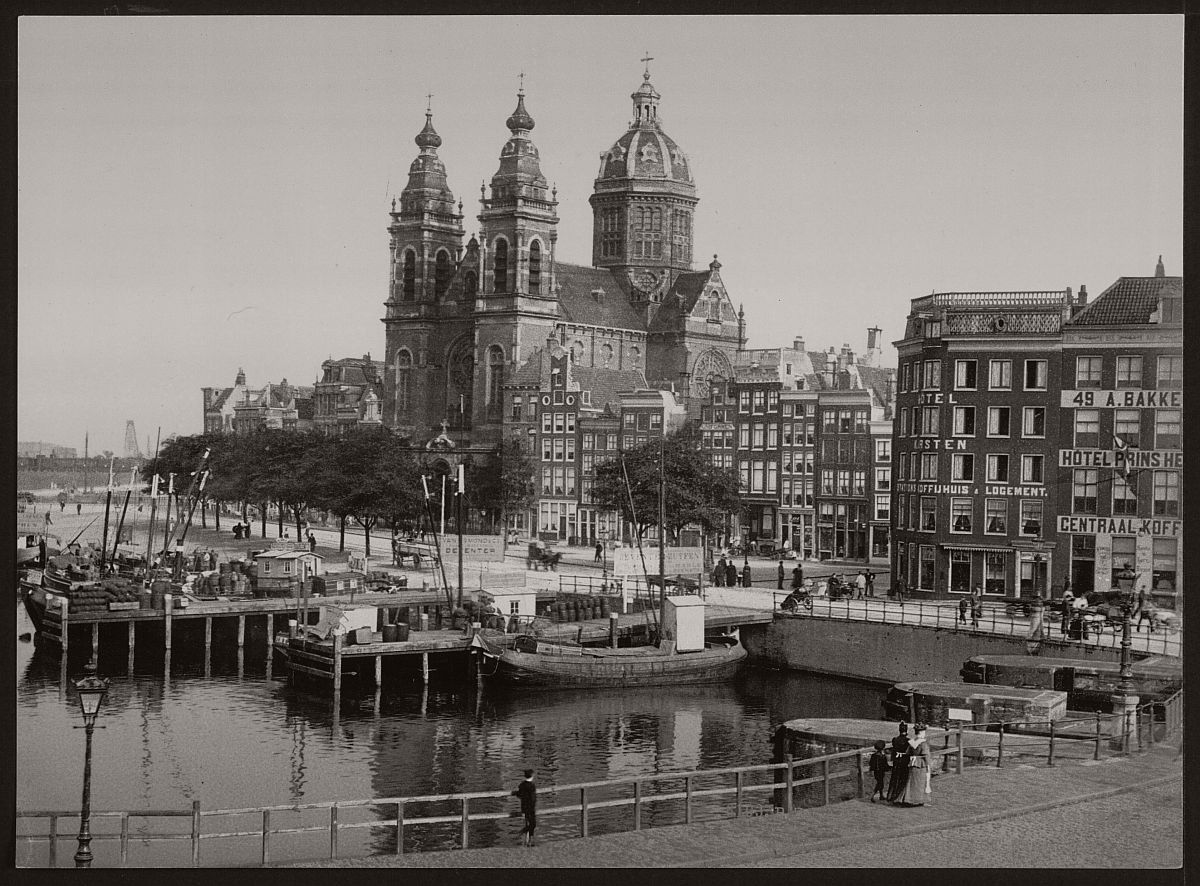
It was very difficult to find information regarding the Jewish population in the Netherlands during the mid to late nineteenth century. Everything I could related to the Holocaust. which leads me to believe that the Jewish people where somewhat disregarded during that time period in Holland their whereabouts were not documented and thus their history was not well kept or recognized. The Netherlands itself has somewhat of a dynamic and almost tragic history. Leading up to the nineteenth century, the Netherlands was controlled by Napoleon, specifically his Batavian Republic. The Batavian Republic granted emancipation to the Jewish population in 1792, however, it was not entirely accepted by every Jewish individual. Factions were created and the Jewish population became divided. Some wanted to be emancipated and seen as Dutch, while others "wanted to maintain the political separateness" (Jewish Virtual Library).
When Napoleon was defeated, the Netherlands became an independent country once again under the rule of King William I during the mid nineteenth century. He installed "compulsory secular education for Jewish children; and he waged a determined battle against Yiddish, which resulted in the Jews’ widespread adoption of Dutch" (Jewish Virtual Library). Therefore, the Jewish population became extremely assimilated and began to take up high paying occupations, many becoming doctors and lawyers.
Works Cited
Eliot, George. "Daniel Deronda." The Project Gutenburg. www.gutenburg.org
"The Netherlands (Holland) Virtual Jewish History Tour." Jewish Virtual Library, American - Israeli Cooperative Enterprise, 1998, www. jewishvirtuallibrary.org
Coordinates
Longitude: 5.291266000000