
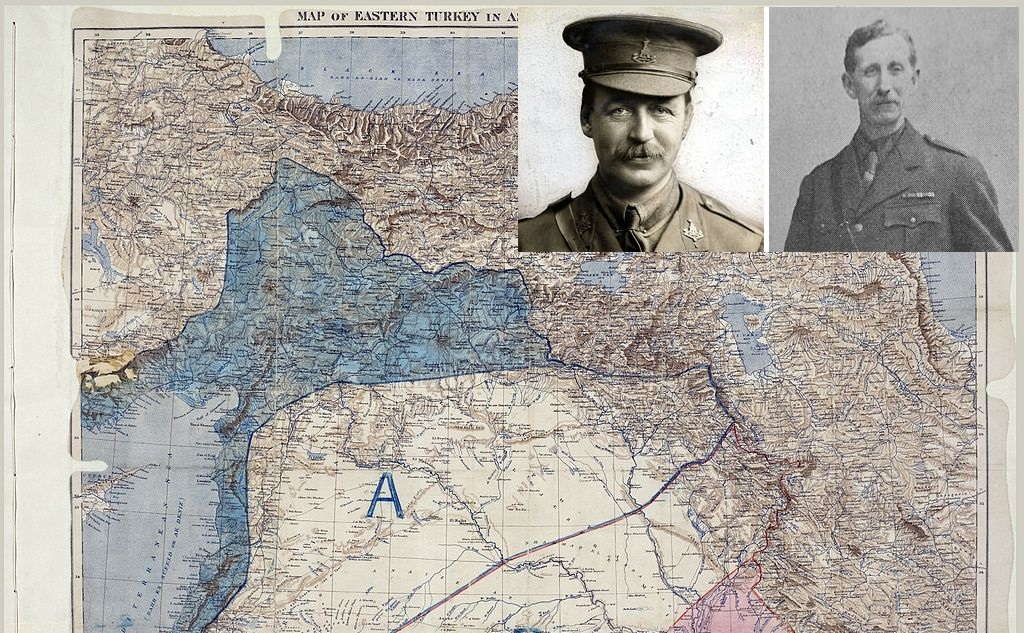
Nationalism is widely believed to be a cause of the First World War. Many European countries, including Britain, viewed themselves as highly superior in comparison to other places around the world. The British experienced a heightened sense of patriotism and a sense of moral superiority over Germany, and their fueling of harsh rhetoric toward enemy countries establishes the Central Powers as an “other,” and creates an us versus them mentality. Not only was the “otherness” created by means of viewing opposing countries as the enemy, but Middle Eastern countries were also “othered” when they were mandated to the British and French Empires. Arguably one of the most controversial outcomes of WWI, the League of Nations adopted the Mandate System, which required , “the legal control over certain territories [to be] transferred from a defeated power to a victorious one” (Gearon). As a result, the British Empire was granted mandates in Iraq and Palestine, taking over whole sovereign countries just because they could – essentially “othering” those who were already residing there. (This was also called the Sykes-Picot Agreement).
Gearon, Eamonn. Was Britain Really Committed to Independence for Its Middle East Mandates, or Was the Mandate System Just Another Form of Empire Building? A Resource for Key Stage 4. 2017, www.history.ox.ac.uk/::ognode-637356::/files/download-resource-printabl….
School History. “Nationalism as a Cause of World War I | Facts & Information.” School History, 2019, schoolhistory.co.uk/notes/nationalism-as-a-cause-of-world-war-i/.
"Sykes Picot Agreement Map signed 8 May 1916" is licensed under CC BY
