

The 19th Century Victorian Era: Prostitution
Introduction:
During the late 19th century, Oscar Wilde published a book called “The Harlot’s House” that highlights prostitution in London. The poem emphaize a concept in London called the “Great Social Evil”, where prostitution began to rise as women were desperately needed income to support themselves.
In Wilde’s poem, he writes about what he sees from the outside of the house. Prostitutes were described as ghostly dancers dancing together as their laugher passed through Wilde’s ears. He hears the sound of the music from the outside, it sounds like “strange mechanical grotesques”, but then it makes “fantastic arabesques” attracting both him and his wife to join them. He refers to those prostitutes as “ghostly dancers”, and mentions one character as a “marionette”, meaning a puppet that is being controlled by someone using strings above.The poem explains Wilde’s perspective on prostitutes, as he refers to them as deadly women. Throughout the poem, I explore Wilde’s ideas with these questions: why did Wilde see prostitutes as ghosts or a person that is like a lifeless puppet being in control? What was prostitution appears to be like in society during the Victorian era?
The four images in the exhibition will explode prostitution in the Victorian era. It begins with how does prostitution relates to Harlot’s House, how men identify prostitutes, how do women look at themselves working this as a job, and the result with choosing this path.
Work Cited:
Wilde, Oscar. “The Harlot’s House”, 1882
Image in the Series
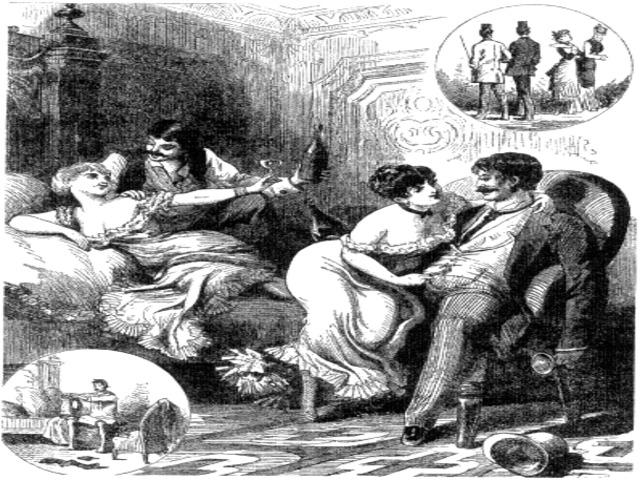
Fig 1: Naman, Dhanju. “Prostitution and lifeof hookers in Victorian society.” Nov 11, 2018, https://medium.com/@namandhanju/prostitution-and-life-of-hookers-in-vic….
In 19th century London, Prostitution is sometimes served in brothels, a building that has bars, pool halls, and a place to sleep overnight, it was where men fulfill their kinky fantasies. In this image, I notice two men each have a prostitute with them, assuming that this is where prostitutes work. Connecting this image back to Wilde’s poem, Harlot’s House was a place filled with music, and the prostitutes dance, everything about them caught the eyes of Wilde and his wife. Similarly, Brothels were created to let prostitutes lure men in and expose their desires. Brothels play music to create a relaxed ambiance for men, where they pay women to give them service.
Fig 2: Judith Flanders, “Prostitution.” 15 May, 2014, https://www.bl.uk/romantics-and-victorians/articles/prostitution
This printed painting was made by Thomas Rowlandson, it illustrates how prostitution is like a trade, the prostitute takes the money as she opens the door to perform the next step. In the painting, I notice that it has hidden a detail that the audience may not have caught. The prostitute’s dress is a little shorter than the regular dresses Victorian women wore. There was a saying in prostitution created by Victorian men that they can tell which woman is a prostitute just by the length of her dress, if her dress exposes her ankles, then she is a prostitute. Ankles were considered as a sexualized body part, so being able to see a woman’s ankles is considered inappropriate. The man next to the prostitute is obviously drooling over her as he places the coins in her hand. In The Harlot’s House, Wilde wrote how the music and slim skeletons attracted him and his wife, the painting is similar to this part of the poem, where the man is attracted to the prostitute and he goes on further by paying her. It is also worth a mention that the prostitute looks taller than the man, indicating that she holds more power because she is seducing him for money.
Fig 3: The Victorian Web. “Found by Dante Gabriel Rossetti.” 27 June, 2020, https://victorianweb.org/painting/dgr/paintings/11.html
This unfinished painting was made by Dante Gabriel Rossetti. Before reading the description, I first noticed the way that man is grasping the woman. She seems uncomfortable, but instead of trying to defend herself, she looks away and falls to the ground as if she has no power to fight. This painting is about a woman in London, who got caught by her former lover and refuses to look at him due to the shame of being a prostitute. This was how Rossetti described the woman’s emotion to William Holman, “...she, recognizing him, has sunk under her shame upon her knees, against the wall of a raised churchyard in the foreground, while he stands holding her hands as he seized them, half in bewilderment and half guarding her against doing herself a hurt”(Rossetti). The woman was being called a “fallen woman”, which is an archaic term used to describe women who lost their innocence. The woman’s facial expression looks painful, and if we were able to read her mind in the painting, her mind is saying: she’d rather die than have to deal with the consequences ahead of her. In Wilde’s poem, he described one prostitute as a marionette. I see the woman in the painting as a marionette when reality struck her and it controls her by pulling the strings, therefore, leading her to become a prostitute,
Work Cited: Dante Gabriel Rossetti, Letter to William Holman Hunt, January 30, 1855, 1855.
Fig 4: Thomas Hood, The Favourite Poems of Thomas Hood, 1872.
This melodramatic poem created by Thomas Hood is about a young woman committing suicide at the Waterloo Bridge. The poem mentioned that she was unmarried and pregnant and she was marked as a “fallen woman” by society(. From that point, she was fated to die. Most women who chose this path gained unwanted attention from society and the government. Because of this, society was strict with women and made stereotypes to identify who is a prostitute or fallen woman. Just like the young woman in the image, some faced tremendous stress from being a prostitute or doing things that men considered as prostitution behavior. In the end, they chose to commit suicide to end it all. In the Harlot’s House, Wilde describes the prostitutes as “ghostly dancers”, which indicates that these women are not alive. This links back to the image where the woman killed herself and she may have turned into a ghost. Wilde suspected the fate of many prostitutes so he sees them as ghosts or surreal figures.
Work Cited: Judith Flanders, Prostitution, 2014