
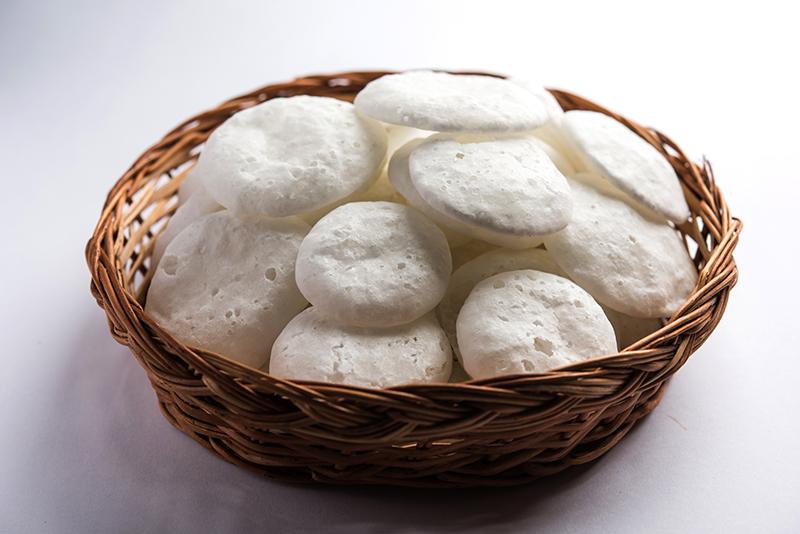
Batasha is a Bengalese sugar candy which is produced by melting sugar to a boiling point and adding sodium bicarbonate to form small button sized treats. They are then laid on a sitalpati- a traditional Bengalese mat specifically designed for cooling. Batasha is enjoyed by people across all socioeconomic levels and is used in Indian rituals. It is easy to imagine the versatility and longevity of batasha in Indian culture, as the sweet can be preserved and transported easily. The origins of batasha predate the Mughal rule of India, as the ancient Gupta dynasty first learned how to crystallize and refine sugar back in 350 AD. India has a rich history of cultivating sugarcane, and Indian sugar was well known globally as superior to other types of refined sugar. Additionally, British colonization efforts were deeply tied to sugarcane production in India and the West Indies so it is likely they used Indian techniques or laborers in order to increase production. Data indicates that early 20th century British India was the powerhouse of sugarcane production, outgrowing and out consuming the closest British colony by hundreds of thousands of tons. It is not hard to envision the important role batasha and Bengalese sweets played within traditional Indian culture and rituals, but the economic considerations likely influenced its staying power over time.
In Sen’s autobiography, her status as a widow influences her diet. For instance, after she is widowed, Sen is confined to a strict widow’s vegetarian diet of lentil soup and jackfruit. She turns to stealing traditional sweets like batasha out of the storeroom for nutrition. While batasha is not an integral part of Sen’s story, it is worth noting the role food plays within the text to serve as an indicator of class status. Batasha and other Bengalese sweets are uniquely enjoyed by people of all classes for many occasions; after Sen’s husband dies, her father gifts some batasha to their relatives. It is significant that sweets like batasha would be offered to visitors or outsiders, but it would be improper for widows to eat similar things. This speaks to the extreme level of ostracization Indian widows faced and demonstrates the implication that the widows are undeserving or cursed, so they cannot eat the same sweets and delicacies that even lower class people would be afforded.
Sources:
Chowdhury, Sanjeet. “Batasha.” Sahapedia, 24 July 2018, www.sahapedia.org/batasha.
Mucci, Kristy. “The Illustrated History of How Sugar Conquered the World.” Saveur, 9 Jan. 2017, www.saveur.com/sugar-history-of-the-world/.
Robertson, C. J. “Cane-Sugar Production in the British Empire.” Economic Geography, vol. 6, no. 2, 1930, pp. 135–151. JSTOR, www.jstor.org/stable/140609.