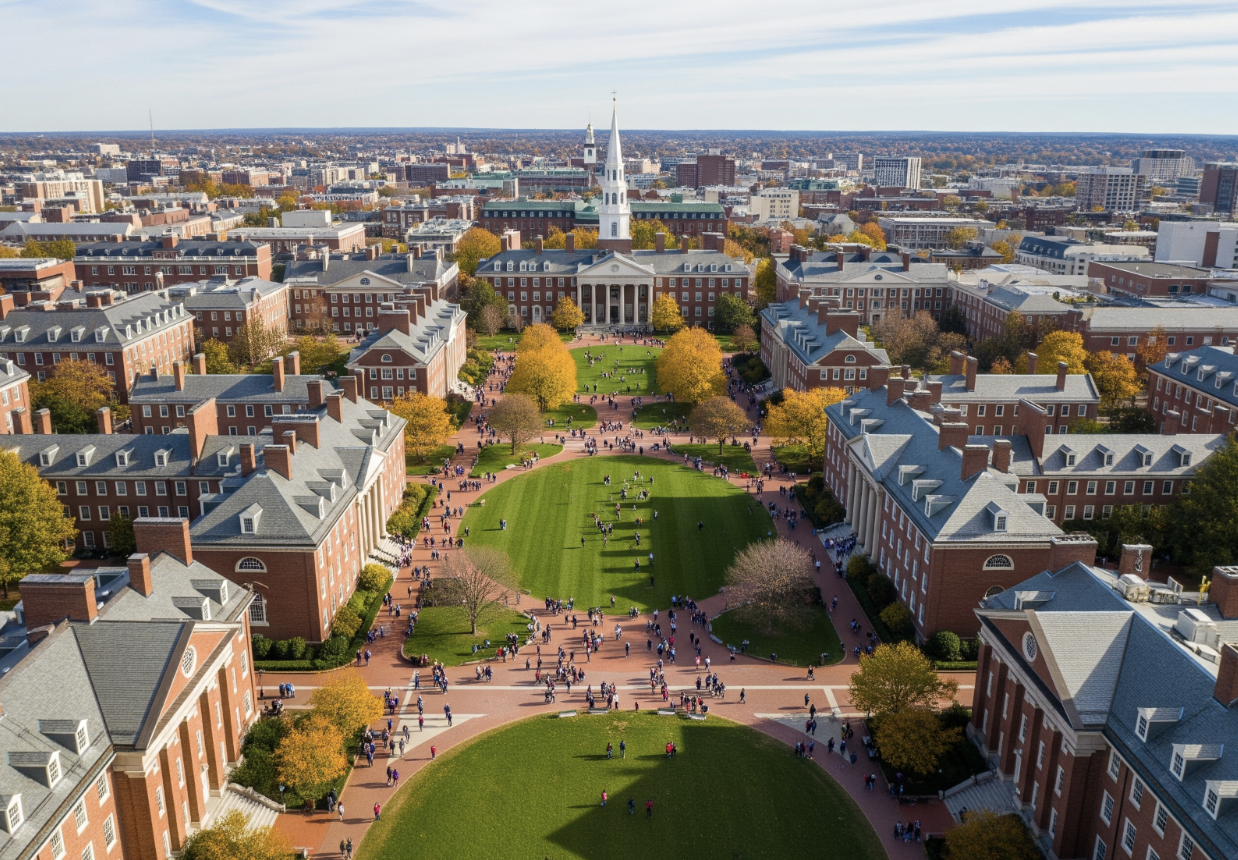
Cambridge, Massachusetts is a historic academic city located just across from Boston. It is a home to major universities, most notably the ivy institution Harvard University. It is widely recognized as one of the most influentialintellectual centers in the United States. According to Encylopaedia Britannica, Cambridge developed specifically as a hub for higher education and research, thus shaping its destiny into that of a city marked with global scholarships, publishing, and cultural exchanges.
This location is essential to Megha Majumdar’s development as an environmentally-motivated author, as she studied at Harvard University, receiving a bachelor's degree in anthropology. Her time in this environment situated her within a highly academic community, exposing her to global political discourse, literary traditions, and instilling questions of inequality and migration. Growing up in a city filled with corruption, it can be near impossible for citizens to acknowledge or even see the disparity around them without the gift of distance. Being able to see systems of power working and functioning correctly, seeing the flourishing natural environment not slummed with coal pollution(Kolkata, India Britannica), provided Majumdar with the space needed to properly see and distinguish damaged systems within her hometown.
Understanding Majumdar’s time as Cambridge deepens the reading of Majumdar’s work due to the contrast between the two different global centers that shape her unique perspective: the academic, resource-rich environmentof Cambridge and the densely populated, unequal urban world of Kolkata that appears both within her fiction and real life. Cambridge helps explain the stories’ careful attention to systems of power and socials, as Majmudarwrites with an awareness shaped by personal experience and academics. By situating Majumdar’s education in Cambridge, readers can easily digest how her work reflects a blend of perspectives- the exact message sent by the book.