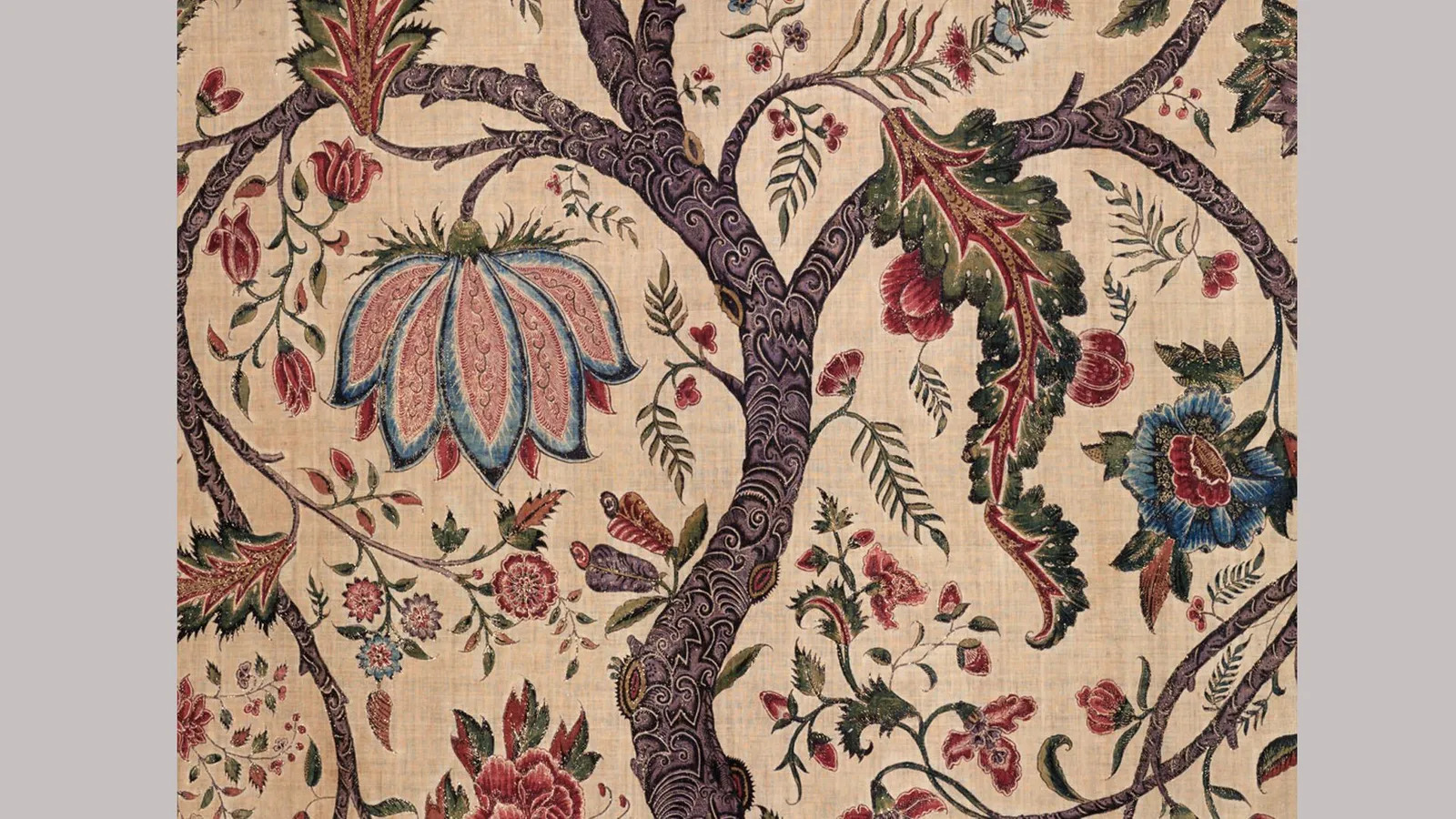
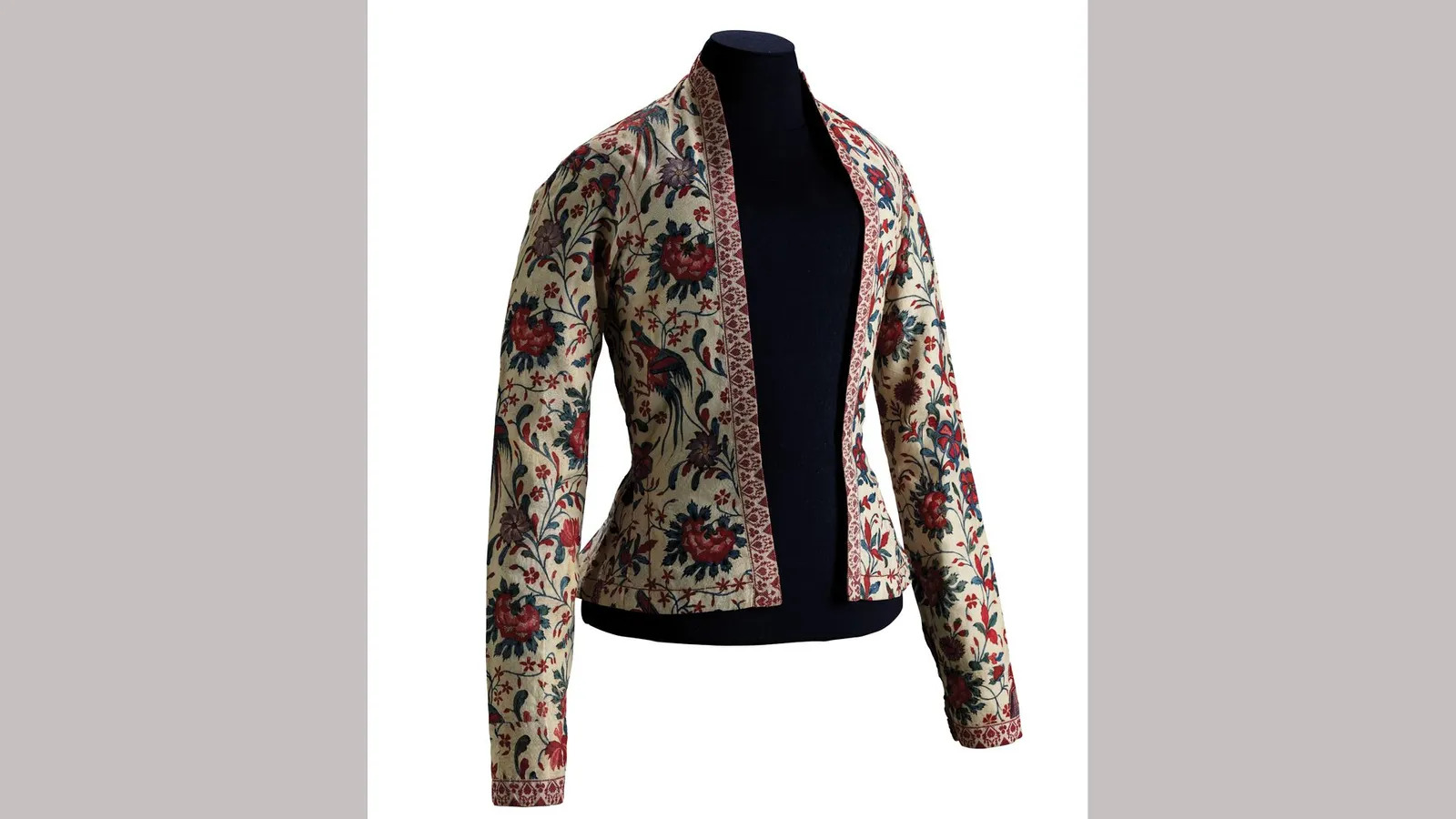
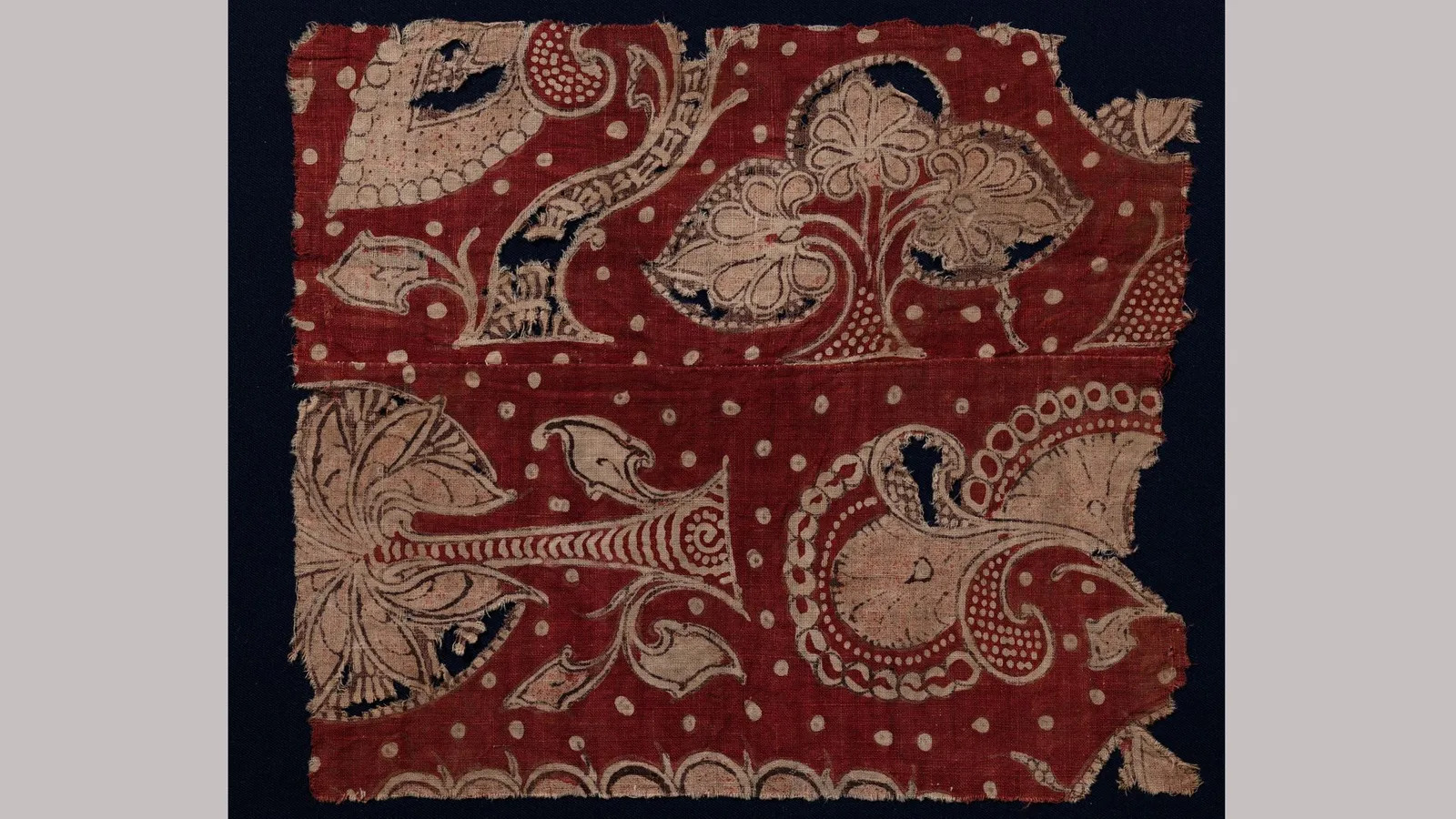
Chintz fabric, defined by its floral designs and the use of mordants and dyes, originated in India and became a staple of English fashion and interior design by the seventeenth century. While chintz became a popular choice for clothing, curtains, and bedspreads, England placed a partial ban on the import of the fabric from 1700 to 1774 in order to protect its own internal developing textile industry.
During the 1700’s, due to a series of technological developments, British textile mills became able to develop their own imitation chintz, leading Britain to become a dominant force in textile printing and effectively eliminated India from the trade. In order to supply the cotton necessary for the fabrics, however, Britain relied on an import of a hardy cotton strain from United States that was cultivated through the use of slave labor. Chintz continued to remain popular among the masses, so much so that George Eliot, in a letter to her sister, coined the term “chintzy” to mean a gaudy or cheap imitation, a term that is used to this day.
__________
Source 1
Bekhrad, Joobin. “The Floral Fabric That Was Banned.” BBC Culture, BBC, 21 Apr. 2020, https://www.bbc.com/culture/article/20200420-the-cutesy-fabric-that-was-banned.
In the BBC Culture article, “The Floral Fabric That Was Banned,” Bekhrad details the troubled trade history of chintz fabric between India and Britain, outlining the partial ban of the fabric’s import in Britain from 1700-1774. This source additionally provides insights into the consequences of this ban, as Britain’s imitation chintz and technological developments led Britain to become the leading textile exporter in Europe. The supplies required for the manufacturing of these materials, however, included a strain of hardy cotton cultivated with slave labor in the United States, thereby perpetuating the slave trade and removal of indigenous Americans.
Source 2
“Chintz Appliqué: From Imitation to Icon.” Chintz Appliqué: From Imitation to Icon | International Quilt Museum - Lincoln, NE, 22 Nov. 2008, https://www.internationalquiltmuseum.org/exhibition/chintz-appliqu%C3%A9-imitation-icon.
In the article “Chintz Appliqué: From Imitation to Icon” from the International Quilt Museum, the actual materials and processes that specialize chintz fabric are detailed, including how complex process of mordant dyeing arose in India and was later imitated by British textile mills, essentially eliminating India from the textile trade. Additionally, this source delineates where chintz fabric could be found, specifically for home décor as draperies and bed coverings.
Source 3
“What Are the Origins of Chintz?” Homes and Antiques, 25 Nov. 2021, https://www.homesandantiques.com/antiques/discover-the-history-of-chintz/.
This article from Homes and Antiques provides insight into the historical background of the chintz trade as well as its relevance in more modern-day interior design. This article also provides insight into the discrepancies between English and Indian produced chintz, discussing how George Eliot coined the term “chintzy” to refer to something as a gaudy or a cheap imitation, indicating a social perspective on the mass-produced version of the fabric.
Source 4
"Multiple Classified Advertisements." Myra's Journal of Dress and Fashion, vol. V, no. 4, 1 Apr. 1879. Nineteenth Century UK Periodicals, link-gale-com.proxy.uchicago.edu/apps/doc/DX1900864582/GDCS?u=chic_rbw&sid=bookmark-GDCS&xid=496a0788. Accessed 8 Feb. 2022.
As seen in the Myra's Journal of Dress and Fashion from 1879, this advertisement presents an illustration of the Perth Dye Works, stating that this company works in the cleaning and dyeing of fabrics and furniture covers such as chintz. This advertisement as well as the lengthy list of businesses and addresses listed as institutions of the Dye Works, illustrate how textiles, dye works, and mills were becoming a centralized part of the British economy during the Victorian period, as well as how chintz was recognized on a day-to-day scale.
Source 5
"Multiple News Items." Standard, 30 Sept. 1863, p. 7. British Library Newspapers, link-gale-com.proxy.uchicago.edu/apps/doc/R3213655518/GDCS?u=chic_rbw&sid=bookmark-GDCS&xid=5efbb116. Accessed 8 Feb. 2022.
This police report outlines a copyright dispute amongst multiple textile businesses in which Baniston Hall works claims that their unique chintz pattern had been replicated by other companies. Multiple members of large firms in the chintz trade convened and agreed upon the similarities between the patterns, and the summons were dismissed. This source is of particular interest due to the fact that the chintz patterns produced in England were in fact imitations of the Indian designs themselves, and even so, the British textile market continued to boom with an abundance of mass-produced patterns.