
The Criminal Law Amendment Act of 1885 is also known as the White Slave Traffic Act (Fletcher 1). This act makes further provision for the protection of women and girls and the suppression of brothels (Mead 17). It has affected several important changes both in law and in procedure (Mead 13). The Criminal Law Amendment Act was followed by the widespread fear that traffickers were forcing many young women into an organized, global system of prostitution (Fletcher 2).
The bill for the amendment of the law took four years to be complete. In 1881, there was public attention to the systematic traffic of English girls to prostitute in foriegn countries. With evidence from 1881 and 1882, a report was then made in August of 1882. The committee found that this trafficking system existed and these women lived very unethical lives and since they did not speak the foriegn language, they were imprisoned in the brothels they were taken to (Mead 7). After this, there were several recommendations made by the Committee and in the years 1883 and 1884, bills were carried in the House of Lords. The Lower House never found an opportunity of dealing with the subject (Mead 10). Finally, the act was reintroduced for a third time in 1885 and passed with a few revisions (Mead 14).
There are three parts to the act: Protection of Women and Girls, Suppression of Brothels, and Definitions and Miscellaneous (Mead 16). These provisions included: raising the age of consent from 13 to 16 years of age; making it a criminal offence to solicit girls for prostitution by using drugs, intimidation or fraud; punishing people who would permit under-age sex on their properties; making it a criminal offence to abduct a girl under 18 for sexual purposes; giving magistrates the power to issue search warrants to find missing women; providing for summary proceedings to be taken against brothels, and criminalizing "gross indecency between males" (Mead 17-128).
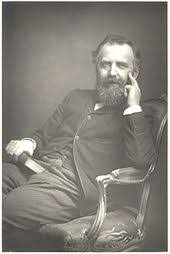
Many people were involved in getting this amendment to pass. W. T Stead was a British newspaper editor who became a very controversial figure in the Victorian era. He played a huge role in getting the Criminal Amendment Act passed (Stack 39). He had worked with feminist activists to assemble popular opinion during the huge panic over white slavery in the 1880s, helping pressuring parliament into passing the Criminal Law Amendment Act (1885) with the publication of his exposé of child prostitution, 'The Maiden Tribute of Modern Babylon', in the Pall Mall Gazet (Fletcher 1). Stead was also involved in the attempt to extend the idea of “childhood” into the mid-teens, by emphasizing the inability of girls to make informed decisions about sexual consent. The Maiden Tribute articles also contained an emphasis on a greater teaching of the young basic physiology and sexual morality (Stack 25).
There were two objectives in mind when writing The Maiden Tribute articles. The first objective was to make sure the bill passed in order to raise the age of consent to 16 years old, and the second was to prevent the passage of certain sections in the bill, which threatened to increase ‘the arbitrary powers of the police on the streets’. Stead viewed this as ‘the very real hell of police despotism’ (Stead 39).
In 1912, after the death of W.T Stead, activists saw a signal opportunity to relaunch their campaign to increase penalties for procurers that had failed for several years to make headway in parliament (Fletcher 1). After feeling pressured, the Liberal government backed the Criminal Law Amendment Act and it eventually reached the statute book at the end of the year. In the final version presented to the Commons in the autumn of 1911, authorizing arrest without warrant of suspected procurers, increasing penalties for brothel-keepers, allowing landlords to terminate leases for property used for prostitution but also establishing penalties for those who knowingly let people propterties for these purposes, increasing penalties for people who lived off the earnings of prostitutes. (Fletcher 4).
Works Cited
Fletcher, Ian Christopher. “Opposition by Journalism? The Socialist and Suffragist Press and the Passage of the Criminal Law Amendment Act of 1912.” Parliamentary History (Edinburgh University Press), vol. 25, no. 1, Mar. 2006, pp. 88–114. EBSCOhost, doi:10.1353/pah.2006.0004.
Mead, Frederick. The Criminal Law Amendment Act, 1885: with Introduction, Notes, and Index. Shaw & Sons, Law Printers and Publishers, 1885.
Stack, David. The Maiden Tribute of Modern Babylon – By W.T. Stead. no. 2, Blackwell Publishing Ltd, June 2009, pp. 333–34, doi:10.1111/j.1750-0206.2009.00111_18.x.