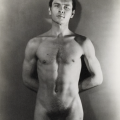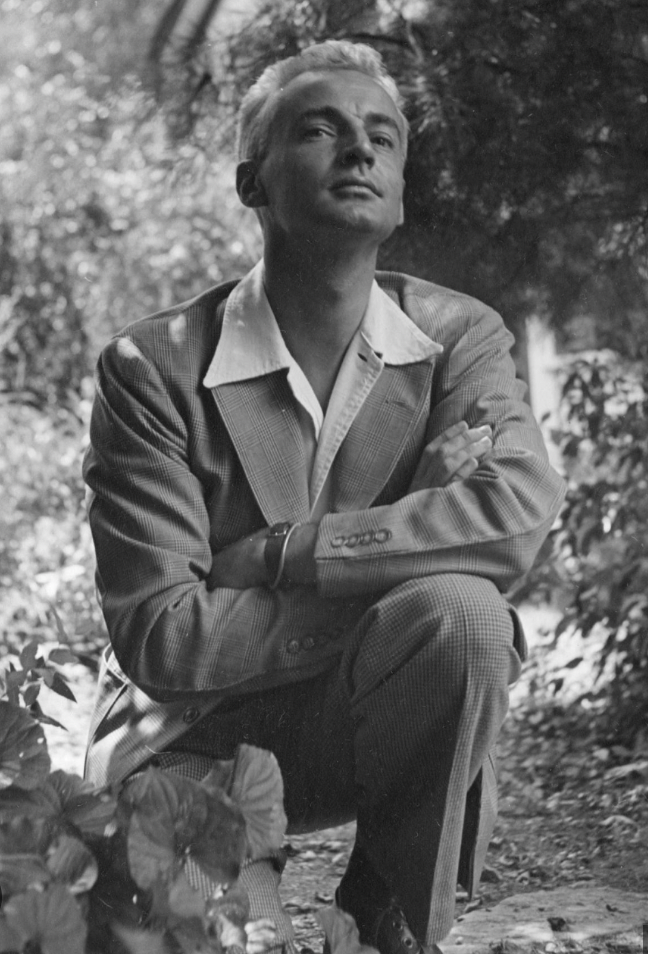
During his lifetime, George Platt Lynes took many different types of pictures of many different types of people. Some of his most famous photographs consist of photos that were not even seen until after he died in 1955. These photos consisted of hundreds of pictures of nude male models posing for Lynes. These pictures were only seen by the public because Lynes had met Dr. Alfred Kinsey, who was a researcher of sexuality. They soon became good friends and Lynes willed all of the photographs to Dr. Kinsey after he passed (George Platt Lynes). Kinsey released the photographs to the public, and through them, people could see the mystery behind being queer in the 1940s. The fear of being gay in the mid-1900s lead men and women to hide their true selves from the public. Lynes, being gay himself, took it upon himself to show the true beauty behind being queer, and that it was not something to be ashamed of. The fear Lynes had of coming out overweighed his passion for photography and forced him to hide these pictures until after his death. Knowing that these photographs were such a big secret between Lynes and his models makes them that much more interesting, and the fact that the models were not afraid to express who they truly were inside.
You may be wondering why these events have anything to do with a photograph of a naked man staring at the camera, but what you may not realize is that each of these events helps me explain what Group of 3 Photographs of Yul Brynner was doing culturally when George Platt Lynes created it. In the first event, Yul Brynner posing for Lynes was a risky move during the time. As a struggling actor, Brynner was taking a huge risk posing nude for a photographer who was within the gay community. Brynner was willing to risk what people may think of him in order to show that anyone could be gay and that as a masculine man, he could show that. The next event ties into the previous one to show that even Lynes, a renowned photographer, was willing to hide his passion in order to save himself from what could have happened if the world found out what his sexuality was. The fact that the models could trust Lynes with their secret identities makes the photographs more intimate to look at by showing the model's most vulnerable secret to the world. Through these events alone you may not understand the severity of being openly gay during the mid-1900s, but this last event will be able to show you just how big of a deal it was to be openly gay. The Lavender Scare shows how the public thought about queer individuals, in the fact that they considered being a communist was comparable to being gay. If it was discovered that you were gay, you would have to relocate to another town where no one knew you just so you could get a job. This ties back to the first two events since Brynner, the other male models, and Lynes himself were susceptible to being compared to a Communist and become outcasts.
Brown, Gretchen. “Lavender Scare: The Historic LGBTQ Witch Hunt.” THIRTEEN, WNET, 1 June 2022, https://www.thirteen.org/blog-post/lavender-scare-the-historic-lgbtq-wi….
Fink, Matt. “Flesh and Form: Remembering George Platt Lynes.” Musée Magazine, Musée Magazine, 28 Jan. 2021, https://museemagazine.com/features/2019/4/22/flesh-and-form-remembering….
“Getting to Know Yul | the Rake.” Therake.com, therake.com/stories/icons/getting-to-know-yul-brynner/. Accessed 20 Mar. 2023.
Platt Lynes, George. Second image of Group of 3 Photographs of Yul Brynner. 1942. https://www.artnet.com/artists/george-platt-lynes/group-of-3-photographs-of-yul-brynner-r12883Hsy6mhP2YCLthNQ2Links to an external site.. Accessed April 3, 2022.
“The Other War.” Learning for Justice, 13 Dec. 2018, www.learningforjustice.org/podcasts/queer-america/the-other-war.
“Yul Brynner.” Wikipedia, Wikimedia Foundation, 29 Mar. 2023, https://en.wikipedia.org/wiki/Yul_Brynner.