
Vivie Warren:
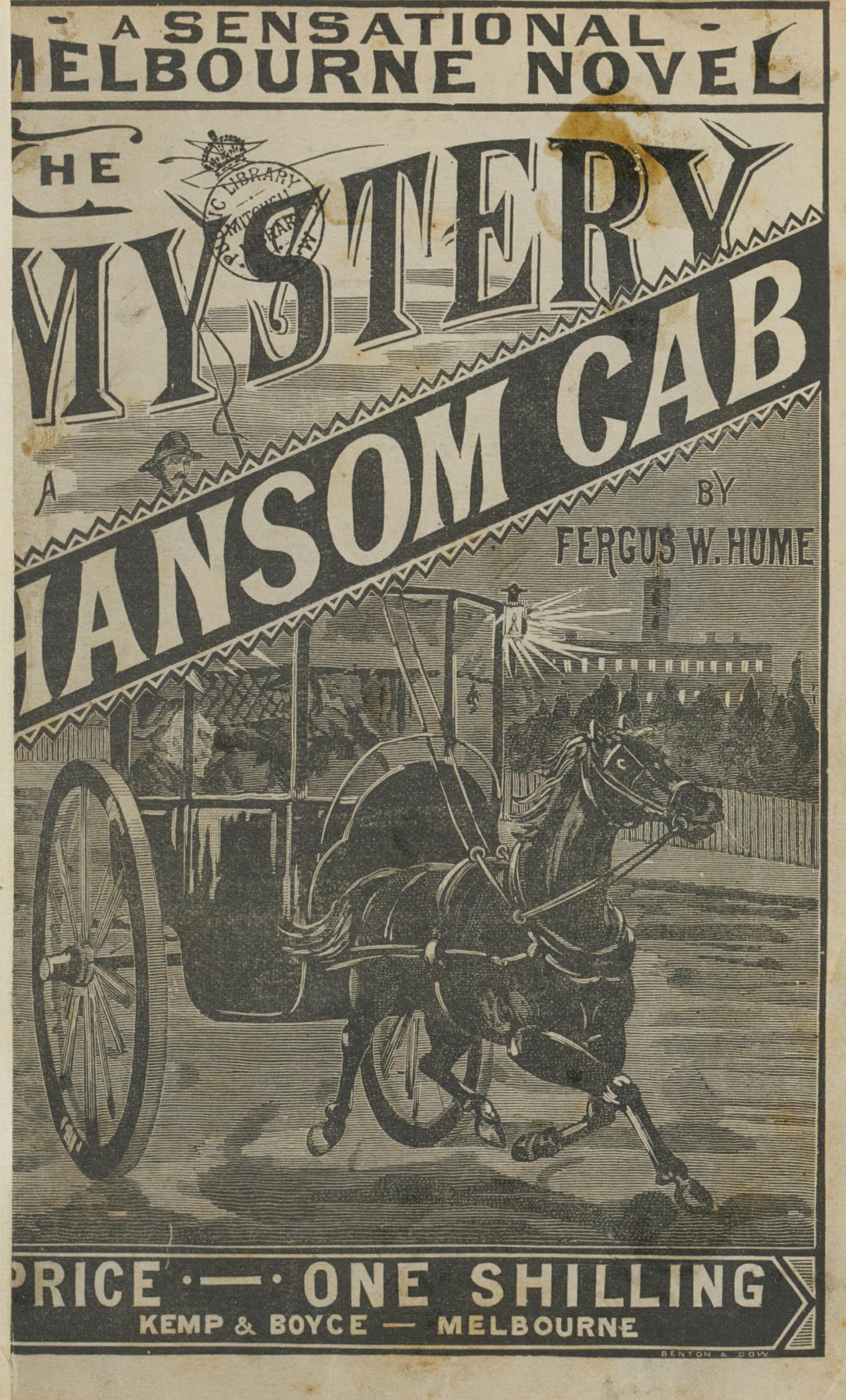
This detective novel, "The Mystery of a Hansom Cab", is the talk of the town right now. I've been immersed in this book for the past week, and I simply had to cut off its cover and paste it into my scrapbook. I came across the book at a local bookstore that I frequent, and I decided to see what all the buzz was about. I've been reading it everyday after returning home from work. There is something that is simply comforting about coming home from a long day at the lawyer's office, and opening a book while sitting and smoking a cigar. I feel as though it highlights my independence, the fact that I earn my own money and can do what I please in my free time. My mother disapproves of this habit; she claims it is "unwomanly" to smoke cigars. She still expects me to marry and settle down, and take up boring hobbies such as crocheting and cooking, rather than spending my time reading and smoking. However, I don't think I'll be taking any advice from a woman whose line of work is as indecent as hers. To put it bluntly, I have no interest in any sort of romance and do not plan on getting married at any point in my life. I would prefer to focus on my work and enjoy life's simple pleasures, rather than to be married and have to become a mother. If I were to get married I would also be expected to stop working, and become a housewife, and I am too passionate about my work to do that.
Researcher:
In this entry, Vivie seems to have cut and pasted the cover of the popular book "The Mystery of a Hansom Cab" into her scrabook. This detective novel, published in 1886, was extremely successful across the world at the time. It is clear that Vivie's habit of reading and smoking is not simply for her enjoyment; it is also a protest against her mother's expectations for her, and this habit of hers represents her embrace of the New Woman archetype. During this time period, the New Woman ideal, which emphasized that women do not have to conform to the social standards limiting their gender, had been gaining traction. Vivie is the prime example of this ideal. She also speaks about her mother's wishes for her to be more feminine and take up womanly habits, similar to her last entry. She has yet to mention a father figure in her life at all, so hopefully further insight into the rest of Vivie's scrapbook will provide that information. At the end of her entry, she makes it clear that she has no plans to get married, again, despire her mother's desires. In the Victorian era, it was a universal expectation that all women get married, and then adopt the role that societal norms mandate. This role consisted of being a stay at home mother that cooks, cleans, watches the kids, and performs such activities rather than work. On the other hand, the husband would be the breadwinner for the family, and would not bother himself with such duties. In a Victorian era marriage, the husband and wife's roles were very different; "[the] woman's essential realm was in the 'pri-vate' domain and man's in the 'public' was rarely questioned in this dis-course, though it was often qualified by pleas for greater understanding of each other's interests and anxieties" (Hammerton 269). It is evident that Vivie refuses to marry and take on the housewife role as she does not want to stop working.
Works Cited:
Hammerton, A. J. (1990). Victorian Marriage and the Law of Matrimonial Cruelty. Victorian Studies, 33(2), 269–292. http://www.jstor.org/stable/3828359
Humpherys, A. (2017, June 28). British Detective Fiction in the 19th and Early 20th Centuries. Oxford Research Encyclopedia of Literature. https://oxfordre.com/literature/view/10.1093/acrefore/9780190201098.001….