
Introduction
“In a Station of the Metro” is a two-line poem written by Ezra Pound, crafted with the Japanese haiku form in mind. As it is so short, I can quote it in full here:
“The apparition of these faces in the crowd:
Petals on a wet, black bough.”
Originally, as stated by Pound, “In a Station of the Metro” was written to convey beauty. In an article regarding the poem, he wrote: “… I got out of a "metro" train… and saw suddenly a beautiful face, and then another and another, and then a beautiful child's face, and then another beautiful woman…” His intention was to depict with imagery the emotion he felt in that moment, and to do so passed through multiple iterations of the work until “In a Station of the Metro” became the two lines shown above.
However—I don’t see it. “In a Station of the Metro” struck me rather as a portrait of a very different feeling, although one no less intense, and judging by many of the commentaries on and artistic representations of the poem one can come across, I am not alone in this reading. Aesthetic distance colors this interpretation, a phrase used by Donald C. Stewart and Edward Bullough to describe the phenomenon in literature of “separating the object and its appeal from one’s own self.”
What “In a Station of the Metro” communicates, rather than beauty—in itself an aspect of the world that begets interpersonal connection—is this sense of distance. Specifically, a distance between speaker and those around them. The essence of this interpretation is that the speaker views the world as an entity they are separate from; they are unable to form meaningful connections with other people.
The four images in this gallery have been collected in effort to describe this distance with picture rather than word. They were each chosen to represent different aspects of the overall theme of the series: perceived distance from community.
Works Cited
Stewart, Donald C. “Aesthetic Distance and the Composition Teacher.” College Composition
and Communication, vol. 26, no. 3, Oct. 1975, pp. 238–243.,
https://doi.org/10.2307/356122.
Pound, Ezra. “Vorticism.” The Fortnightly Review, vol. 571, 1 Sept. 1914, pp. 456-67
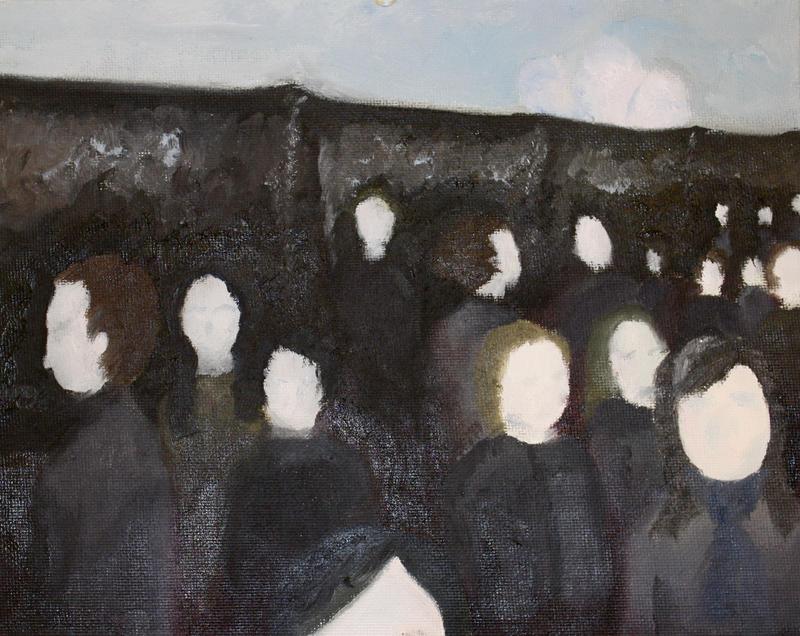
Fig. 1. Moy, Sarah “solitarymuse.” “In a Station of the Metro.” 2011. DeviantArt. Accessed online 1 December 2021. https://www.deviantart.com/solitarymuse/art/In-a-Station-of-the-Metro-206821374
This painting by Sarah Moy, self-published on the website DeviantArt as a direct interpretation of Pound’s poem, represents an inability to connect with individuals. The painting, evoking especially the use of “apparition” in Pound’s poem, depicts a number of distinct human figures, some seemingly in motion and with purpose. Yet, every one of these individuals is faceless. The only facial features any of them hold are the barest hints of shadows below the brows, chin, and nose, evoking the image of a human without the personal essence that facial features create. More than a few of the figures seem to be staring directly at the viewer—presumably the speaker of the poem—and yet without eyes, who can really tell? We, as the speaker, are unable to make eye contact with these people, unable to discern their thoughts and feelings, and can hardly even distinguish any one figure from another. This is not a literal reality, but a way to visually understand the mental block that prevents the speaker from making connections.
Fig. 2. Magill, Anne. “The Reading.” 2021. annemagill.com. Accessed online 1 December 2021. https://annemagill.com/walking-the-land/
Magill’s painting depicts what might be interpreted as a eulogy, or a sermon, or a poetry reading. No matter the content of the reading, it is the circumstances of the work that endear it to this gallery, representing Pound’s speaker’s inability to participate in their community. The painting shows a crowd of men and some women loosely surrounding a man reading from a text in his hands. All of the figures in the painting are turned toward this man, including the centermost figure whose back is completely turned from the viewer (in this case, the speaker). The ring surrounding the reader, based on positioning and expected symmetry, should extend into the space the viewer occupies—and yet the foremost figures are some distance from the viewer. The fact that the centermost man’s back is turned is most damning; what the viewer sees here is a community of people with purpose and collective interest (relating to Pound’s text, the petals), neither of which the viewer feels they share. This is apparent from the fact that the viewer has not stepped forward to join them.
Fig. 3. Hammond, Jacqueline. “The Crowd.” Smart Deco Style. Accessed online 1 December 2021. https://www.smartdecostyle.com/products/original-the-crowd
Hammond’s painting, as its title suggests, most aptly depicts the feeling of the crowd from “In a Station of the Metro.” It shows what can only be described as a mass, interpretable as hundreds (perhaps thousands) of people only through Hammond’s color choices making the suggestion of heads and torsos. This mass might be construed as humanity, and the theme of this image an unnavigable distance from humanity, so that—this far away—any distinct part of it is indistinguishable from the rest, and the whole of it is uninterpretable. In this painting, there are no figures who come close to the viewer. There are no hints of facial features to discern, no distinguishable event that can be joined; the speaker perceives no opportunity to integrate into society, and therefore convinces themself they cannot. Hammond’s work is most distinct in the center of the image; around the edges, there are distinctly looser and more abstract shapes, and (especially noticeable on the right) some portions are even muddy and blurry. When I first looked at this piece, to me this blurring evoked seeing through tears.
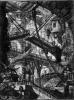
Fig. 4. Piranesi, Giovanni Battista. “The Drawbridge.” 1745. lionofchaerona.tumblr.com. Tumblr. Accessed online 1 December 2021. https://lionofchaeronea.tumblr.com/post/179080305117/the-drawbridge-no-7-from-the-series-carceri
Piranesi’s etching departs slightly from the other three images in this series, but it portrays an essential aspect of the theme. The etching depicts a great structure, with bridges and pathways crisscrossing it, and which has pulleys and cables and great mechanical devices whose purpose is unknown. The structure extends far into the background, upward, and downward, and the scale of it can only be understood when one looks closely and finds the human figures dotting the pathways, tiny in the face of such architectural enormity. The unfamiliarity of the structure itself is enough to alienate any viewer, but when interpreted thematically, in conjunction with “In a Station of the Metro,” one might begin to see “The Drawbridge” as the figurative bough of Pound’s piece: the world which the crowd inhabits, which the petals cling to. The enormity of the structure, and the smallness of its figures, evokes the final aspect of our theme: the speaker’s perceived inability to interact with the world they live in. Notice that the majority of the figures in Piranesi’s piece are depicted in groups of two or three or four—even here, people are making connections. But the real key to this piece is in how confusing the structure itself is: it is easy to get lost in just looking at it; attempting to actually navigate it would be incredibly difficult. This, taken figuratively, is how Pound’s speaker sees the world at large: confusing and unnavigable.