

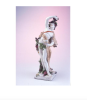
Produced by the Chelsea Porcelain Factory during the 1700s, “Figure of Bacchus” is inspired by Michelangelo’s original sculpture of Bacchus, the God of Wine. The figure, made of soft-paste porcelain, embodies gentle, lighthearted energy that emanates a romantic essence through the fluidity in the subject’s movement, articles of clothing, and identity. Soft-paste porcelain is a relatively fragile but notably attractive ceramic as it can be painted, carved, and decorated with a lot of precision to detail. With the use of hand-painted Polychrome enamel, color and further dimension are added to the figure to bring it to life. Carried firmly in their hand is a pearl white capulet, decorated with lustrous gold embellishments. Whether or not the capulet is filled is not explicitly visible, but given the figure’s swaying stance and various grape bunches, it is likely wine they are drinking from the capulet. Regardless of how diversely depicted Bacchus is, the consistent, specific elements such as grape bunches and a capulet make him recognizable. Without these identifying attributes, the figure is merely a body. Thus, it is Michelangelo’s achievements with his sculpture that makes Bacchus recognizable to many. Michelangelo’s innovative work was widely acknowledged as a fusion of psychological depth and refreshing emotional realism. His innovative approach towards the art of sculpting also contributed to the controversies surrounding his work. Illustrating any taboo such as alcoholism in the depiction of gods in classical Greek and Roman art was deemed disrespectful, regardless of how accurate or representative. Nonetheless, the sculpture received global notoriety and was a widely inspiring piece of art.