
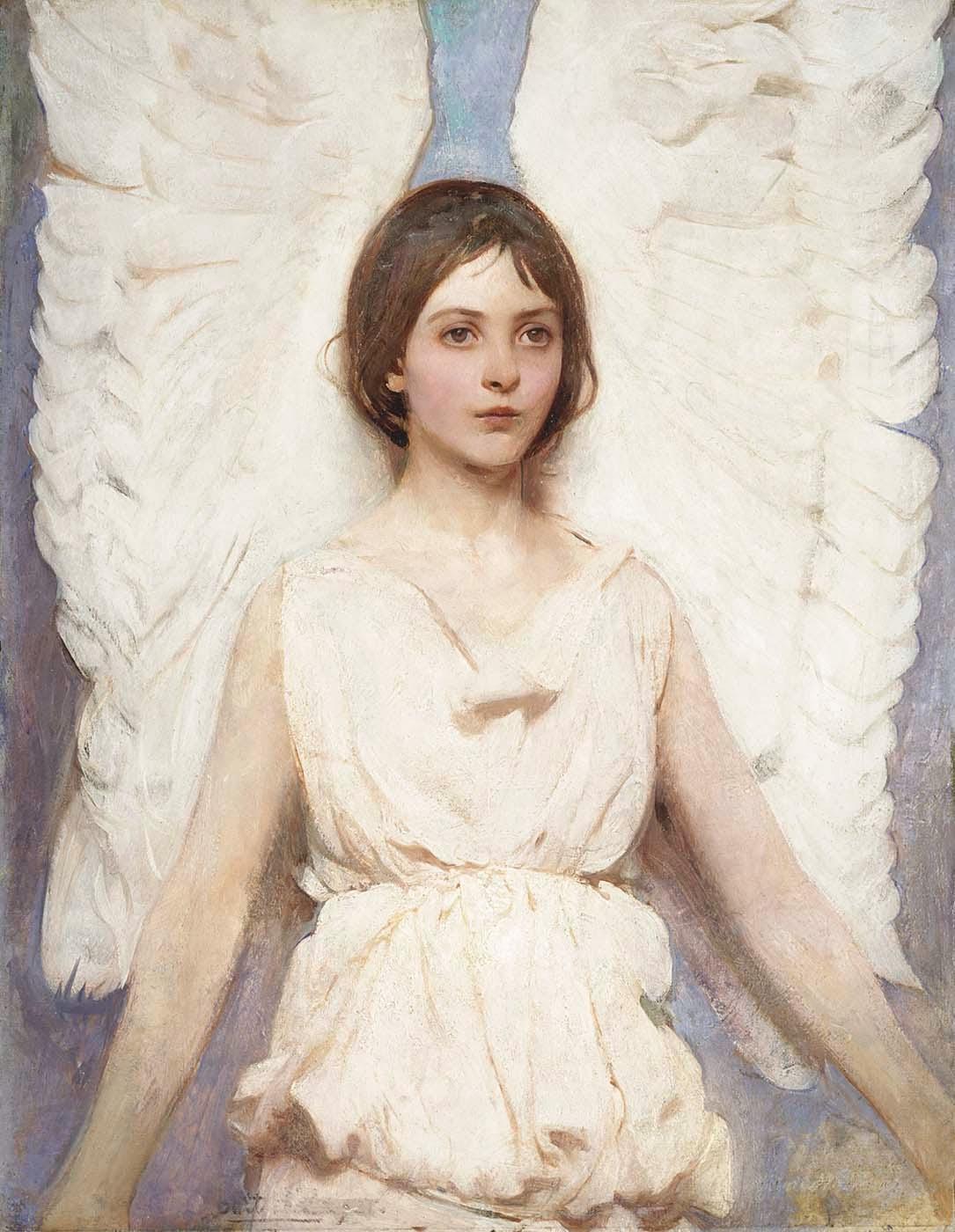
In the Victorian period, angels were frequently depicted as winged women, reflecting cultural ideals that linked femininity to moral purity, emotional sensitivity, and self-sacrificing care. Women were associated with angelic figures because of their perceived nurturing roles within both family and society. As Anna Rose notes, this feminized imagery was partly a "decorative" response to the more androgynous depictions of angels in the Middle Ages, emphasizing beauty, fragility, and passive goodness, qualities that Victorian culture celebrated in women under the ideal of the "angel of the house". In The Little Lame Prince, these associations are mirrored through the feminization of the prince himself: his physical weakness, emotional vulnerability, and deep inner life reflect a move away from traditional models of masculine heroism and toward a more feminized mode of being.
The prince’s longing for wings is crucial to this portrayal. In Victorian symbolism, wings represented more than just the ability to move, they signified a spiritual elevation above earthly suffering, a form of freedom attainable only through death or divine grace. To fly was to escape not only physical limitations but also the burdens of a fallen world. In the story, the Little Lame Prince, whose disability confines him physically, dreams of wings to rise above his struggles. His statement, “How nice it must be to be a bird! If legs are no good, why cannot one have wings? People have wings when they die—perhaps; I wish I were dead, that I do” (COVE, Chapter IV) demonstrates his yearning for the kind of spiritualized escape traditionally imagined through feminine imagery —an angel’s gentle, sorrowful escape.
Flying becomes an act of feminized transcendence: an abandonment of the physical body and a movement into an emotional, imaginative, and spiritual realm. In contrast to the masculine ideal of overcoming obstacles through strength and will, the prince’s dream of flying aligns with Victorian ideals of the feminine soul, pure, suffering, and destined for a higher, more beautiful world beyond the painful realities of life. Thus, through the imagery of wings and flight, The Little Lame Prince not only reflects Victorian ideas of disability and spiritual salvation but also deepens the prince's feminization, positioning him as an angelic figure caught between earthly suffering and heaven's wings.
Image Citation
Thayer, Abbott, “Angel” Artwork by Anna Rose, March 11, 2014, https://artworkbyannarose.blogspot.com/2014/03/an-exploration-of-winged-figures.html