

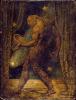
This painting by William Blake is considered to be his most "gothic", as it portrays very dark color hues and terror-focused imagery. The main aspect of the painting is the figure, a combination between a man and a demon, as it shares qualities of both. It is shown to be walking on a stage with a bowl in its hand. According to Blake's friend, artist John Varley, Blake said he was visited by a ghost of a flea that told him fleas were the souls of men who were prone to excess (excess in food, habits, lust, etc.). Blake says the bowl or cup in the creature's hand is for "blood-drinking", symbolizing overindulgence, as fleas survive off of drinking other creatures' blood. The creature's human and demon-like qualities symbolize a man's resurrected soul, and the dark brown colors of the painting add to the gothic style of the artwork.
William Blake was famous for his romantic and gothic poetry. His Songs of Innocence and Songs of Experience collections portrayed the concept that children are born innocent and have a choice of remaining in that innocent state or using the experience they gain from the world to grow wise. If they don't balance their innocence with experience, then they will either hold too much rage for the world, or be too blind to see the harsh realities of the world itself. His interpretations of society and humanity paved the way for romantic and gothic literature because of his pessimistic views on both.