
Within Barabara Black’s book, On Exhibit: Victorians and Their Museums, she makes the claim that Edward FitzGerald’s translation of The Rubáiyát of Omar Khayyám became exceedingly popular due to the cultural appropriation the translation exhibited. At the time of his popularity the Rubáiyát essentially became less about the content of its poetry, and more about the fictionalized grandeur FitzGerlad’s translation seemed to project. Black expresses this sentiment in the following,
“Kermode summarizes this point well: “Having left Persian poetry out, FitzGerald was putting English poetry in, and his changes obscurely touch the heart of a people which rarely reads verses and rarely drinks wine. He is exotic without being foreign.” Non-English yet so English, not foreign yet so exotic (Black, page 64).”
The Rubáiyát exploded in popularity in the late 1800s and early 1900s, which allowed publishers to maximize their profits on the poems' popularity. Thus the Rubáiyát as a gift book was created. These gift books were elaborately decorated and detailed. However Black discusses how the popularity of the Rubáiyát as a gift book essentially tore down the “poem’s value [to be] inseparable from its pretty, crafted, possessable diminutiveness (Black, page 61).” As the gift books of the Rubáiyát became more popular as items, the actual content of the poem became less important.
This edition of The Rubáiyát of Omar Khayyám is appropriating Persian culture in order to be more profitable. This edition is using the Persian stylized fonts, imagery, and page decorations in order to be profitable during the height of The Rubáiyát’s popularity. Just as Black is describing in the quote above, this gift book is designed to function as an easily-sellable object and not an appreciation of Perisan culture and poetry. Black describes that, “In certain ways, FitzGerald was determined to give an oriental flavor to his Rubáiyát (Black, page 63).” Within On Exhibit Black continues to explain how at the time of the Rubáiyát’s popularity, “Khayyám’s Rubáiyát became thoroughly objectified… that possessing the text was as important as reading it, if not more so (Black, page 61).” These quotes from Black explain why this edition is so focused on the “flowery” details of Persian appropriation; it likely had been attempting to buy into the objectifying popularity of the Rubáiyát at the time it was published.
One bit of evidence pointing to this kind of Persian appropriation can be found in the page at the back of the edition (see image 1). As mentioned in my previous post, I initially thought these two words were the name Jamám Bud. However after rereading the page I later suspected that the words may actually be Jamám Shud based off of the stylized style of the font. A quick google search later revealed that “Tamám Shud” is a relatively well known Persian phrase meaning “the end” or “it is finished”. I did also read that this phrase was rather commonly printed at the end of The Rubáiyát. Ordinarily it doesn’t seem problematic whatsoever for the Persian phrase meaning “the end” to be printed in the back of a page of Persian poetry, but it is important to remember the audience for this book are English speaking people. This relates back to Black’s commentary that in order for this gift books to be collectable or sellable at the height of the Rubáiyát’s popularity, these books needed an “oriental flavor” to them. Black goes as far to express that “it seems more accurate to see FitzGerald’s accomplishment as more elaborate: dressing the Englishman in Persian costume or, in minstrel-show fashion, first dressing the Persian in English guise and then demanding a Persian “impersonation” (Black, pages 63-64).” Essentially, placing Persian phrases in an edition of the Rubáiyát in order to make the edition more desirable for an English audience is a form of Persian appropriation.
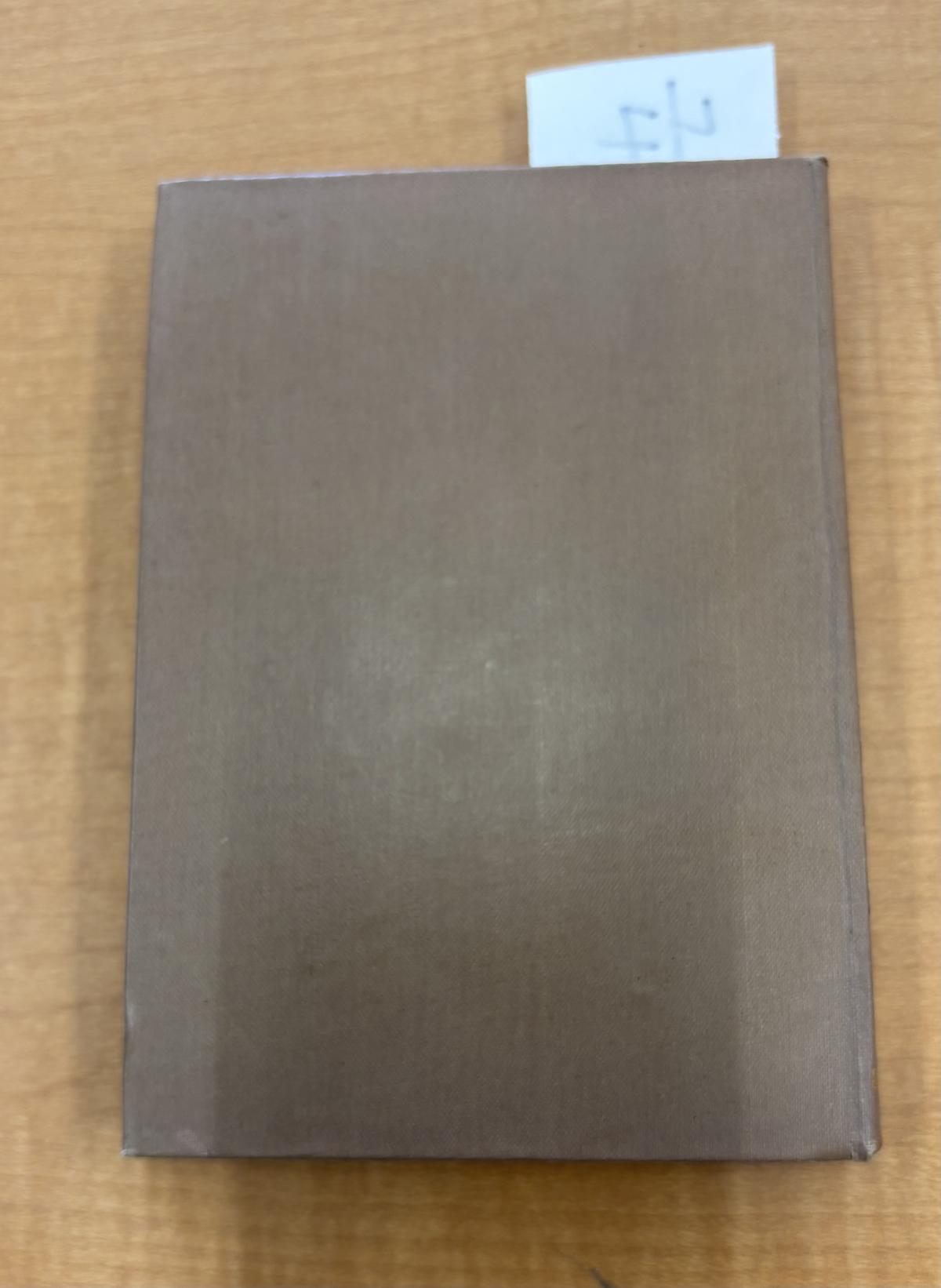
Other aspects of my edition that seem to be appropriating Persian culture would be: the use of Persian stylized font and detailing throughout the book, Persian stylized imagery throughout the book, and the use of gold colored font throughout (see images 2 & 3). All of these details are very clearly making an effort to project the idea of what Persian culture was thought to be at the time of this edition’s publication. These details also play a key role in the possessiveness and desirability of this edition. However I do feel that some of this edition’s choices in the appropriation of Persian culture could have been more flashy than what was chosen. In other words, this edition isn’t as ostentatious as other editions of the Rubáiyát seem to be. The materials used for this edition are relatively simple compared to others. Examples of this would be the book’s cover (see images 2 & 4), and the use of only 12 illustrations for a total of 92 pages. The use of black and white imagery speaks to the potential cheapness with which this edition was made, as the use of color printing would have made the edition more expensive to make. In summary this edition is very much appropriating Persian culture in order to be objectified during the English popularity of the Rubáiyát. Despite the issues with this appropriation, the lack of excessive decorum used allows this edition to fall into the affordable range of Rubáiyát editions from the time of its publication. This means that despite the appropriation happening here, it is possible that the contents of the poetry itself may have been able to be appreciated more than the edition would have been objectified.
Citations:
Black, B. (2000). On Exhibit: Victorians and Their Museums. In Google Books. University Press of Virginia. https://www.google.com/books/edition/On_Exhibit/z19oXDrIrbEC?hl=en&gbpv=1
FitzGerald, E. (1917). Edward FitzGerald, Rubáiyát of Omar Khayyám. (1st ed.).
Ross, G. L. (n.d.). TAMÁM SHUD (تمام شد). Graham Lyle Ross. https://www.grahamlyleross.net/blog/tamam-shud
Wikipedia contributors. (2025, April 29). Somerton Man. Wikipedia. https://en.wikipedia.org/wiki/Somerton_Man