


Introduction: In Emma (1816), Harriet would be less likely to have her image recreated professionally than Emma Woodhouse, but in the novel, Emma is the one to create a portrait of her friend. She does not ask for anything in return, and this act of friendship serves as an important reminder of the power Emma has. As many nineteenth- century women were not given a real portrait, and only a silhouette if anything, Harriet's portrait is a way to insure her being remembered.
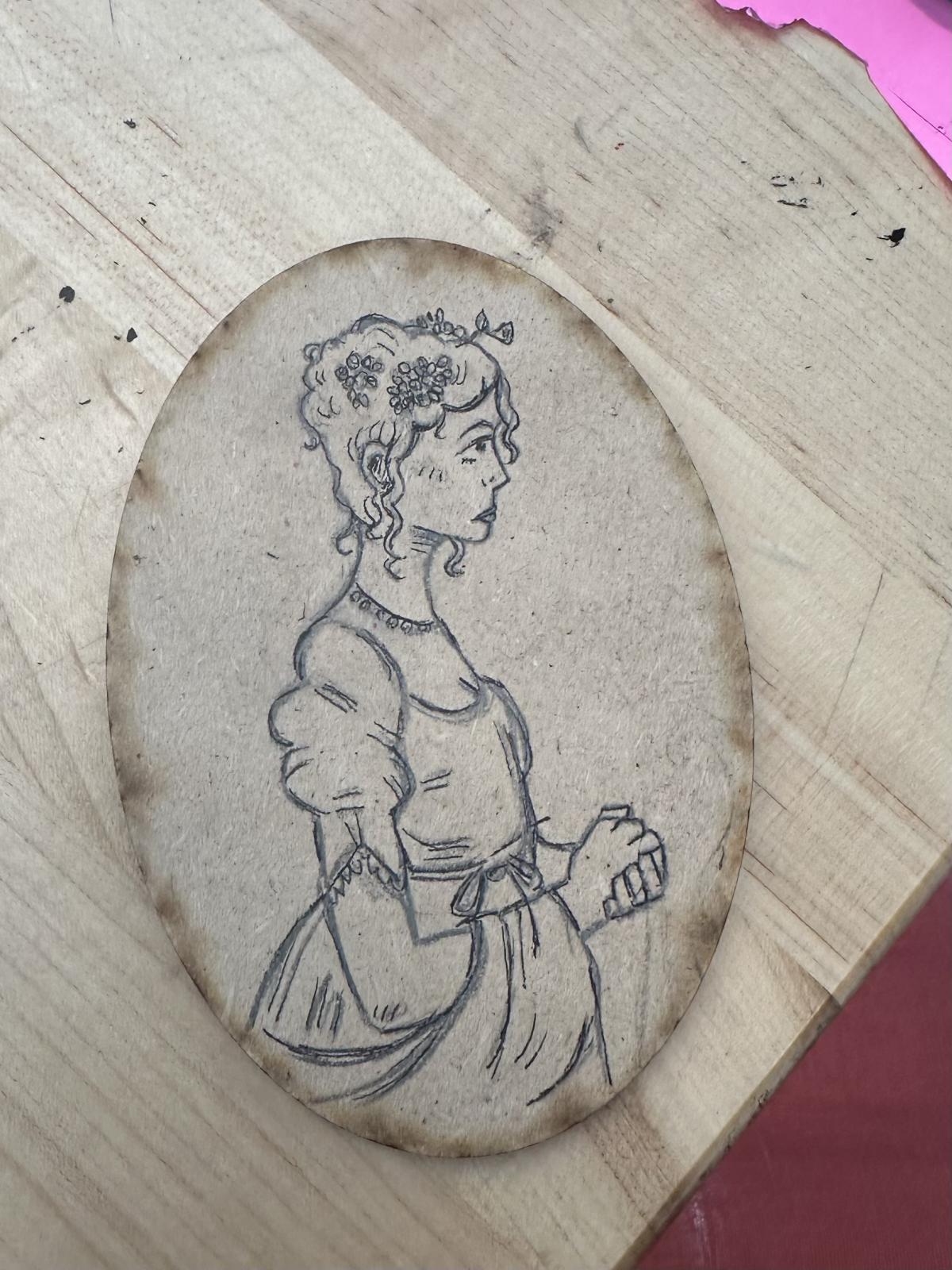
Portrait of Harriet Smith, illustrated by Lorelei Heuer, 2025. This portrait of Harriet Smith has less decoration than Emma's (second image), representing the economic difference between them. The simple flowers in her hair in comparison to Emma's pearls show her of a lower class but also her connection to the farmer Mr. Martin. This floral connection shows her affection for him, complete with his occupation that requires that he gets his hands dirty. Harriet does not mind this station, but Emma cannot understand because she is privileged enough to never consider manual labor and to stay inside of her estate. The necklace on Harriet's neck represents the gift of higher class Emma gives to Harriet, believing it to be for her benefit but instead making it look like she is trying to be something she is not.
Portrait of Emma Woodhouse, illustrated by Lorelei Heuer, 2025. Here Emma's portrait is a contrast to Harriet's. She is adorned with pearls in her hair, more liveliness in the face, more elegant dress with accessories, and a more complicated background. The background has elaborate swirls, roses, and hearts. This is to show her personality and her association with love. On the top is written "Little Miss Matchmaker," which not only describes her obsession with matchmaking but also, "little miss" takes a sarcastic tone. Her portrait shows that she has money and high social class. Emma's portrait would have style like her and express her vibrant personality and the confidence she carries. The difference between her and Harriet not only in character but also in class is evident in the portaits of the two young ladies.
Collage of The Process: 1. Lorelei Diligently Illustrating, taken by Lorelei Heuer 2025. I used the timed-photo function on my camera to capture a moment of me working, making it look candid. I tried to pose in a proper way as l imagine a nineteenth-century woman would look writing a letter or designing a silhouette. I function as an artist who has been commissioned to draw two young ladies. I have a thoughtful look as I think about how the ladies would have been drawn and how to characterize them though the portraits.
2. Photograph with a friend, taken by Lorelei Heuer, 2025. A huge part of the creative process in the IdeaLab was the ability to collaborate with classmates. Doing this together as a class provided an opportunity to share ideas and see each other's creative works. I very much enjoy looking over my shoulder to see what my classmates were working on--they were doing a wonderful job! I was glad to sit next to a friend, and this photograph is a selfie with Jadyn showing us holding up our work.
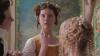
Shot from Emma film (2020). This shot from the film shows Harriet being posed by Emma. In a previous scene, Emma's other illustrations are shown on the desk and praised highly, despite them being amateur. This is continued by this scene where Harriet is being drawn by Emma, and Mr. Elton looks on an praises it highly. He says, "You have given Miss Smith all that she requires. She was a beautiful creature when she came to you but the attractions you have added are infinitely superior to what she received from...(pause)...nature." This dialogue reflects more about his opinion on Emma's talent for perfecting Harriet than a commentary on her beauty; it is clear to us that this is more of a backhanded compliment to Harriet than a display of his interest in her. With this visual aid, we see the expressions of the characters communicating their true feelings.
Shot from Emma film (2020). Here we see a closer image of Emma's portrait. The way Harriet is dressed and posed is also very important, tying back to my illustration of her. My portrait was drawn with Harriet's profile from the movie as reference. Because of that, you see the flowers in her hair present in both. Harriet looks somehow elegant and simple in her dress. The curls elevate her, and the flowers are simple and a beautiful touch. The room she is posed in has a backdrop of nature. Her dress is very simple though in a yellow, almost mustard color. This combination of white and yellow makes her look more like a commoner than a genteel woman, which Emma is trying to make her out to be. Harriet has beauty, but in a simple and modest way that matches her personality. But in the portrait, Emma is creating an idealized version of her. In both her pose and setting, her character is exaggerated. Harriet has one arm raised in the drawing in an exaggerated manner and a flowing dress and is perched on a little hill outside. The choice for setting is telling, connecting her with the country, which connects her with Mr. Martin again.