
London Calling CLASS TIMELINE!
Created by Laura Rotunno on Sat, 03/04/2023 - 12:04
Part of Group:
The site for all your interesting events from the locales you will investigate.
Timeline
Chronological table
| Date | Event | Created by | Associated Places | |
|---|---|---|---|---|
| 24 Apr 1993 |
IRA Bombing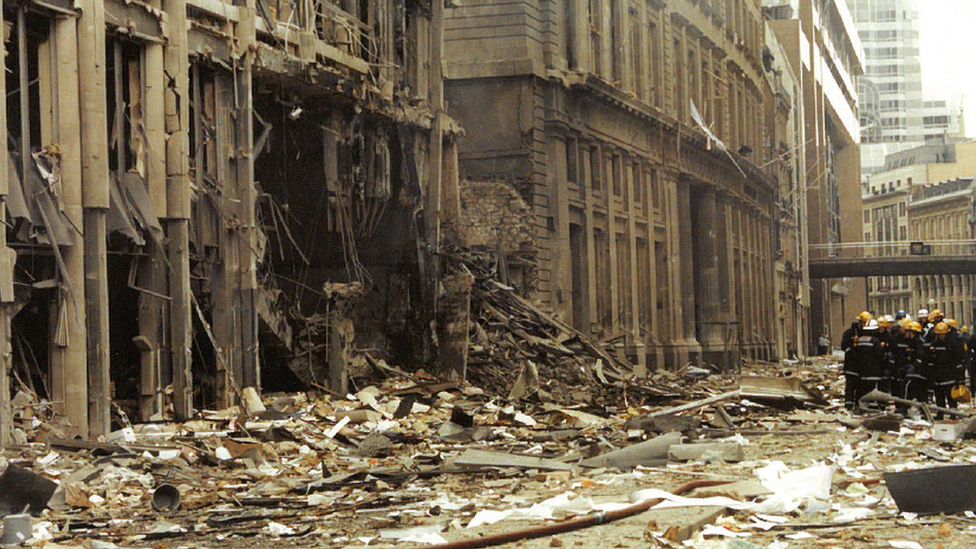 On April 24th1993, Bishopsgate was the site of an IRA truck bombing which injured over 40 people, killing one, and caused one billion euros worth of damage, including the destruction of St. Ethelburga’s church. News of the World photographer Edward Hendy was killed. There was significant damage to the NatWest Tower and Liverpool Street station. Bishopsgate had already suffered damage previously as the Baltic Exchange bombing occurred one year prior. Politically, the bombing was accomplished in order to disrupt, and severely damage, the British economy. Additionally, it would put pressure on the British government to negotiate a withdrawal from Northern Ireland. At the time, the British Prime Minister John Major refused to openly discuss with Sinn Fein, an Irish political group, until the IRA declared a ceasefire. Due to these tensions and lack of political progress, the risk of an IRA attack increased, and ultimately led to one. "BBC ON THIS DAY | 24 | 1993: IRA bomb devastates City of London". BBC News. 24 April 1993. Archived from the original on 27 April 2009. Retrieved 23 April 2025 |
Hollie Keller | ||
| 1997 |
Maritime Greenwich Moleitau. Greenwich Park, Royal Observatory Greenwich and National Maritime Museum in the Snow. 2 February 2009. Greenwich London has always been home to the Royal Observatory and many other groundbreaking times for the Royal Navy. Despite Greenwich not properly being a part of London until much later in time, the area has served a significant purpose for a while. The official naming of Maritime Greenwich encompasses Royal Greenwich Observatory, the National Maritime Museum, and the Old Royal Naval College. As of 1997, the area was dedicated as a World Heritage site and recognized for its longstanding history of maritime ventures. As I’ve researched and done more and more digging in Greenwich, I have found that it is the ugly stepsister of London. The borough’s traffic of people pales in comparison to other more prominent boroughs, but the people of the borough keep its history intact. The Maritime Greenwich represents a glowing achievement for the British in many fields of science and technology. The observatory is still functioning today and has tons of invaluable information that anyone can visit and see. It is also home to the Prime Meridian Line which sets the standard for everyone else in the world. The National Maritime Museum has on display some of the oldest British, and not British, ships that are still together. The glimpse into the past is amazing to see how ships have changed and how Britain dominated the seas for hundreds of years. Finally, the Old Royal Naval College was one of the most pristine colleges that the Navy had. The college produced thousands of officers for the Navy and even had a section for women to train and join the Navy. The encirclement of all the historical sites under the Maritime Greenwich title and its becoming a World Heritage Site shows the distance traveled by the people of Greenwich. The museums serve as a timestamp of where Greenwich was and where it is going to go.
sources: “Greenwich.” Encyclopædia Britannica, Encyclopædia Britannica, Inc., 17 Mar. 2023, https://www.britannica.com/place/Greenwich-borough-London. |
Aidan Pellegrino | ||
| 14 Jun 1997 to 14 Jun 1997 |
Third Restoration of The Globe Theater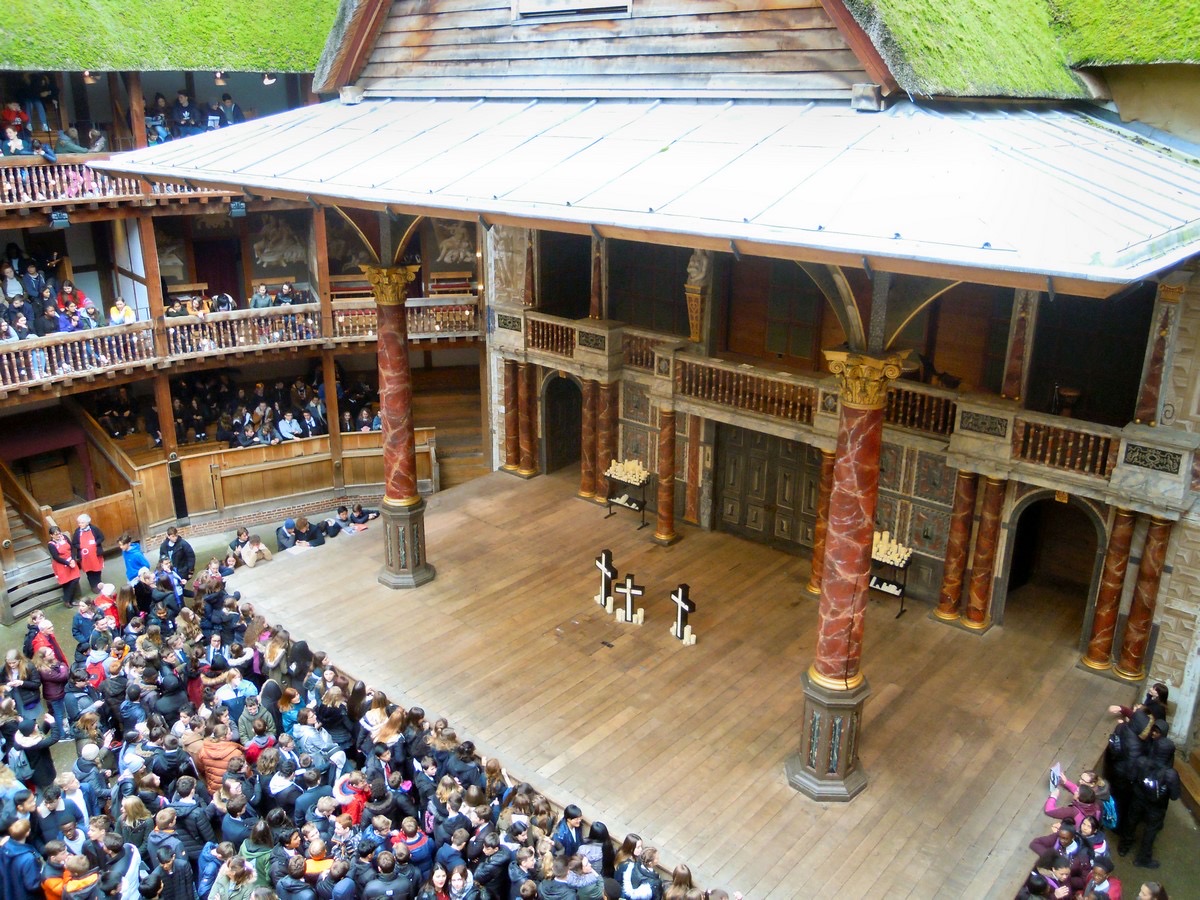 The Globe Theater that we will be visiting is not the original but rather the third recreation of the theater in London. It was originally opened in 1599. On June 29th, 1613, the Globe burned to the ground and then was rebuilt on the same foundation and reopened the following year. It was then destroyed again in 1644 after being closed down two years prior due to the banning of theater productions by the Puritans. After the demolition, the land where the Globe once was had homes built overtop of it. During this period, all the theaters in London were destroyed. Actors were beaten and arrested, and there were fines given to those who watched plays. The current Globe is a recreation of the first, with the only changes being important safety regulations and better structural design. This recreation stands about 750 feet away from the ground that held the original. This rebuild was pushed for by the actor/director Sam Wanamaker for 20 years before its final creation. The Globe Theater reopened completely in 1997 but was used for some smaller performances for two years before. It had been 384 years since the theater put on a full-season selection of shows. Behind the News, 2018. What is the Globe Theater?- Behind the News. Available at: <https://www.youtube.com/watch?v=xlqi5k0Z3ps> Saunders, J and Beckerman, B., 1963. Shakespeare at the Globe, 1599-1609. Shakespeare Quarterly, 14 (2), p.167 Wanamaker, S., 1989. Shakespeare's Globe Reborn. RSA Journal, Vol. 138 (5401) |
Danielle West-Habjanetz | ||
| 1999 |
Excavation of a Roman Temple in Greenwich Park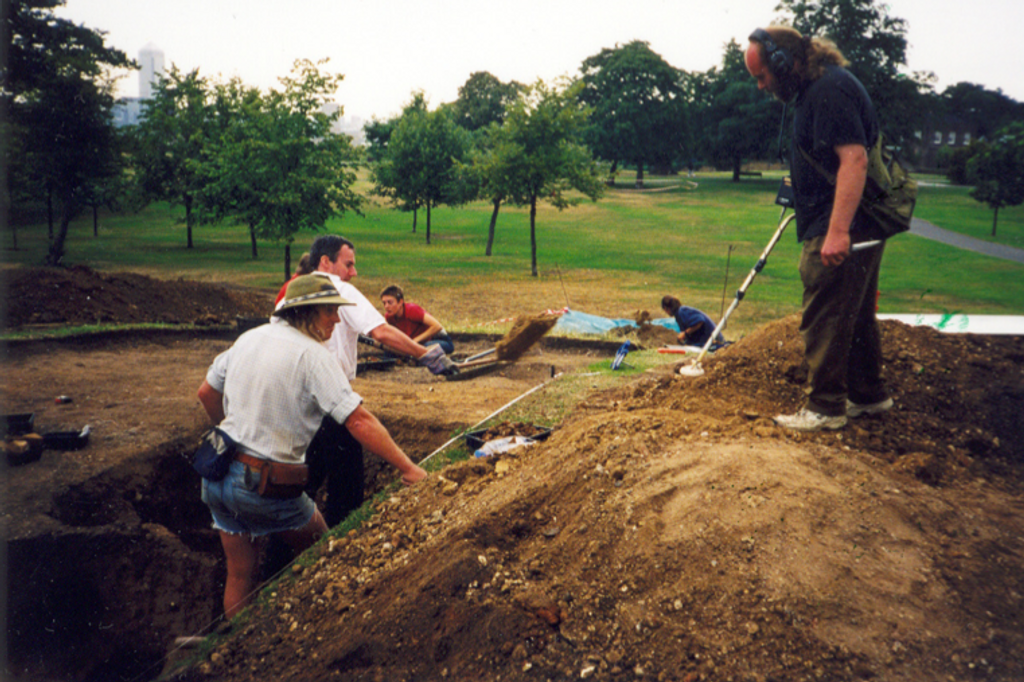 Channel 4 Archeological Dig “[T]he Greenwich Park discovery is important, adding as it does another link to the chain of evidence respecting the Roman occupation of this part of the County, and surpassing in interest any previously recorded from the immediate neighbourhood.” – A.D. Webster, writing on the significance of finding Roman remains in Greenwich Park (“The Roman Temple”).
In 55 B.C., Roman arrived in Britain for the first time and attempted and failed to conquer the people living there. However, in 43 A.D., the Romans were successful. While the exact time frame is unknown, historians assume that Roman occupation of Greenwich Park happened shortly after the Roman’s first visit to Britain (“Greenwich”).
Greenwich Park is and was popular for its vast amount of beautiful green spaces so close yet so far from the city (“Welcome”). In fact, the land was so coveted that “ever since the land was inherited in 1427 by Humphrey, Duke of Gloucester—brother of Henry V—generations of British monarchs have taken this magnificent park into their hearts,” in which it was enclosed and treated as private estate for monarchy for a time (“History”). Many notable British figures were born at Greenwich, including King Henry VIII in 1491, who introduced deer to the park, and his daughters Mary I in 1516 and Elizabeth I in 1533. King Henry’s son, Edward VI, also died in Greenwich in 1553 (“History”).
The Romans also enjoyed the area and scenery that Greenwich Park offered, settling enough to build a temple there. Throughout the 1900s, archaeological digs and excavations began as a part of routine work for the park. First evidence of the temple was the result of Superintendent of Greenwich Park between 1897 and 1920, Angus Duncan Webster (“The Roman Temple”). He had intended to located a Roman road, but instead discovered “the remains of a stone statue arm, mosaic floor, coins, wall plaster, roofing and tiles” as well as fragments of Roman inscriptions (“The Roman Temple”). Webster wrote that “a search was made in the mound by probing the soil with an iron bar. As a result several tesserae [mosaic tiles] and cement were discovered, which at once confirmed the existence of Roman remains” (“The Roman Temple”). Initially, it had been concluded that it was a Roman villa.
50 years later, archaeologists returned to the site and ultimately determined that the building was religious in function, due to features commonly associated with Romano-Celtic temples like the raising of the central building to stand on a low platform, the square/rectangular floor plan, and an eastern entrance (“The Roman Temple”).
In 1999, a more high-profile dig led by Channel 4’s “Time Team” found:
“The 1999 digs supported the theory that this was the site of a Roman temple through further excavations of the temple structure and a surrounding ditch which fits the description of an enclosed temple precinct (or temenos)” (“The Roman Temple”).
The presence of the temple, aside from linking locals to history as A.D. Webster stated in the quote above, brings yet another draw to the park, contributing to its beauty, history, and provides historical context to those looking for more information about Roman activity in Britain.
Works Cited: “Greenwich,” Blackheath & Greenwich History Blog, https://www.blackheathandgreenwich.com/greenwich-and-the-romans “History of Greenwich Park,” The Royal Parks, https://www.royalparks.org.uk/visit/parks/greenwich-park/history “The Roman Temple,” The Royal Parks, 3 Dec. 2024, https://www.royalparks.org.uk/read-watch-listen/roman-temple Wallower, Becky. “Screen Shot 2019-12-18 at 19.28.29,” Layers of London, https://www.layersoflondon.org/map/records/roman-temple-complex-in-green... “Welcome to Greenwich Park,” The Royal Parks, https://www.royalparks.org.uk/visit/parks/greenwich-park |
Emera Gregor | ||
| Spring 2025 |
Practice April 17 2025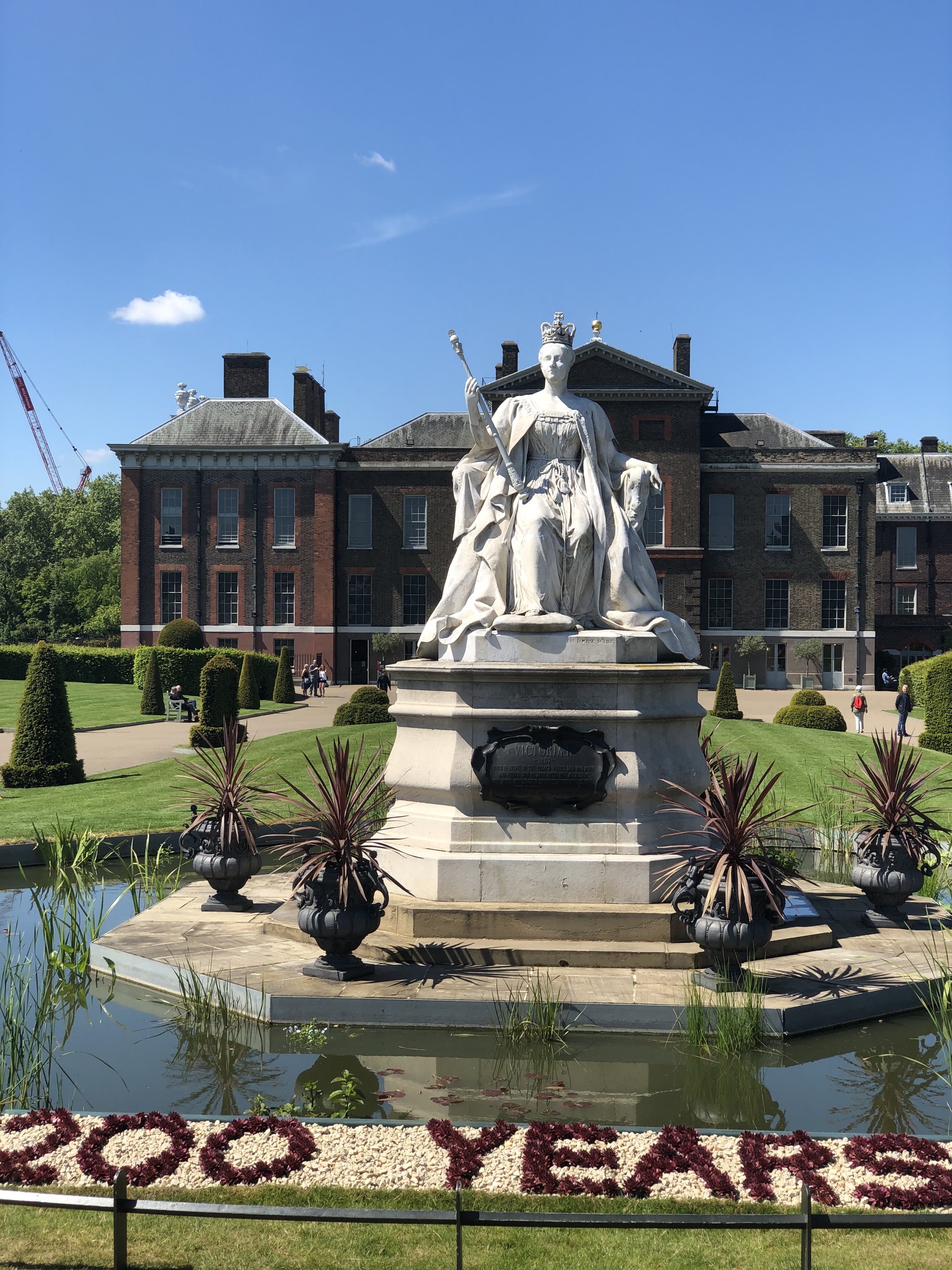 tba
|
Laura Rotunno | ||
| 28 May 2025 to 6 Jun 2025 |
Penn State Altoona London Calling Group is IN LONDON! Welcome to London image Penn State Altoona London Calling Group is IN LONDON! **we leave from Dulles on Wednesday May 28, arriving in London Heathrow on Thursday May 29!** |
Laura Rotunno | ||
| 6 Jun 2025 |
Our Return to Dulles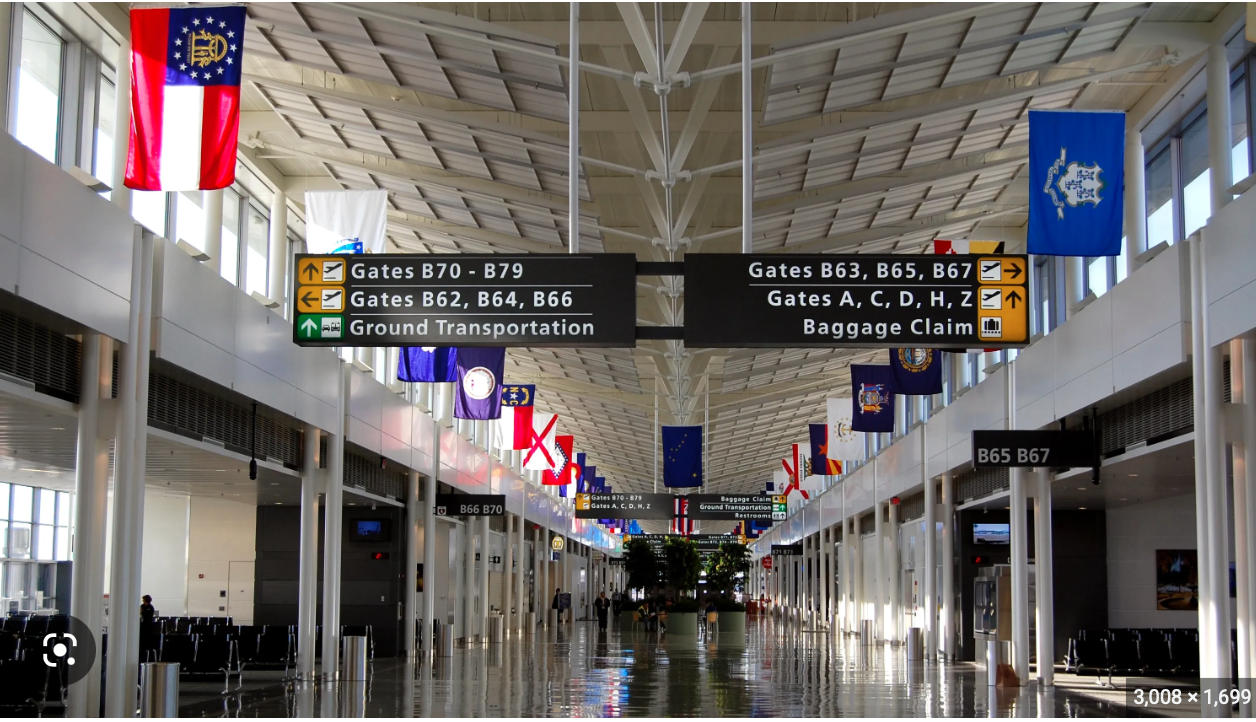 Inside Dulles airport We return to Dulles. |
Doug Page |
