
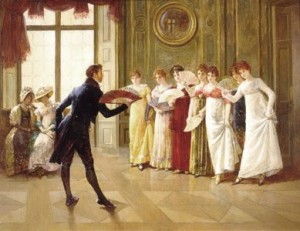
Around the 17th and 18th centuries, there was an event known as the “London Social Season,” or the “London Season.” The London Season was originally created to market marriage. At the age of eighteen for a woman, there would be a “presentation of debutantes at court used to traditional marker of the start of the Season” (Lara). These women would come from aristocratic families and they would proceed to be introduced to many bachelors with similar backgrounds. The women would then have to take part in all the events that occurred throughout the season, including balls and parties, and other glamorous events. There used to be certain laws, forbidding “well-born young women” to take part in these events if they hadn’t been “presented properly” (Lara). But Queen Elizabeth abolished the initial ceremony, instead, allowing all different types of women to be presented and allowed to partake in these events. The Tenant of Wildfell Hall brushes upon this, especially when they discuss marriage. In chapter sixteen, Helen Graham is speaking with her aunt about marriage, expressing how she wasn’t sure if she even wanted to wed. Her aunt responded by telling her not to wish for a man to want to marry her, that a woman is supposed to wait until a man offers her a proposal before she can want to be with him. In other words, a woman was supposed to wait to be chosen. She wasn’t allowed to choose a partner herself, only until after the man had proposed to her. Then, she was allowed to decide if she wished to be married to him. The London season did exactly this, and before the parties were over, a woman was supposed to receive at least one proposal from a man. It was a very popular event and something that many surprisingly looked forward to.
Lara Updated May 22, Maria Mercedes, and Maria Mercedes Lara. “5 Things to Know About the British Social Season.” PEOPLE.com, people.com/royals/5-things-to-know-about-the-british-social-season/