
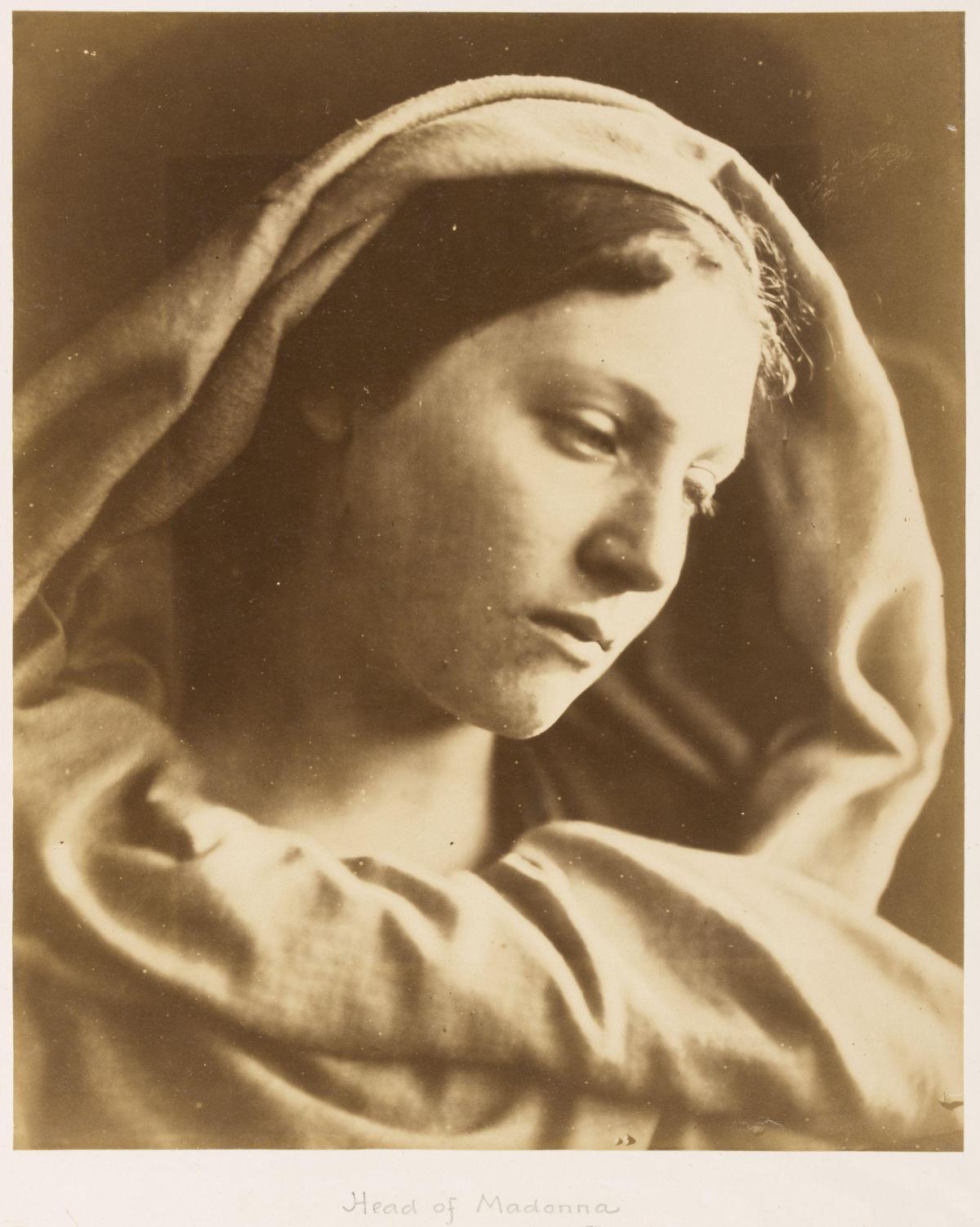
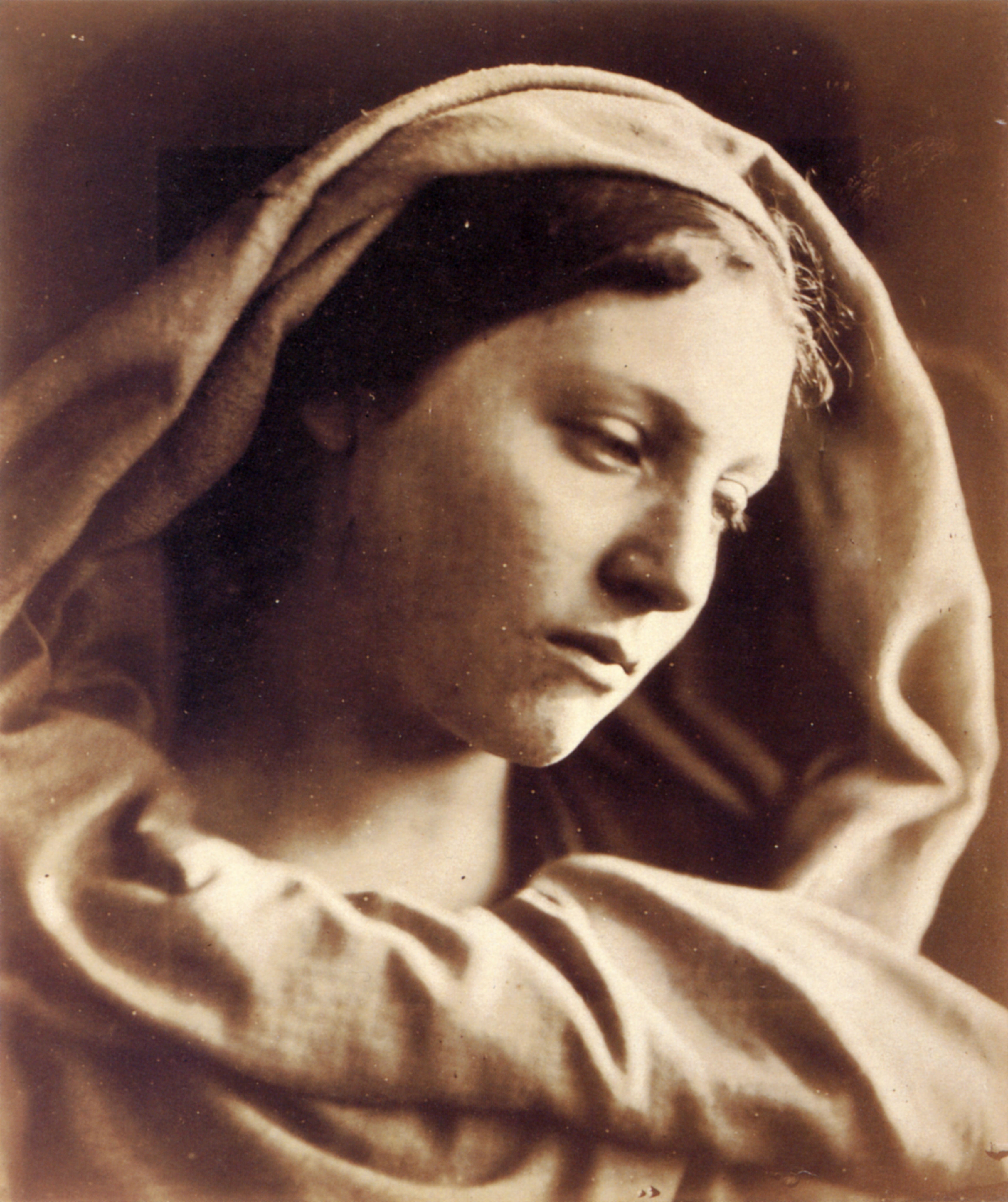
Julia Margaret Cameron, Mary Mother, 1867. Albumen print, 307 x 257mm, Prints & Drawings Study Room.
The photograph depicts a portrait of a woman dressed in drapes. From the name of the photograph and the way the woman is dressed, one can deduce that the woman in the picture is a reference to the Virgin Mary. Cameron was a devout Christian and regarded Christian love as the only possible answer to the cruel nature surrounding us (Wolf). The woman’s head takes up almost half the frame, and her clothing and surroundings are nearly shrouded by soft focus in contrast to the sharp focus on the woman’s face that draws the viewer’s attention solely to the woman’s facial expression. The plain drapes that the woman is dressed in also aim to concentrate the viewer’s whole focus to the woman’s face. Cameron was one of the pioneers of such a photographic style. Most of Cameron’s portraits of people capture still, natural expressions of a person in sharp focus and contrast the face of the person with an opaque background.
The woman in the picture does not make eye contact with the camera. Instead, the woman is partly turned to the left and stares down and to the side. The pose that the woman holds is meant to represent societal expectations of women at the time. Women were not supposed to be bold, daring, or defiant. They were expected to be submissive and complicit. The eyes staring down is a signal of obedience, or, when combined with the drapes, is a sign of helplessness. The helplessness in the woman’s eyes is almost disturbing. The viewers of the art piece, both men and women, are expected to sympathize with the woman in the picture and ponder upon what caused the woman to be in her depicted state.
The woman’s facial expression shows no smile, a typical feature of Cameron’s portraits (Wolf). The melancholy mood created by the woman’s pose, facial expression, and the color of the picture suggest that the woman in the photograph is in grief. The woman’s grief can be analyzed from two standpoints. From a religious standpoint, the woman is representing the Virgin Mary, so the grief is tied to the death of Jesus. From a social standpoint, the woman represents a fallen woman, and the grief is tied to the societal issues that women faced in the Victorian era. Although Cameron was not an activist for women’s rights, she believed in the creative abilities of women, supported by her own experience.
The orange-brown tint that is given to the photograph was intended to highlight the humility of Victorian women. The color given to the portrait, and the woman’s pose, generate a calm, melancholy mood. This mood is supported by the random markings and smudges on the picture that were the result of Cameron’s use of the albumen method, which was messy and unpredictable. The markings and smudges help generate an even more realistic portrayal. It is also important to note that the woman’s drapes and face are given a more vibrant shade of orange-brown than the background, confirming Cameron’s ideas about photography and complementing her style.
The simplicity behind Mary Mother comes from Cameron’s attitude toward beauty. Cameron did not get into the “why” questions whenever she observed beauty. She stopped at the source of beauty and captured it using her camera (Wolf). The simplicity of the portrait allows Cameron to completely eradicate the class differences. We are not given any clues pertaining to the woman’s social status. Cameron did not take pictures of famous women, further adding to the mystery of the painting and concealing the woman’s identity, including her social status.
References:
Wolf, Sylvia. Julia Margaret Cameron's Women. Art Institute Of Chicago, 1998.