
POV Shots
The intent of this series is talk and show how POV shots are adaptations of Robert Louis Stevenson’s text from being Jekyll and Hyde films directly or in a completely separate film adaptation. Stevenson’s text has been inspired by many films in the future for having the split personality such as The Incredible Hulk or Fight Club even as well. While those may not be directly adaptations from Stevenson’s text, they display an equal look at the transformation of a man into something else or even dual personalities as well. Such as how Jekyll is a doctor who experiments on himself a project that transforms him into Hyde and Bruce Banner is a doctor as well who experiments on himself a different project that then transforms him into The Hulk. As well as how the movie Fight Club is similar to Stevenson’s text in the fact that it has the main character, known as The Narrator, have a dual personality with the other main character in the film Tyler Durden. Durden is able to do things that The Narrator is not believed to be “cool” enough to do. Similar to how in both the Jekyll and Hyde movie and play where Hyde is Jekyll’s escape to do things, he does not believe he can do as Jekyll, as well as in Stevenson’s text. I will be using POV shots from Jekyll and Hyde as well as some close-up shots that are used in the 2008 The Incredible Hulk film as well as the 1999 Fight Club close ups since both films are very similar to Stevenson’s text about Jekyll and Hyde, their ways of transforming and dual personalities are the main examples of how they are despite not being direct adaptations. I will also being Henry Jenkins article about Transmedia Storytelling as well.
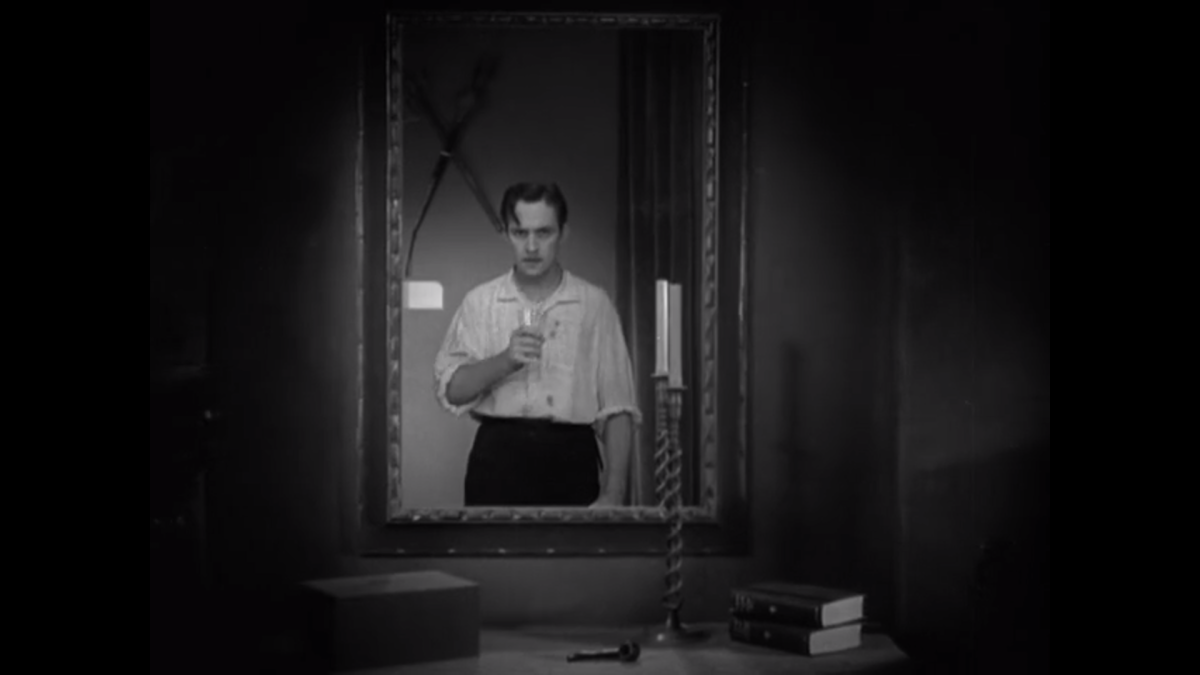
Dr. Jekyll and Mr. Hyde. Directed by Rouben Mamoulian, Paramount Pictures, 1931, (26:47)
This shot of seeing Jekyll in the mirror while holding the formula that transforms him into Hyde shows the POV Shot of him looking into the mirror at himself as he is getting ready to take the formula. This shows a sense of self-reflection that Jekyll does on himself before taking the transformation drink. Jekyll is not sure if the drink will kill him or not so he is not sure if this will be the end of him. The glance he gives himself in the mirror is that of he is not sure if this will be his last glance but also that of, he does not know what exactly will happen after he takes a drink. Once he takes the drink and transforms into Hyde, Hyde then looks into the mirror after the transformation, showing a sense of self-reflection from himself as well but also after he yells, “Freedom! Freedom!” It shows as well about how Hyde has been hidden away for so long and a sense of that he has been released from the chains that were weighing him down being inside of Jekyll this entire time. The impact that these shots have are that they show us how Jekyll feels about himself before the drink as well as what Hyde feels about being let free. This can be also connected to Jenkins writing when he talks about radical intertextuality as he mentions a story about multiple characters where we see the same point of viewpoint from but have different perspectives of what is happening.
Dr. Jekyll and Mr. Hyde. Directed by Rouben Mamoulian, Paramount Pictures, 1931, (2:48)
This POV Shot is also a long shot that is continuous for a couple minutes from the beginning of the film. The first POV shot we see of Jekyll looking into the mirror is very similar to the other mirror shot as it shows a sense of self-reflection as well. This is the audience’s first-time seeing Jekyll as well, we have no idea what he looks like before this scene when we see him in the mirror. After we do see him in the mirror, we see him fixing his suit and tie in the mirror, showing the audience that he cares very much about his appearance to others and that he believes he has to be a gentleman to those around him as well. This POV shot actually continues to see him go out in public as we then see him interact with others outside as he goes into giving a lecture inside a building. The POV shot of him walking outside with seeing people’s reactions to him shows the audience about how other people view him and that they view him in a really positive way, a way that no one would view him he committed the actions that Hyde would later commit.
The Incredible Hulk. Directed by Louis Leterrier, Universal Studios, 2008, (1:20)
This shot is a POV Shot of the 2008 The Incredible Hulk film starring Edward Norton where Banner first transforms into The Hulk from his self-experimentation on himself. This POV Shot is the only shot in the entire film where we see the world from The Hulk’s eyes as we see him throw things at the glass and break out and fight humans inside the lab. The Hulk is a beast and monster who is driven by rage and his vision that we see is also blurred and disoriented from the normal human vision we would see from Banner or any other humans in the film, letting the audience know that this is for fact The Hulk and as well the camera being up higher than a normal man’s height would be. The people’s reactions of seeing them running away and freaking out on the sight of The Hulk is also a sense we get that this is a creature of some sort they see. Similar to the POV Shot we see from the Jekyll and Hyde movie when we see the long POV shot of Jekyll walking to his lecture and seeing all of the people’s reactions outside to him as he is walking in. Where Jekyll receives praise and respect in his POV, but The Hulk receives fear. Banner and Hulk is another form of Transmedia Storytelling as Hulk just wants to destroy and smash everything that happens to them, but Banner has human instincts and wants to keep everything calm in the situations that happen to him. When Banner is angry before he transforms into the Hulk, he still has reasonable motives and does not want to hurt anyone.
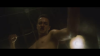
Fight Club. Directed by David Fincher. 20th Century Fox, 1999, (47:32)
This is a scene from David Fincher’s 1999 film Fight Club starring Edward Norton and Brad Pitt in where they are in their underground fight club that these characters both created. The POV Shot we get is that of Angelface’s, played by Jared Leto, where The Narrator beats him so badly that he leaves his face disfigured. In the shot, we see The Narrator on top of Angelface, as the camera is pointed up at him. Making the audience feel smaller compared to The Narrator and making him more powerful. The punches from The Narrator also even come straight down to the camera, making it seem like we as the audience are being hit, as well as the camera becoming blurrier the more punches that are received, as if Angelface is closer to blacking out. The shots of this can reflect on the same mirror POV shot as the beginning of Jekyll and Hyde as we the audience can feel smaller to someone like Jekyll by the way he dresses in the mirror as a fancy gentleman. Fight Club is nowhere near a direct adaptation of Stevenson’s novel but Fight Club plays with the trope of a dual personality as The Narrator and Tyler Durden end up being the same person and Durden is a made-up person created by The Narrator of his worst side of the things he does. Similar to how with Jekyll and Hyde that Hyde is created by Jekyll as a means of Jekyll to release his bad side.
Dr. Jekyll and Mr. Hyde. Directed by Rouben Mamoulian, Paramount Pictures, 1931, (26:47)
Dr. Jekyll and Mr. Hyde. Directed by Rouben Mamoulian, Paramount Pictures, 1931, (2:48)
Fight Club. Directed by David Fincher. 20th Century Fox, 1999, (47:32)
Powell, M., Pérez Daniel, & Stevenson, R. L. (2009). The strange case of Dr. Jekyll and Mr. Hyde. Stone Arch Books.
The Incredible Hulk. Directed by Louis Leterrier, Universal Studios, 2008, (1:20)
Jenkins, Henry (2007). Transmedia Storytelling. Confessions of an ACA-Fan