

In Psychology & Religion (1938), Jung explains “Everyone carries a shadow, and the less it is embodied in the individual's conscious life, the blacker and denser it is. If an inferiority is conscious, one always has a chance to correct it.”
Carl Jung was a student of Freud and carried many similar beliefs, while diverging on others. They seem to be in agreement here. Dr. Jekyll and Mr. Hyde constantly brings up the ideas of suppressed emotions, separate beings of good and evil, etc. Going off of Freud’s teachings, Jung believed in a self-actualized person who can lead a balanced and harmonious life by engaging with the “shadow” and learning from it in a process called individualization. He also believed if one archetype of a person’s self was too big or too small, this imbalance would lead to a neurosis, like anxiety or depression.
In seeing this, I thought this tied perfectly to the conversation of Freud and Dr. Jekyll and Mr. Hyde. Specifically, the ideas of the repressed selves and what that means for someone. The id, these baseline urges are put away, for social reasons, past experiences, etc. but this has a strong effect on how the person now lives their life. Many of the different adaptations and iterations approach this in different ways, while some lean very similar.
All the different characters and adaptations within this gallery show the connection of the repressed id. We will get to take a look at how these characters are presented with this repressed id in mind.
Mamoulian's Dr. Jekyll and Mr. Hyde (1931)
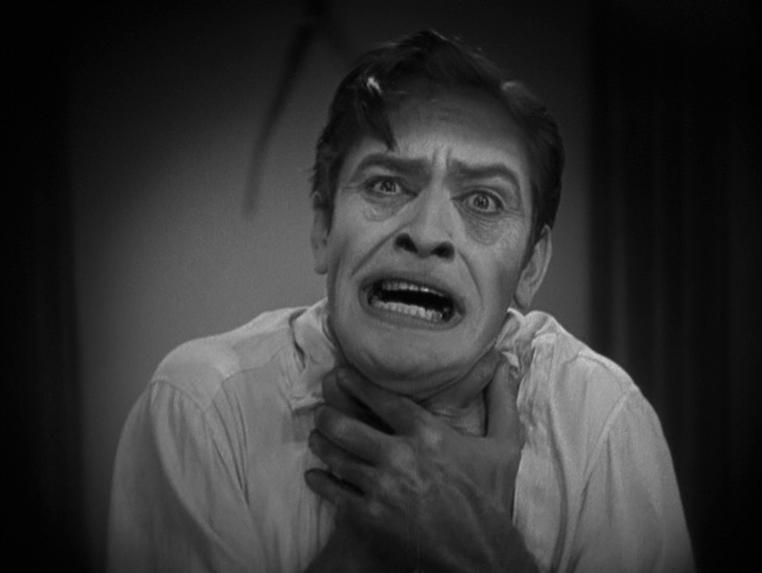
Jekyll believes in two selves and wants to be rid of the evil side. Jekyll represents the good. He is successful, engaged, well-off, respected, etc. When Hyde comes along, he is the antithesis. He is beastly/animalistic. He acts purely on urges and instinct. That is where Freud really comes into play. Hyde is the id. Jekyll desperately wants to marry Muriel, which we can clearly see the sexual implications that come with it. But when that is prolonged and he transforms into Hyde, Hyde quickly gets with the prostitute stand in character. His anger continues to lash out with no restraint to the point of murder, yet all along the question being is it two selves or one being with repressed urges.
I think this picture gives a strong look into what the director was trying to say. As Jekyll transforms into Hyde, he grasps his throat as his face changes. I see this as Hyde coming from within and being such a repressed side of Jekyll’s desires that he only acts on that alone. As the “good” side, Jekyll has to act a certain way and restrain himself in others. We can infer that he repressed those urges to the point that when they manifest as Hyde, they are uncontrollable and unbalanced.
DC Comic's Two Face
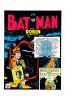
Two Face is a character that is directly inspired by Jekyll and Hyde. In his first comic appearance in Detective Comics #66, he is reading the novel and they refer to him as a “Twentieth Century Jekyll and Hyde,”. While often they play this character more along the lines of personality disorders and things like that, more recent comic lines have leaned another direction. Specifically in the comic line “Face the Face”, the writer’s attempted to go much deeper. They presented the audience with a reformed and healed Harvey Dent. Much like early on before becoming Two Face, Harvey was known as the ideal citizen. He fought for good as the District Attorney and worked to lock up Gotham’s criminal underground. Here, after years of Two Face, we learned that Harvey struggled with repressed memories and trauma of abusive from his father to him and his mother along with an array of other things. It fleshes out the struggle he has within his mind of what Harvey tries to think versus Two Face. Similarly to Jekyll and Hyde, when Mr. Hyde takes over at the end, Harvey cracks and intentionally burns half of his face once more embracing Two Face.This presents a few through lines. We see the repression of himself to the point where he is unbalanced. He attempts the complete separation, which comes with a repression of the id and certain baseline urges. This grows his shadow as Jung would put it as the two spin more out of control and less balanced.
The Nutty Professor (1963)
The Nutty Professor takes a very comedic approach to the whole notion of Jekyll and Hyde. It is campy and out of pocket at times. With all that said, I think it says a lot to the notion of the id and the urges that can be repressed to a fault. Specifically in the heredity/flashback scene, we get an intimate look back at Julius Kelp’s upbringing. His mother is shown in a very negative light being domineering, verbally abusive, and downright bad but she is shown as having control or a power over his father. His father is shown as a meek, mild, weak, and a victim who just wants to love his wife. We can see this and see how Julius keeps his father’s attributes of the meek and mild but caring persona, but even when a student throws him in a closet or insults him, he doesn’t fight back. We see that he has repressed that urge to fight back because of what he had seen in his upbringing. So, when he transforms into Buddy Love, we see his sleazy, manipulative, violent, and rude side come out (granted, presented in a different light from his mother). We see these urges come out and in all of Buddy Love’s actions and it even begins to affect Kelp’s day-to-day. There is a scene Where Kelp is gawking over Stella in a male gaze sequence, but it shows how the repression of that entire feeling come out in a tidal swell. His id was completely closed off for so many years, that when he gave way to it, he struggled to keep it in check.
The League of Extraordinary Gentlemen (2003)
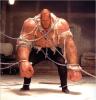
I use this because I think it is a great example of taking the character away from the Freudian belief of it all. The League of Extraordinary Gentlemen seems to take us in a different kind of direction while still trying to make similar implications, but I don’t think this works along the lines of the repressed self per say. It is heavily inspired by Marvel’s Hulk, even the design (which is genuinely amazing prosthetic work) parallels some of that. I couldn’t find a good still of this but there are different scenes throughout Where Jekyll or Hyde will look into a mirror, and they will see the other. So, in that, we can see that it isn’t so much about repressed urges/desires like the id as it is more about the good and evil personality. You could make the argument that the repressed urges come out as the anger from Hyde, but I think it is too oversimplified to call it that and it is much more along the lines of the dual personality. So it tackles that dual personality, as we can even see from the poster above, but the idea of the id and these desires that manifest into the monstrous side of Hyde is somewhat lost in this iteration.