
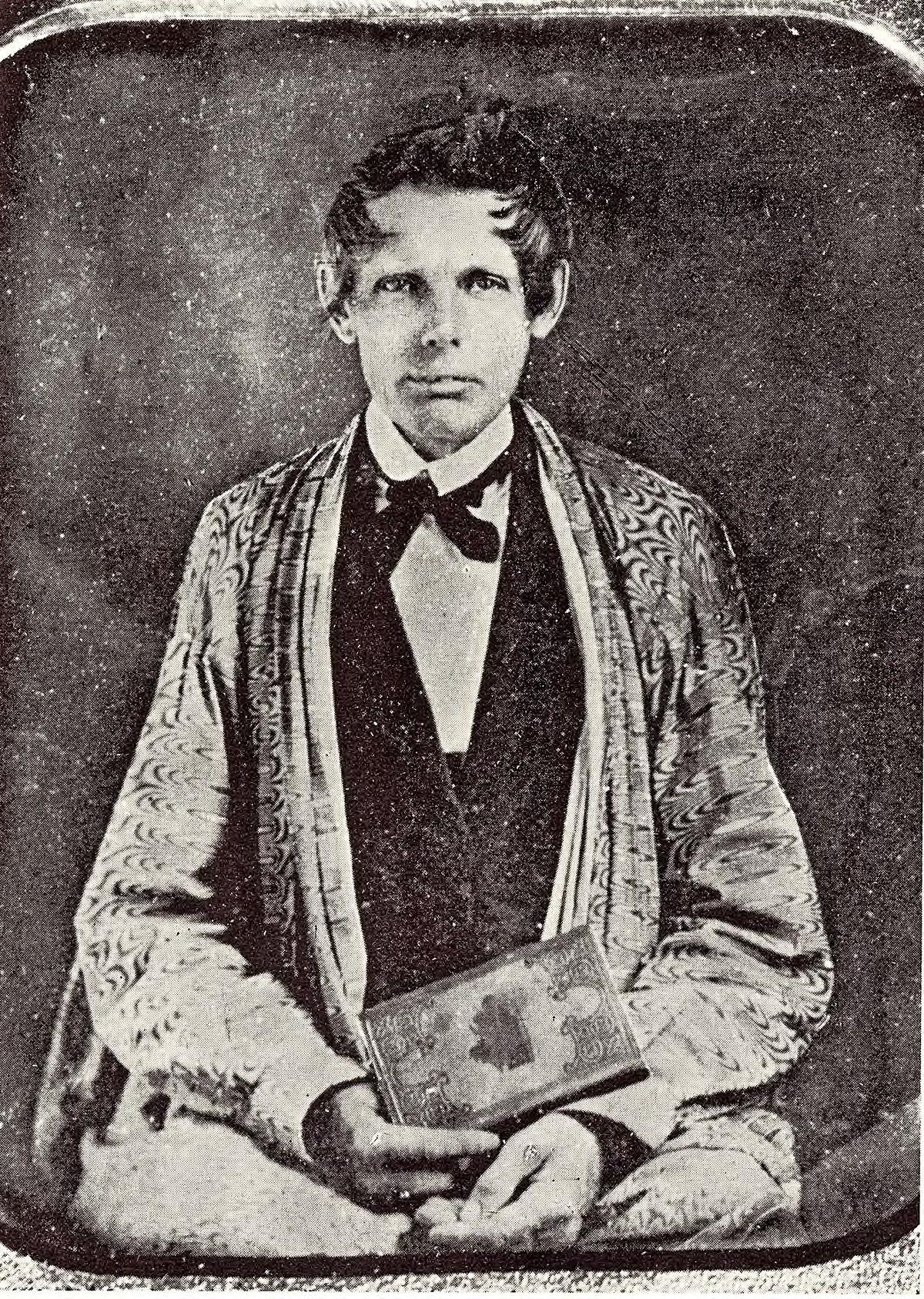

The image is of Samuel Worcester, the missionary who was the plantiff in the Supreme Court case of Worcester v. Georgia, which was responsible for the declaration of Native American soverignity over their land and tribe. Worcester, along with ten other men, refused to comply with the existing law of the time that mandated all people living on Native land who were not Native Americans required a license to do so. These men refused because they felt compliance would inherently prove that Native Americans had no soverignity over their land. Worcester and his missionaries had been living there for some time, and had been actively involved with the Native American community. When they were brought into court, it took two trials to find them guilty and sentenced to hard labor for four years. Of these men, nine took pardons, leaving Worcester and one more to have the case appear before the Supreme Court. The state of Georgia did not send council to argue their side of the case. However, despite the Court ruling in favor of Worcester, it did not change the situation for Native Americans, as President Andrew Jackson did not enforce the ruling, and Worcester and his ally were still imprisoned by Georgia state government, who felt that the Supreme Court had overstepped it's bounds concerning the rights of the states. Worcester and his ally would be freed, but only after the state of South Carolina declared tariffs of the federal government unconstitutional, prompting an event known as the Nullification Crisis. Jackson, fearing another Southern Rebellion, would apply pressure onto both sides of the case to see that Worcester and his ally went free, as he did not want Georgia to join South Carolina in nullification and possibly secession. Both sides complied, granting the two men freedom, but their Supreme Court case thus did not lead to any others which may have had greater impact upon supporting the Native American rights to soverignity. Of course, much of the lack of enforcement on President Jackson's part was due to the desire for American expansion, and thus less concern over the rights of another race.